
Communication; Growth – Apr 30
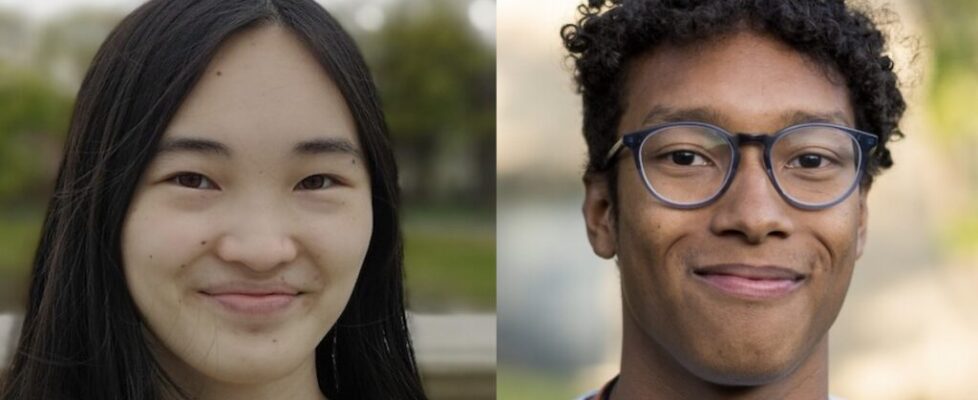
Wonderfest Science Envoys are early-career researchers with special communication skills and aspirations. Following short talks on provocative modern science topics, these two Science Envoys will answer questions with insight and enthusiasm:
• UC Berkeley psychologist Sophia Li on Imperfect Communication — As a communicator, I want to transfer information from my mind into the minds of listeners. Research shows that both listeners and uninvolved observers have overly positive perceptions of any communicator. They believe that the communicator knows more than s/he actually does, and has articulated thoughts better than s/he actually has.
• Stanford physicist Josh Tong on Growth and Form — Living creatures grow and transform their shape, to the awe of many scientists. What does it mean to grow? How do we compare an organism at different stages of its growth? Mathematics can help us find the way to understand this fundamental transformation.
This interactive science presentation, free and unticketed, is produced by Wonderfest in partnership with Marin Science Seminar.
Marin Science Seminar [https://marinscienceseminar.com]
What value does this FREE science experience have for you and, indirectly, for society? Accordingly, please consider making a donation to nonprofit Wonderfest via the Eventbrite box, below.
Most Famous Equation – Feb 17
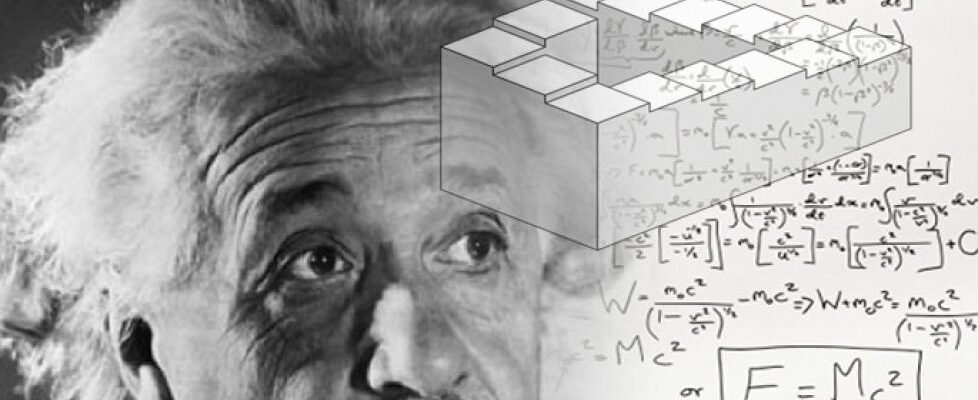
Around the world, people recognize that E=mc^2 oozes cosmic insight. But what does this “most famous equation” really say? What are energy and mass? And what makes the speed of light, c, so important? [Hint: mass, moving at speed c, doesn’t turn into energy!] Using little more than common experience and middle-school math, Einstein’s “special relativity” gem can come to life — with surprising insights into the nature of reality.
This event is co-produced by Wonderfest and the East Bay Astronomical Society. Our speaker is long-time physics teacher Tucker Hiatt, founding director of Wonderfest. Tucker has been a Visiting Scholar in the Stanford Chemistry Department, and is a recipient of the Amgen Award for Science Teaching Excellence.
Tucker Hiatt
East Bay Astronomical Society [https://eastbayastro.org]
This event is free, unticketed, ... and valuable. Please assess its value for you, and, in the Eventbrite space below, consider a corresponding donation to nonprofit Wonderfest.
Most Famous Equation – Jan 31
Around the world, people recognize that E=mc^2 oozes cosmic insight. But what does this “most famous equation” really say? What are energy and mass? And what makes the speed of light, c, so important? [Hint: mass, moving at speed c, doesn’t turn into energy!] Using little more than common experience and middle-school math, Einstein’s “special relativity” gem can come to life — with surprising insights into the nature of reality.
Around the world, people recognize that E=mc^2 oozes cosmic insight. But what does this "most famous equation" really say? What are energy and mass? And what makes the speed of light, c, so important? [Hint: mass, moving at speed c, doesn't turn into energy!] Using little more than common experience and middle-school math, Einstein's "special relativity" gem can come to life — with surprising insights into the nature of reality.
This event is co-produced by Wonderfest and Marin Science Seminar. Our speaker is long-time physics teacher Tucker Hiatt, founding director of Wonderfest. Tucker has been a Visiting Scholar in the Stanford Chemistry Department, and is a recipient of the Amgen Award for Science Teaching Excellence.
Tucker Hiatt
Marin Science Seminar [https://marinscienceseminar.com]
This event is free, unticketed, ... and valuable. Please assess its value for you, and, in the Eventbrite space below, consider a corresponding donation to nonprofit Wonderfest.
Fast & Faraway – Nov 28
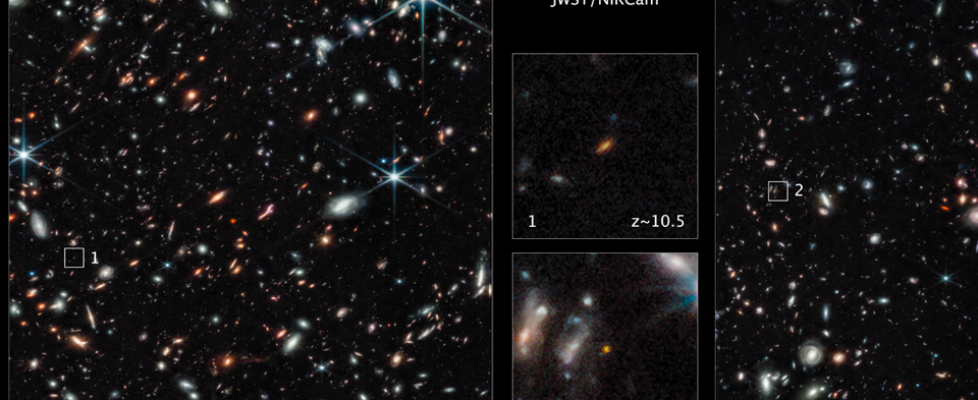
In astronomy, the redder a galaxy appears, the faster it is fleeing, and the older a tale its light can tell. Such “redshifts” in the spectra of galaxies (symbolized with the letter “z”) allow compelling cosmic insights. The recently-launched James Webb Space Telescope (JWST) has allowed astronomers to study the properties of high-z galaxies in existence only 250 million years after the Big Bang, when the universe was only 2% of its current age! How are these objects detected in such very “deep” space, and what are the early science results from this JWST research?
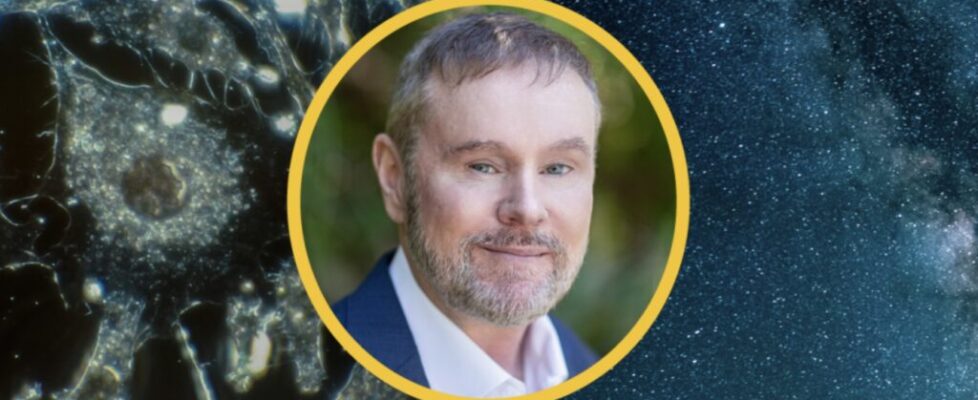
Our speaker is Dr. Thomas Targett, Associate Professor of Physics & Astronomy at the Sonoma campus of California State University. Dr. Targett’s Wonderfest history includes an eye-opening talk entitled Popular Myths of Astronomy, presented as part of the Mt. Tam Astronomy Program.
Dr. Thomas Targett
This event is FREE and unticketed ... and valuable. But what value does it have for YOU? Accordingly, please consider a donation to nonprofit Wonderfest via the Eventbrite window, below.
Next Scientist #2 – Nov 7
Next Scientist is a new Wonderfest series of online presentations. Every Next Scientist Zoom consists of two 30-minute presentations (including 10 minutes of Q&A), each featuring a young researcher describing next-level science:
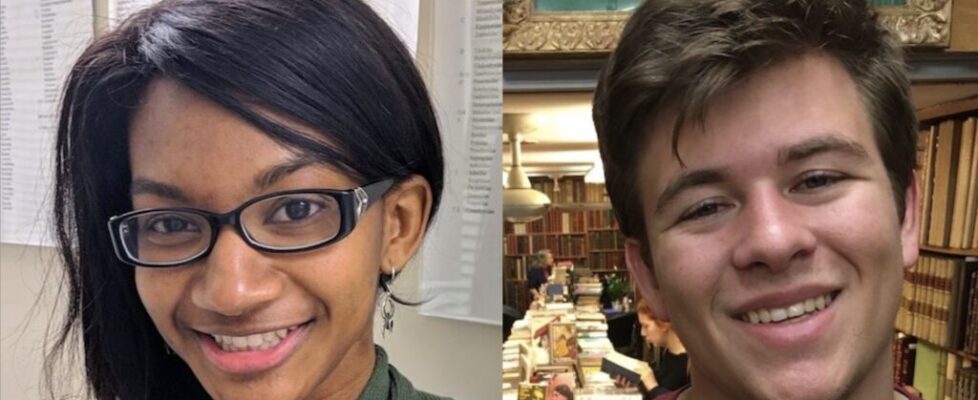
UC Berkeley arachnologist Trinity Walls on Creepy or Captivating: A Spider Scientist’s Perspective — How have recent discoveries about spiders changed beliefs that have been passed down for generations? Can we see that the study of spiders is beneficial to society? One person’s life-long journey — from curious child to rigorous researcher — reveals spider science to be an avenue of creative self-expression that offers rich insights into nature.
UC Berkeley astrophysicist Tyler Cox on Creating the Largest-Ever Maps of the Universe — New datasets from the James Webb Space Telescope have begun to reveal some of the oldest known galaxies in the universe. But what lies beyond these extremely remote objects, and what more can we learn by going deeper? Next-generation experiments are working to map the most distant regions of the universe to help explain the origins of the first galaxies.
This free, online, science presentation is produced by Wonderfest in partnership with the Castro Valley Educational Foundation and Castro Valley Science.
What value does this experience — and these insights — have for YOU? Accordingly, please support nonprofit Wonderfest, the Bay Area Beacon of Science, by donating via the Eventbrite space, below.
Warped Universe – Oct 30
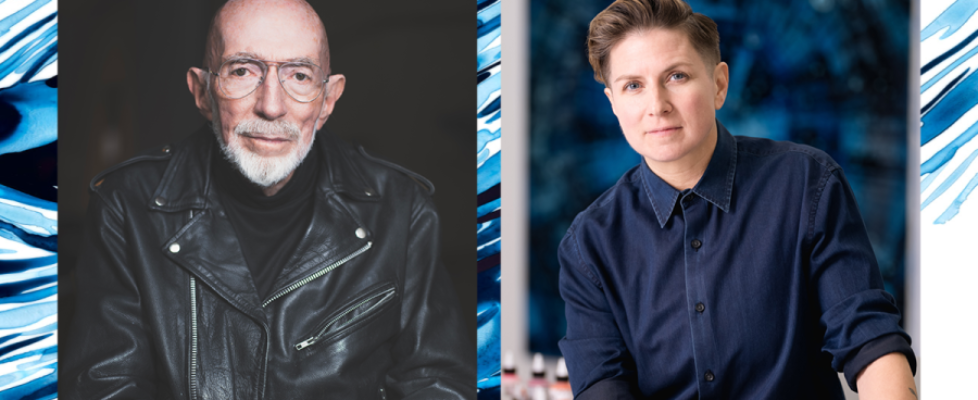
The warping of space becomes noticeable near small massive objects — black holes, in particular. Beyond “noticeable,” that curvature becomes beautiful when rendered with the skilled artist’s hand and described with the poetic physicist’s verse. Lia Halloran and Kip Thorne team up to describe an odyssey through black holes, wormholes, time travel, and gravitational waves. In fact, that is the subtitle of their soon-to-be-published book, The Warped Side of Our Universe. Kirkus Reviews calls the book “Beautiful art in the service of cutting-edge astrophysics.”
Award-winning artist Lia Halloran is Associate Professor and Chair of the Chapman University Art Department. Nobel Prize-winning physicist Kip Thorne is Emeritus Professor of Physics at Caltech. These two authors will be in conversation with the Commonwealth Club’s George Hammond.
Visit the Commonwealth Club event webpage (link below) to purchase tickets for this in-person event. During the final steps of ticket acquisition, use code WonderfestPromo for a $10 discount.
Joy of Science – Oct 16
How do the methods of science enrich the world for us? The latest book by physicist Jim Al-Khalili, The Joy of Science, invites us to engage with the world as scientists do. It discusses the nature of truth and uncertainty, the role of doubt, the pros and cons of simplification, the value of guarding aginst bias, the importance of evidence-based thinking — all ideas that can empower us to think more objectively, see through the fog of our preexisting beliefs, and lead a more fulfilling life.
Dr. Jim Al-Khalili is Distinguished Professor of Theoretical Physics at the University of Surrey in England. Having written 14 popular books and having earned the Stephen Hawking Medal for Science Communication, he is also a university chair in the public engagement in science. Dr. Al-Khalili will discuss The Joy of Science with Kishore Hari, Science Correspondent at Tested.com.
Dr. Jim Al-Khalili
Please register for this event with the Commonwealth Club via the "Tickets" link, below. Use discount code WonderfestPromo for $10 off, rendering that ticket completely FREE. Upon registration, you will receive an email containing a link to this live-stream event.
Search for ET – Oct 15
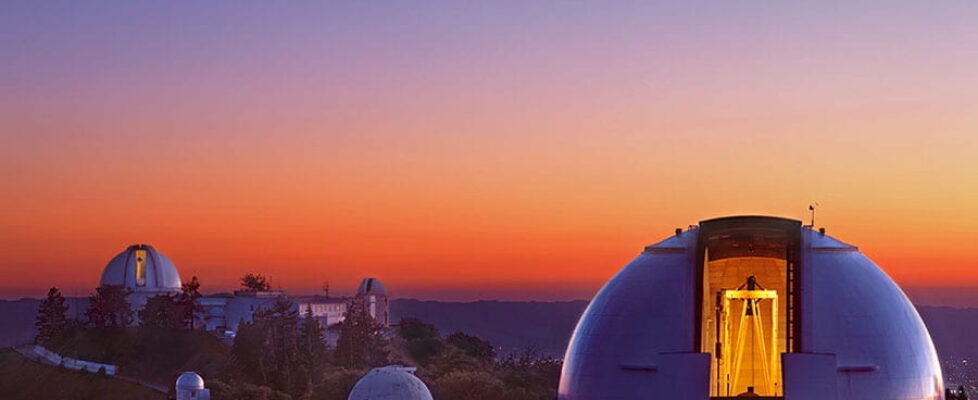
Humans have sought “signs from above” for millennia. The scientific search for extraterrestrial intelligence (SETI) began circa 1960, and, today, grows ever deeper and more technologically diverse. The scope of modern research is breathtaking. Methods include targeted searches for electromagnetic (EM) signals near known Earth-like exoplanets, continuous EM scans over the entire sky (e.g., PANOSETI at the Bay Area’s Lick Observatory, pictured), the hunt for exotic forms of communication, and the careful search for ET artifacts on/near Earth.
Our speaker, Dan Werthimer, is Chief Scientist at the Berkeley SETI Research Center. He is also co-founder of SETI@Home, and principal investigator of CASPER, the Center for Astronomy Signal Processing and Electronics Research. Since 1979, Dan has helped to design and build numerous sensitive tools for the detection of ET. In 2019, Dan earned Wonderfest’s Carl Sagan Prize for Science Popularization. And, in 2021, he received the prestigious Frank Drake Award of the SETI Institute.
Dan Werthimer
This free event is produced by Wonderfest and by the Alameda Free Library. In the Eventbrite space below, please consider a donation to help nonprofit Wonderfest in its mission of science outreach.
Extraterrestrial Life – Sep 5
An August-24th New York Times article about audacious astronomer Avi Loeb concludes with this: “Now, that being said, if [Dr. Loeb] finds something, it’s life-changing … It will change everything.” What was “being said” referred to professional academic complaints about Dr. Loeb’s alleged “transgressions against scientific norms and protocols.” However, no one disputes the excitement of Prof. Loeb’s investigations. Wonderfest joins the Commonwealth Club to present controversial Harvard astronomer Avi Loeb in conversation about ideas in his latest book, Interstellar: The Search for Extraterrestrial Life and Our Future in the Stars. That conversation will explore some vital — if highly speculative — long-term questions: How do we prepare for first contact with ET? And how can our species itself become interstellar?
Dr. Avi Loeb is Professor of Science and former chair of the Astronomy Department at Harvard University. During this online event, he will be in conversation with the Commonwealth Club’s George Hammond.
Dr. Avi Loeb
The Commonwealth Club
Please pre-register with the Commonwealth Club (via the URL below) to receive a link — via email — to this live-stream event. Use discount code WonderfestPromo for $10 off the ticket price, rendering that ticket completely FREE.
Astrobiology Memoir – July 24
How far off are the “goldilocks” worlds? These are the planets, orbiting other stars, that have just the right environmental traits to make life possible — not too hot, not too cold, etc. Will we be able to detect the chemical signals of alien life from so far away? In her new book, Life on Other Planets: A Memoir of Finding My Place in the Universe, Dr. Aomawa Shields discusses these questions alongside the personal challenges she’s encountered on the path to success in the thrilling field of astrobiology. Dr. Shields is in conversation with author and journalist Julia Flynn, and in touch with the online audience via the chat bar.
Dr. Aomawa Shields is Associate Professor of Physics & Astronomy at UC Irvine. She is also founding director of Rising Stargirls, dedicated to encouraging girls to explore the universe using theater, writing, and visual art.

Dr. Aomawa Shields
The Commonwealth Club
Please pre-register with the Commonwealth Club (via the URL below) to receive a link — via email — to this live-stream event. Use discount code WonderfestPromo for $10 off the ticket price, rendering that ticket completely FREE.
Astronomy for Earth – June 20
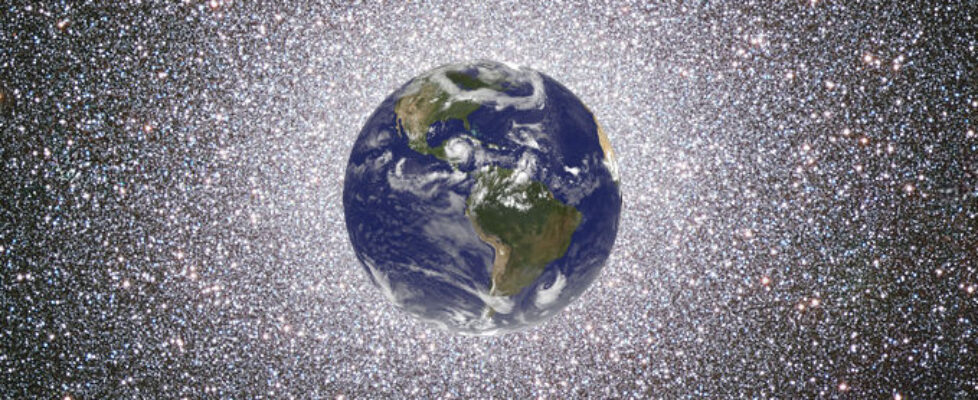
The past few decades of astronomical discovery have been breathtaking: thirty years of awe-inspiring images from two Space Telescopes (Hubble & Webb), thousands of planets found circling nearby stars, mind-bending and spacetime-bending gravity waves and, quite recently, a stunning image of the black hole at the center of the Milky Way. What is the value of all of these discoveries? Can learning about our place in the Universe inspire us, as Carl Sagan put it, to preserve and cherish the Pale Blue Dot?
Our speaker, Dr. Adrienne Cool, is Professor of Physics & Astronomy at San Francisco State University. She is also co-founder of Astronomers for Planet Earth, an international organization working to address climate change from a cosmic perspective.
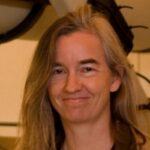
Dr. Adrienne Cool
Since Wonderfest is COVID-cautious, consider wearing a mask; the warm feeling of Wondernaut(!) camaraderie radiates through masks and across wide seat-spacing.
This event is FREE and unticketed ... and valuable. But what value does it have for you? Accordingly please consider a donation to nonprofit Wonderfest via the Eventbrite window, below.
Poison Frogs; Quantum Chem – May 11
Wonderfest Science Envoys are early-career researchers with special communication skills and aspirations. Following short talks on provocative modern science topics, these two Science Envoys will answer questions with insight and enthusiasm:
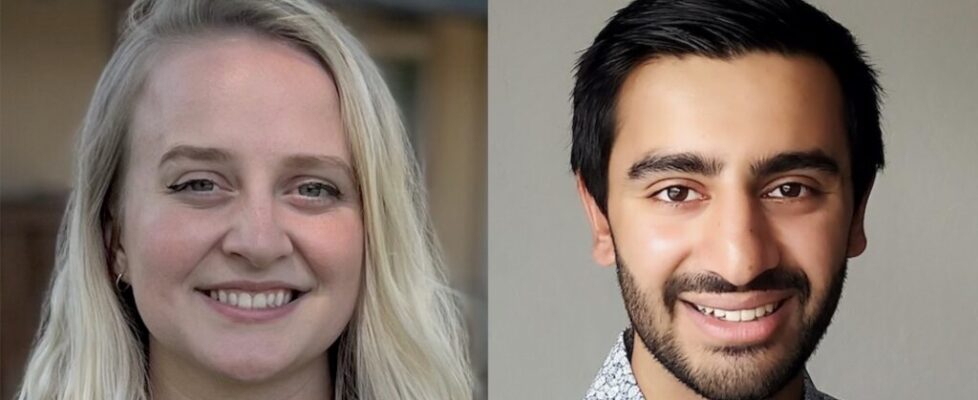
• Stanford biologist Billie Goolsby on Family Feud: Familial Decision-Making in Poison Frogs — Cooperation between parents tends to ensure family success, especially among poison frogs. Through direct observation, sound recordings, and hormone analysis, researchers test how coordination of parenting happens in nature — and how it predicts offspring survival.
• UC Berkeley physicist Ashwin Singh on Exploring Quantum Chemistry with Earth’s Strongest Laser — Quantum mechanics helps describe cold chemical reactions, like those that occur in outer space. By building the world’s strongest laser to hold molecules in place, we can watch quantum chemistry happen in real time.
Berkeley Public Library [https://www.berkeleypubliclibrary.org]
This free, online, science presentation is produced by Wonderfest in partnership with the Berkeley Public Library.
What value do these science insights have for you? Accordingly, please consider making a donation to nonprofit Wonderfest via the Eventbrite box, below. (Note: No "sales" or "tickets" are involved; it's just a thoughtful contribution to help Wonderfest promote science understanding and the scientific outlook.)
Spider Love; Dark Matter – Mar 15
Wonderfest Science Envoys are early-career researchers with special communication skills and aspirations. Following short talks on provocative modern science topics, these two Science Envoys will answer questions with insight and enthusiasm:
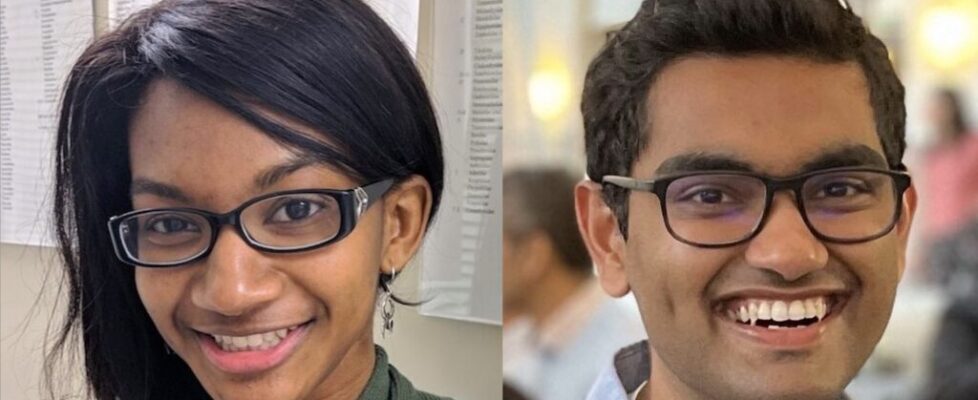
• UC Berkeley arachnologist Trinity Walls on Creepy or Captivating: A Spider Scientist’s Perspective — How have recent discoveries about spiders changed beliefs that have been passed down for generations? Can we see that the study of spiders is beneficial to society? One person’s life-long journey — from curious child to rigorous researcher — reveals spider science to be an avenue of creative self-expression that offers rich insights into nature.
• Stanford physicist Jyotirmai “Joe” Singh on Exploring the Dark Side of the Universe — Deeply mysterious dark matter constitutes a staggering 85% of the material universe. What is the evidence for dark matter’s ubiquitous existence, yet why has it been so difficult to detect in the laboratory? Cutting-edge theories and experiments within modern physics do give us hope that we can understand dark matter, unlocking key mysteries of the cosmos.
Berkeley Public Library [https://www.berkeleypubliclibrary.org]
This free, online, science presentation is produced by Wonderfest in partnership with the Berkeley Public Library.
What value do these science insights have for you? Accordingly, please consider making a donation to nonprofit Wonderfest via the Eventbrite box, below. (Note: No "sales" or "tickets" are involved; it's just a thoughtful contribution to help Wonderfest promote science understanding and the scientific outlook.)
Laser Micro-imaging; Mental Time Travel – Mar 24
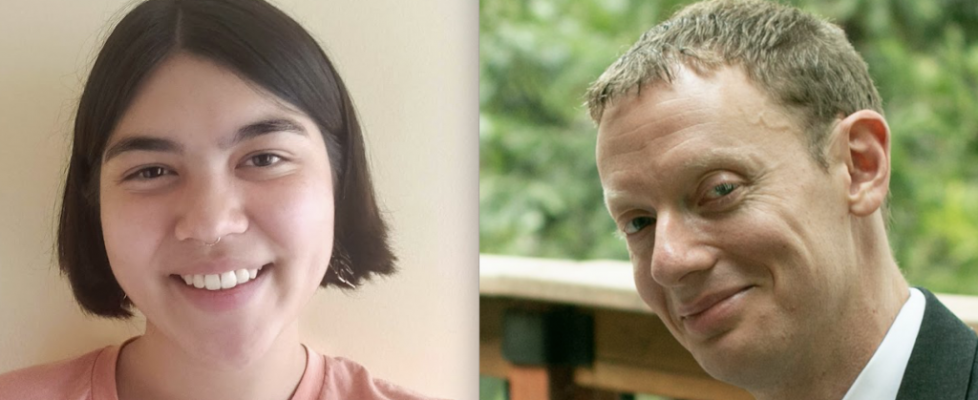
Wonderfest Science Envoys are early-career researchers with special communication skills and aspirations. Following short talks on provocative modern science topics, these two Science Envoys will answer questions with insight and enthusiasm:
• UC Berkeley physicist Jeske Dioquino on “Laser Micro-imaging” — With the help of the electron microscope, researchers are taking pictures of some of nature’s smallest biological structures. To improve the contrast in these images, allowing us to study even smaller structures, a high-intensity laser joins the fray.
• Stanford neurobiologist Marc Harrison on “Mental Time Travel” — As we grow older, our ability to mentally time travel via episodic memory begins to change. Recent advances that utilize biomarkers of disease states, in combination with neuroimaging, have opened exciting new doors in the early detection of Alzheimer’s disease.
This event is FREE. But what value do these science insights have FOR YOU? Accordingly, please use the space below to contribute to nonprofit Wonderfest, and help to promote the scientific outlook broadly — as through our outstanding Science Envoy Program.
Madame Curie – Dec 21-23
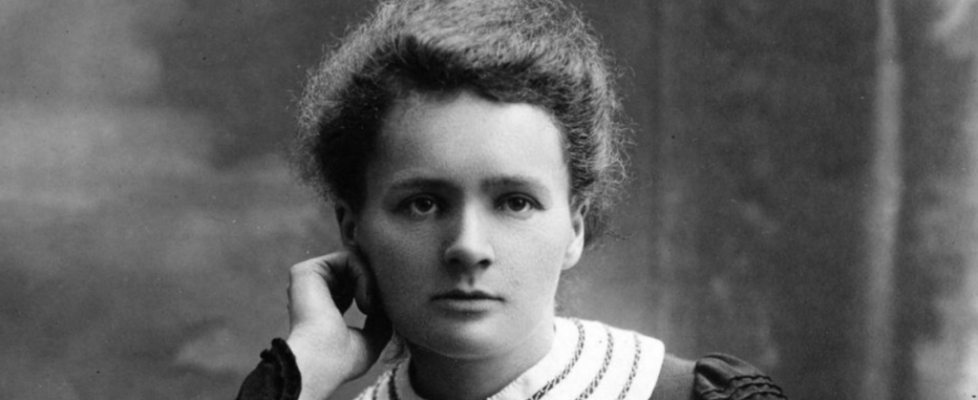
"Nothing in life is to be feared; it is only to be understood." - M. Curie
Wonderfest is delighted to present Madame Curie, a new musical-theater tribute to Earth's most accomplished female scientist. As Maria Sklodowska was becoming Marie Curie, she emigrated 1000 miles from Poland to France, overcame xenophobia and sexism, and pioneered our understanding of radioactivity. In the process, she earned Nobel prizes (plural!) in physics and chemistry, and treated — directly and indirectly — over a million WWI soldiers with her mobile X-ray units.
"I have frequently been questioned, especially by women, regarding how I could reconcile family life with a scientific career. Well, it has not been easy." - M. Curie
Madame Curie brings to life the story and spirit of a revolutionary. It features a compelling narrative, beautiful music, and eleven experienced actors who sheltered in their respective homes during recording! Fully orchestrated in the Rodgers and Hammerstein tradition, Madame Curie will revive your love of science, and it will especially inspire young women to heed their call to the passionate exploration of Nature.
"All my life through, the new sights of Nature made me rejoice like a child." - M. Curie
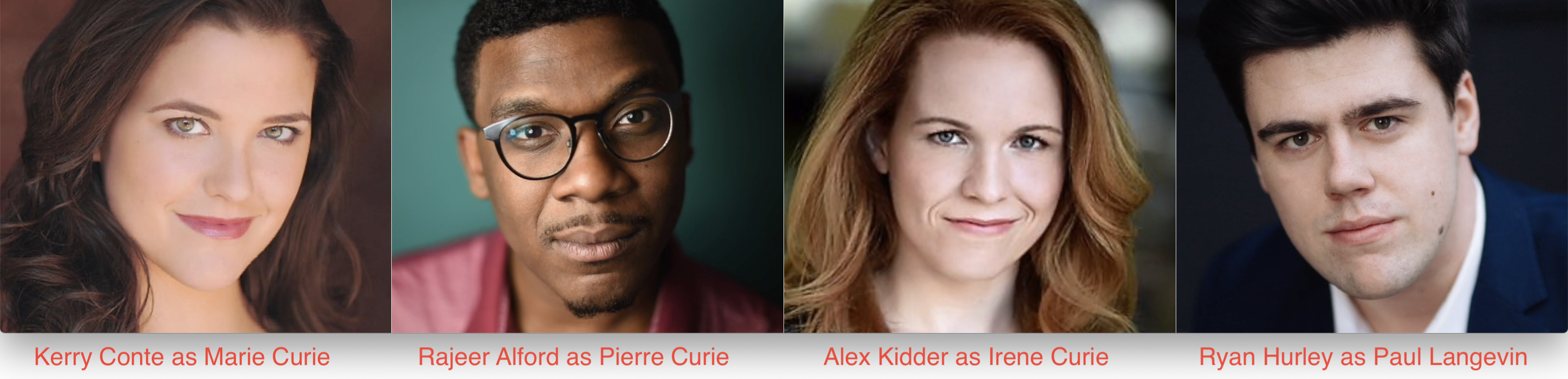
Music and Libretto by David Kurkowski [https://www.curiethemusical.com]
Produced by Cate Cammarata [https://createtheater.com]
Madame Curie's YouTube Premiere took place on the evening of December 21st. This musical experience will continue to be available at the Wonderfest Science YouTube channel through the morning of December 24th. Simply visit the webaddress above for an inspiring start to your next revolution of the Sun ... with a revolutionary!
The Official Houdini Séance – Halloween!
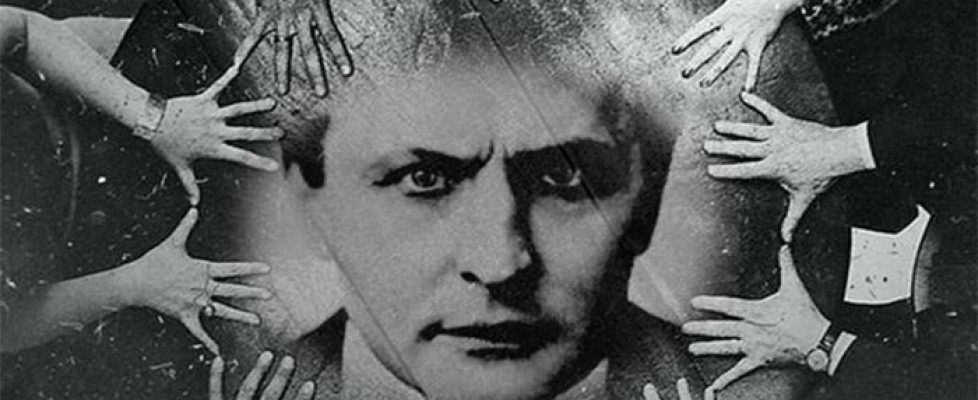
- WHAT: The Official Houdini Séance, part of the Bay Area Science Festival
- WHO: Skeptic Michael Shermer, Magician Jamy Ian Swiss, UCSF Neuroscientist Melina Uncapher, ?The Ghost of Harry Houdini?, et al
- WHEN: 8:00 PM, Saturday, October 31 (HALLOWEEN!), 2015
- WHERE: Brava Theater, 2781 – 24th Street, San Francisco, CA 94110
- HOW: Produced by Wonderfest, Robert Strong, and the Bay Area Skeptics.
- TICKETS: Only via the Brava Theater box office
- WHY: Because we’re curious creatures.
BIG THANKS to these generous donors for supporting Wonderfest through the Official Houdini Séance Kickstarter campaign:
——————————–
Wonderfest works every day to promote the scientific outlook. For as little as $1/month, why not become a Wonderfest Patron? As the Medici family were patrons of popular art in old Italy, you can become a patron of popular science and rationality in the modern Bay Area. (And you’ll get that tax-deduction that the Medici never did!) Please become a regular supporter of Wonderfest, and help enlarge the concept of scientific community.
Become a Wonderfest Patron: http://www.patreon.com/wonderfest
Make a one time donation: http://wonderfest.org/donate
If you shop at Amazon.com, why not shop at AmazonSmile? It doesn’t cost you a dime extra, selection and prices are the same, and a small percent supports Wonderfest and science!
http://amazon.wonderfest.org.
Watch more videos: http://videos.wonderfest.org
Join us on:
http://facebook.com/wonderfest
http://twitter.com/wonderfest
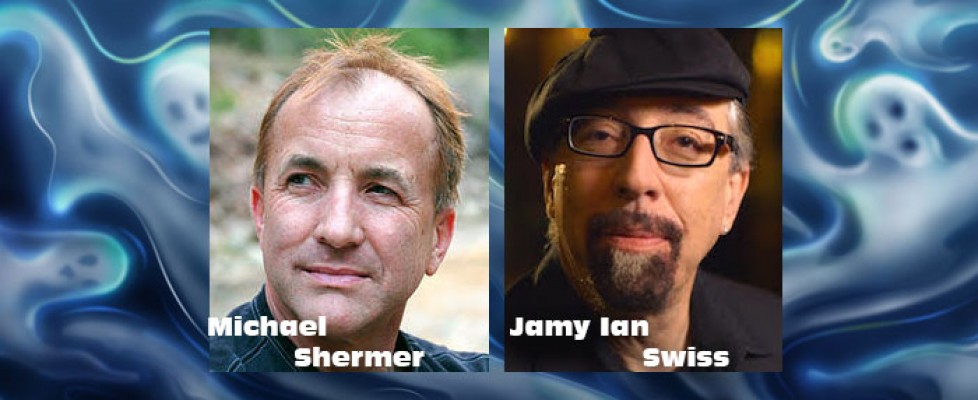
Skepticism and the Supernatural, a Halloween dialogue – Oct 31
 Halloween is the perfect day for a deep and magical dialogue on the supernatural! Michael Shermer is the founder of The Skeptics Society, and monthly contributor to Scientific American magazine. He has written over a dozen books, including The Moral Arc and Why People Believe Weird Things, and he has appeared on The Colbert Report, Dateline, and Charlie Rose. Jamy Ian Swiss is a world-renowned magician and skeptic. He has been featured in print in The New Yorker and Vanity Fair, and on television on 48 Hours, PBS’s NOVA, The Today Show, AND he was a comedy writer and chief magic consultant for Penn & Teller. Please join Shermer and Swiss as they discuss the supernatural — on Halloween — with science and skepticism in mind.
- WHAT: Skepticism and the Supernatural, a Halloween dialogue
- WHO: Michael Shermer and Jamy Ian Swiss
- WHEN: 5:00 PM, Saturday, October 31, 2015
- WHERE: Brava Theater, 2781 – 24th Street, San Francisco, CA 94110
- HOW: Produced by Wonderfest and the Bay Area Skeptics as part of the Bay Area Science Festival.
- TICKETS: Below
- WHY: Because we’re curious creatures.
——————————–
Wonderfest works every day to promote the scientific outlook. For as little as $1/month, why not become a Wonderfest Patron? As the Medici family were patrons of popular art in old Italy, you can become a patron of popular science and rationality in the modern Bay Area. (And you’ll get that tax-deduction that the Medici never did!) Please become a regular supporter of Wonderfest, and help enlarge the concept of scientific community.
Become a Wonderfest Patron: http://www.patreon.com/wonderfest
Make a one time donation: http://wonderfest.org/donate
If you shop at Amazon.com, why not shop at AmazonSmile? It doesn’t cost you a dime extra, selection and prices are the same, and a small percent supports Wonderfest and science!
http://amazon.wonderfest.org.
Watch more videos: http://videos.wonderfest.org
Join us on:
http://facebook.com/wonderfest
http://twitter.com/wonderfest
Wonderfest’s “Cosmic NightLife” at the California Academy of Sciences, Oct 22
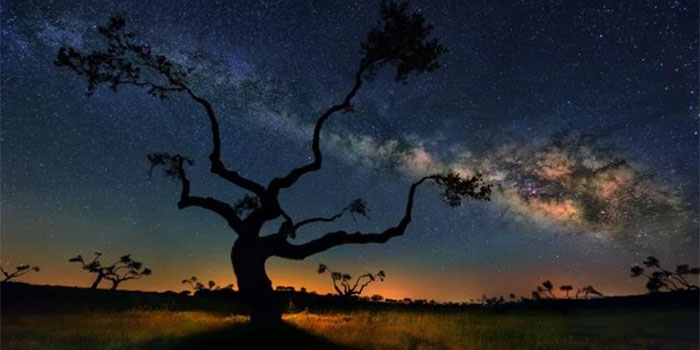 Whether you’re a NightLife regular or rookie, Wonderfest’s Cosmic NightLife is not to be missed. It features three of the most exciting and insightful space experts in the Bay Area — and perhaps on planet Earth. Here’s the schedule and line-up:
- WHAT: Wonderfest’s “Cosmic NightLife” at the Cal Academy
- WHO: Alex Filippenko, UC Berkeley; Chris McKay, NASA-Ames; Dan Werthimer, UC Berkeley
- WHEN: 6:00 PM, Thursday, October 22
- WHERE: California Academy of Sciences, 55 Music Concourse Drive, Golden Gate Park, San Francisco
- TICKETS: Purchase tickets at this Cal Academy site
- WHY: Because we’re curious creatures.
——————————–
Wonderfest works every day to promote the scientific outlook. For as little as $1/month, why not become a Wonderfest Patron? As the Medici family were patrons of popular art in old Italy, you can become a patron of popular science and rationality in the modern Bay Area. (And you’ll get that tax-deduction that the Medici never did!) Please become a regular supporter of Wonderfest, and help enlarge the concept of scientific community.
Become a Wonderfest Patron: http://www.patreon.com/wonderfest
Make a one time donation: http://wonderfest.org/donate
If you shop at Amazon.com, why not shop at AmazonSmile? It doesn’t cost you a dime extra, selection and prices are the same, and a small percent supports Wonderfest and science!
http://amazon.wonderfest.org.
Watch more videos: http://videos.wonderfest.org
Join us on:
http://facebook.com/wonderfest
http://twitter.com/wonderfest
How the First Things in the Universe Came About and How They Ended Up Within Us, Oct 5
 Join us for a fascinating journey through the early universe using the latest computer animations of early star formation, supernova explosions, and the build-up of the first galaxies. Dr. Abel’s work has shown that the first luminous objects in the universe were very massive stars shining one million times as brightly as our Sun. They died quickly and seeded the cosmos with the chemical elements necessary for life. One star at a time, galaxies started to assemble just one hundred million years after the Big Bang, and they are still growing now. Computer simulations of these events use the physics of dark matter, of ordinary atoms & molecules, and of expanding space to deliver remarkable insights into the early history of the cosmos.
- WHAT: How the First Things in the Universe Came About and How They Ended Up Within Us
- WHO: Tom Abel, Professor of Physics and Director of the Kavli Institute for Particle Astrophysics & Cosmology, Stanford
- WHEN: 7pm, Monday, October 5, 2015
- WHERE: PianoFight, 144 Taylor Street, San Francisco http://www.pianofight.com/
- HOW: Register below.
- WHY: Because we’re curious creatures.
——————————–
Wonderfest works every day to promote the scientific outlook. For as little as $1/month, why not become a Wonderfest Patron? As the Medici family were patrons of popular art in old Italy, you can become a patron of popular science and rationality in the modern Bay Area. (And you’ll get that tax-deduction that the Medici never did!) Please become a regular supporter of Wonderfest, and help enlarge the concept of scientific community.
Become a Wonderfest Patron: http://www.patreon.com/wonderfest
Make a one time donation: http://wonderfest.org/donate
If you shop at Amazon.com, why not shop at AmazonSmile? It doesn’t cost you a dime extra, selection and prices are the same, and a small percent supports Wonderfest and science!
http://amazon.wonderfest.org.
Watch more videos: http://videos.wonderfest.org
Join us on:
http://facebook.com/wonderfest
http://twitter.com/wonderfest