Team Science Quiz – TBD

Howard Rachelson


It’s a science double feature! Wonderfest presents two half-hour talks — with Q&A (of course) — by outstanding UC Berkeley researchers:
• Biologist Dr. Stephen Gaughran on The Genetics of Extinction (and Survival) — Species are now disappearing faster than at any point in the last several million years. Decades of conservation and management has made real progress in protecting endangered species, yet we still struggle to understand why some recover while others go extinct. By combining new genomic technologies with evolutionary theory, we are entering a new era of species conservation — one where we can use a species’ evolutionary past to plan for its future survival.
• Chemist Dr. Colin Gould on Building Next-Generation Medicines with Light & Electricity — Modern medicines have revolutionized treatments for cancer, heart disease, chronic illness, and more. These therapeutics often consist of carefully engineered organic molecules, which are designed in an iterative process of chemical synthesis and biological testing. Alternative energy sources, such as light and electricity, can help to speed up drug discovery, while also making manufacturing more environmentally friendly.


Wonderfest Science Envoys are early-career researchers with enhanced communication skills and aspirations. Following short talks on provocative modern science topics, these two Science Envoys will answer questions with insight and enthusiasm:
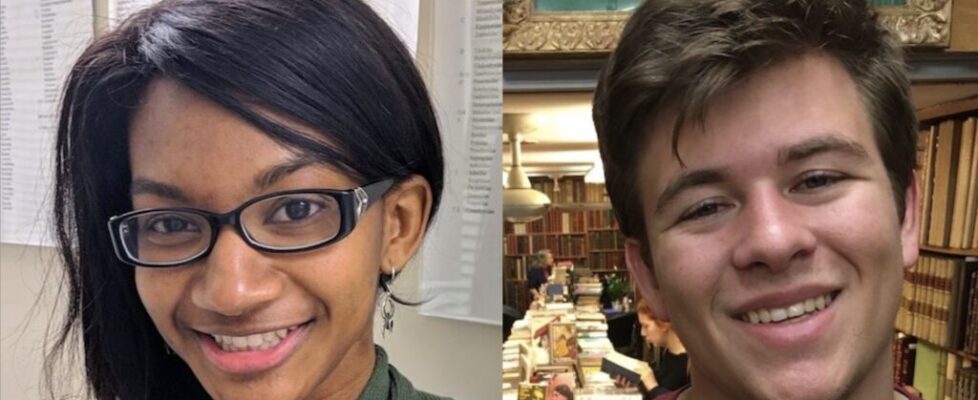
• UC Berkeley geophysicist Caroline Hasler on Measuring Geologic Time with Rock Clocks — In microscopically small crystals within rocks, radioactive elements decay at predictable rates and function as tiny clocks. These “rock clocks” help us to figure out the timing of major events in Earth history — from the moment of Earth’s formation to the asteroid impact that killed the dinosaurs.
• UC Berkeley astronomer Eli Wiston on Seeing Core-collapse Supernovae with Radio Telescopes — At the end of its life, a massive star will contract and explode in spectacular fashion, outshining the light of an entire galaxy. While most astronomers focus on the optical light given off by these stellar explosions, there is a wealth of new information to be gained by observing invisible wavelengths. With radio telescopes, we can study new aspects of supernovae: their stars’ activity in the years before death, their environments, and what they leave behind after the explosion fades.
This interactive science presentation, free and unticketed, is produced by Wonderfest in partnership with Marin Science Seminar.
Wonderfest Science Envoys are early-career researchers with enhanced communication skills and aspirations. Following short talks on provocative modern science topics, these two Science Envoys will answer questions with insight and enthusiasm:
• UC Berkeley astronomer Natalie LeBaron on Origins of the Elements — From the oxygen we breathe to the gold in our jewelry and the calcium in our bones, most periodic table elements are forged by stars. How does the universe transforms simple hydrogen into the rich diversity of atoms that build planets, life, and everything we see around us? Beginning their lives in vast clouds of gas and ending in massive explosions, every star in the night sky creates and scatters ingredients for new worlds.
• UC Berkeley psychologist Colin Jacobs on Children’s Sense of Fairness — Our motivation to enact fairness shapes human behavior across societal and individual levels: from outrage at economic inequalities, to personal protest against not being considered in a discussion. As parents and teachers know, our motivation to insist upon fairness starts early, often through shouts of “that’s not fair,” or very strict regulation of turn-taking. What motivates children to object to unfairness, and how does this moral impulse develop throughout early childhood?
This interactive science presentation, free and unticketed, is produced by Wonderfest in partnership with Marin Science Seminar.

Wonderfest Science Envoys are early-career researchers with enhanced communication skills and aspirations. Following short talks on provocative modern science topics, these two Science Envoys will answer questions with insight and enthusiasm:
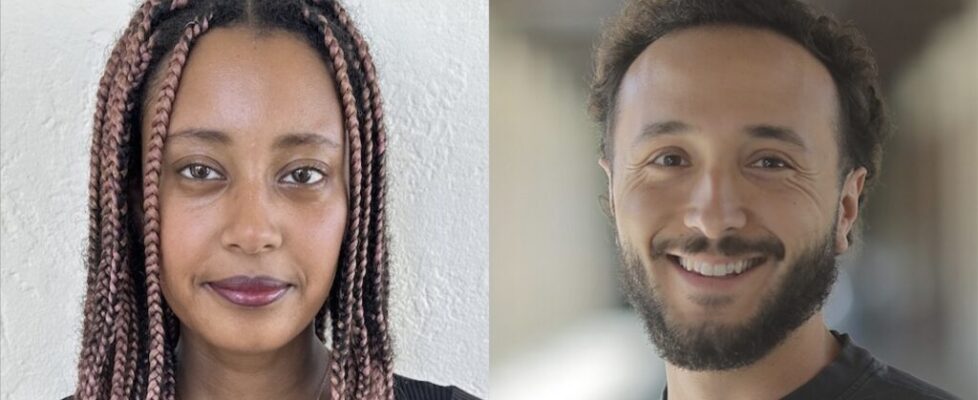
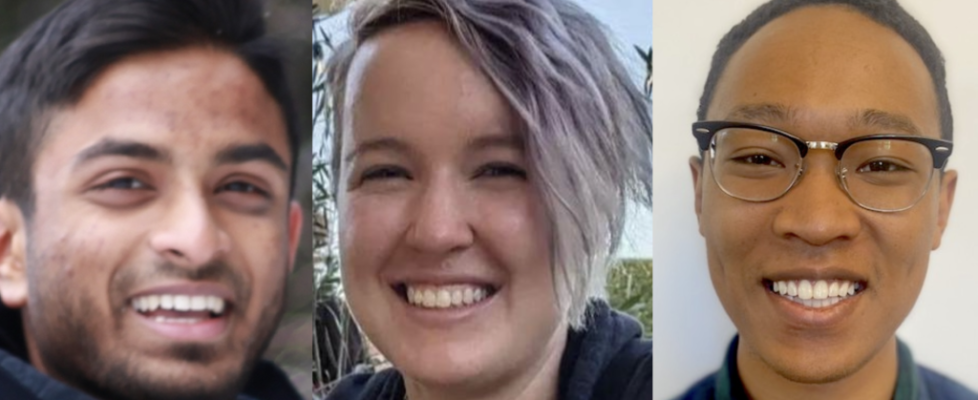
• Stanford physicist Mahlet Shiferaw on Learning Cosmology from Galaxies — The Universe is shaped by an invisible “cosmic web” of dark matter that guides where galaxies form. By comparing observations of galaxies to predictions from models, we can probe the nature of dark matter and dark energy. Cosmologists are now developing new modeling and inference techniques to unlock even more information from upcoming galaxy surveys.
• Stanford biologist Sebastian Somolinos on Give Evolution a Chance — When was the last time you watched evolution happen? Evolution is nature’s most powerful problem solver, yet creatures like horseshoe crabs remind us that it can also be slow and stubbornly conservative. To unlock evolution’s full creative potential, and to appreciate evolution more fully, we must learn how to accelerate it. We need to give evolution a chance.
This interactive science presentation, free and unticketed, is produced by Wonderfest in partnership with Marin Science Seminar.


Wonderfest Science Envoys are early-career researchers with enhanced communication skills and aspirations. Following short talks on provocative modern science topics, these two Science Envoys will answer questions with insight and enthusiasm:
• UC Berkeley astrophysicist Daniel Brethauer on Astronomically Rocking Out to Heavy Metals — The gold in jewelry, the uranium in a nuclear power plant, the caesium in atomic clocks: what do these all have in common? It turns out they were likely forged in the fires of a cosmic explosion known as a kilonova. These extremely energetic events reveal the origins of the periodic table’s heaviest elements.
• UC Berkeley ecologist Tyus Williams on Unraveling the Ecology of Domestic Cats — What if one of our greatest companions is potentially one of our greatest threats? When free to roam, domestic cats can severely disrupt wildlife communities. However, understanding cats’ behavior and how they’re influenced by their surroundings can allow us to develop better conservation strategies.
This interactive science presentation, free and unticketed, is produced by Wonderfest in partnership with Marin Science Seminar.
Wonderfest Science Envoys are early-career researchers with enhanced communication skills and aspirations. Following short talks on provocative modern science topics, these two Science Envoys will answer questions with insight and enthusiasm:
• UC Berkeley neuroscientist Stephanie Reeves on The Horizontal Saccade Bias — Humans make eye movements to explore the visual environment. One type of involuntary eye movement, termed a saccade, occurs 2-3 times per second and is one of the fastest movements that the human body can make. New research challenges previous assumptions about how and why saccades arise.
• Stanford astrophysicist Viraj Manwadkar on Tiny Galaxies and Big Cosmic Mysteries — The very smallest galaxies shed light on fundamental questions in physics and astronomy: They play an intriguing role in the formation of cosmic ecosystems, and they even inform our attempt to understand dark matter, the utterly mysterious stuff that constitutes 80% of the material universe.
This interactive science presentation, free and unticketed, is produced by Wonderfest in partnership with Marin Science Seminar.
Wonderfest Science Envoys are early-career researchers with special communication skills and aspirations. Following short talks on provocative modern science topics, these two Science Envoys will answer questions with insight and enthusiasm:
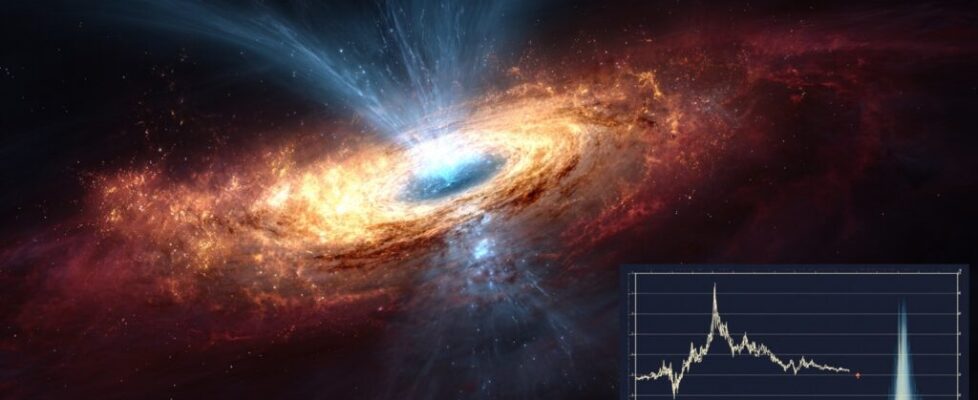
• UC Berkeley astrophysicist Natasha Abrams on Black Holes: Discovering the Invisible — Black holes are among the most extreme objects in the universe. They push the boundaries of our knowledge, holding many unsolved mysteries. This talk will explore black holes from “small” to enormous, including how to detect these invisible marvels. In the process, we will probe the very frontiers of astrophysics.
• Stanford marine biologist Will Johnson on The Structure of Kelp Forests — Kelp forests constitute one of the most diverse ecosystems on Earth, and they’re hidden right beneath the waves of our coastline. To research how these ecosystems function, we need to study what lives there. Come learn how scientific diving and modern genetics are helping us unravel the complex structure of kelp forests.
This interactive science presentation, free and unticketed, is produced by Wonderfest in partnership with Marin Science Seminar.
Wonderfest Science Envoys are early-career researchers with special communication skills and aspirations. Following short talks on provocative modern science topics, these three Science Envoys will answer questions with insight and enthusiasm:
• Stanford ecologist Chinmay Sonawane on How Scavenging Animals Protect Human Health — Wildlife is rapidly disappearing globally. But why should we care? The loss of scavengers (consumers of already-dead animals) provides an intriguing example of how biodiversity loss has had, and will continue to have, profound consequences for human health.
• UC Berkeley physicist Bethany Suter on Direct Detection of Dark Matter — Ubiquitous, yet deeply mysterious, dark matter constitutes 85%(!) of the material universe. What do we know — and not know — of elusive dark matter particles? Novel laboratory materials may allow us to detect dark matter directly, shining light into the pervasive cosmic shadows.
• Stanford biophysicist Sean Waterton on Making Biomolecules from Electricity — Solar panels produce ever-more clean electricity. At the same time, human activity produces copious amounts of CO2. Modern research in synthetic biology allows us to use electricty and CO2 to create valuable molecules like fats and proteins — and, hopefully, more specialized molecules like medications.
This interactive science presentation, free and unticketed, is produced by Wonderfest in partnership with Marin Science Seminar.
What value does this free science experience have for you and, indirectly, for society? Accordingly, please consider making a donation to nonprofit Wonderfest via the Eventbrite box, below.
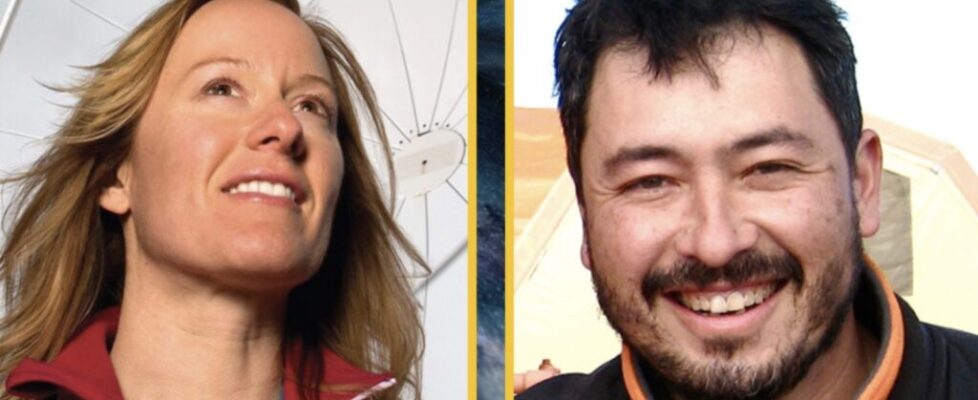
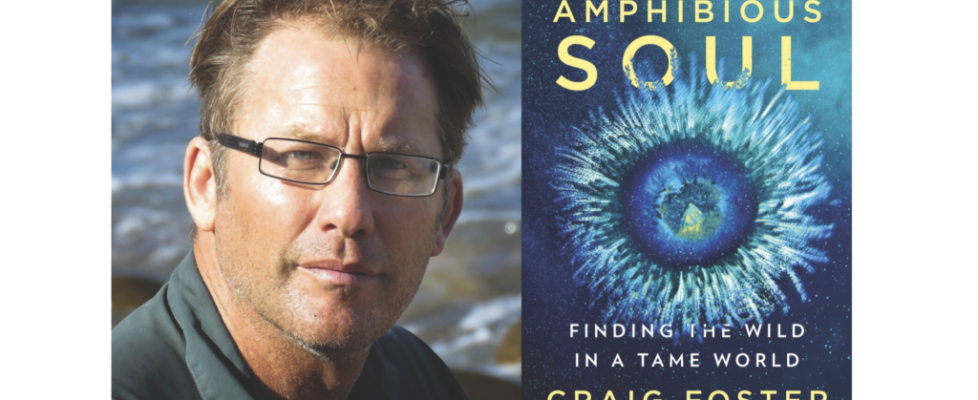
Naturalist Craig Foster has explored and studied some of Earth’s wildest environments. He has also experienced the demands of professional life in our big cities — experiences that might tend to deaden a capacity to appreciate natural beauty. Foster’s latest book, Amphibious Soul: Finding the Wild in a Tame World, vividly addresses the challenge of staying open to the wonders of nature. Of the book, Jane Goodall wrote, “[It] will transform how we think about being human … [and] inspire hope.” In this Commonwealth Club conversation, Foster will help us understand how to attend to earthly beauty and deepen our love for all living things.
Craig Foster is one of Earth’s leading nature filmmakers. Foster’s My Octopus Teacher won the 2021 Academy Award for Best Documentary. We can participate in this Commonwealth+Wonderfest event either in person or online.
Sci-Fi movies often depict hibernation as the secret to long-duration human spaceflight. (Note: Even with ideal starship acceleration and deceleration — AND with the benefit of relativistic effects — the nearest exoplanet is 3.6 years away!) Of course, the boundary between science fiction and science fantasy is hazy. Advances in anesthesia may facilitate hibernation. Physiologically, however, general anesthesia is detrimental in the short term, and worse in the long term. Will long-spaceflight medical advances ever be able to deal with this sobering hibernation fact: roughly half of naturally-hibernating animals never revive!
Our speaker is Dr. Art Wallace, Professor and Vice-Chair of Anesthesiology and Perioperative Care at UC San Francisco. He is also Chief of Anesthesia at San Francisco's Veterans Affairs Medical Center.

This event is FREE and unticketed ... and valuable. But what value does it have for YOU? Accordingly, please consider a donation to nonprofit Wonderfest via the Eventbrite window, below.
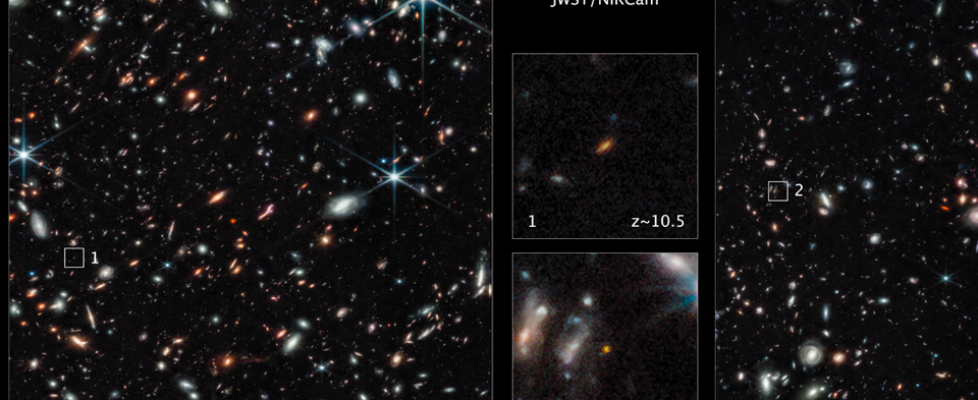
In astronomy, the redder a galaxy appears, the faster it is fleeing, and the older a tale its light can tell. Such “redshifts” in the spectra of galaxies (symbolized with the letter “z”) allow compelling cosmic insights. The recently-launched James Webb Space Telescope (JWST) has allowed astronomers to study the properties of high-z galaxies in existence only 250 million years after the Big Bang, when the universe was only 2% of its current age! How are these objects detected in such very “deep” space, and what are the early science results from this JWST research?
Our speaker is Dr. Thomas Targett, Associate Professor of Physics & Astronomy at the Sonoma campus of California State University. Dr. Targett’s Wonderfest history includes an eye-opening talk entitled Popular Myths of Astronomy, presented as part of the Mt. Tam Astronomy Program.

This event is FREE and unticketed ... and valuable. But what value does it have for YOU? Accordingly, please consider a donation to nonprofit Wonderfest via the Eventbrite window, below.