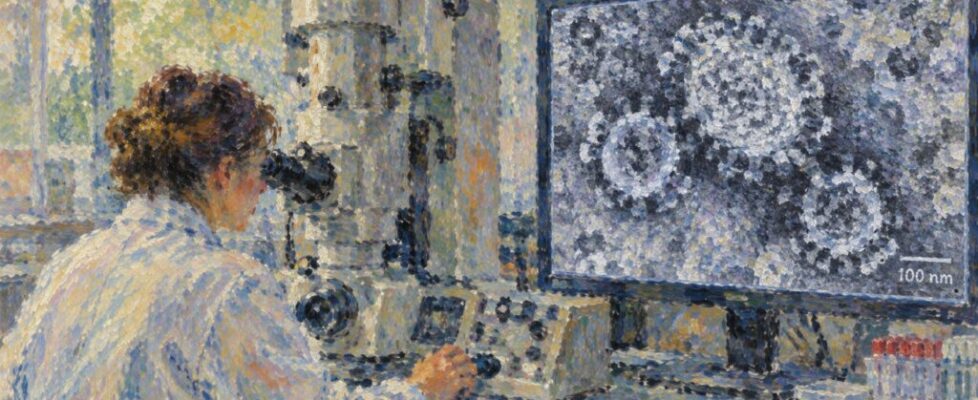
Can we understand biology at the atomic level by looking at a cell’s molecular machinery under the electron microscope? Unfortunately, most human macromolecules are just too small to be studied in noisy, low-contrast images. Now, researchers have imported a 1930s breakthrough in light microscopy to electron microscopy: phase contrast. Physicists are using the world’s most intense continuous-wave laser to quantum-manipulate the wave function of the electron beam to convert small phase shifts into visible image contrast. Macromolecules much smaller than ever are now coming into focus.
Our Wonderfest speaker is Dr. Holger Müller, Professor of Physics at UC Berkeley. He leads the Müller Group in using light to trap molecules and to record subtle biological signals. Dr. Müller also helps the Molecular Biophysics division at Lawrence Berkeley National Lab.
HOW: This event is free and unticketed ... and valuable. But what value does it have FOR YOU (and, indirectly, for society)? Accordingly, please use the DONATE button (below) to support Wonderfest in its nonprofit mission to share the scientific outlook.
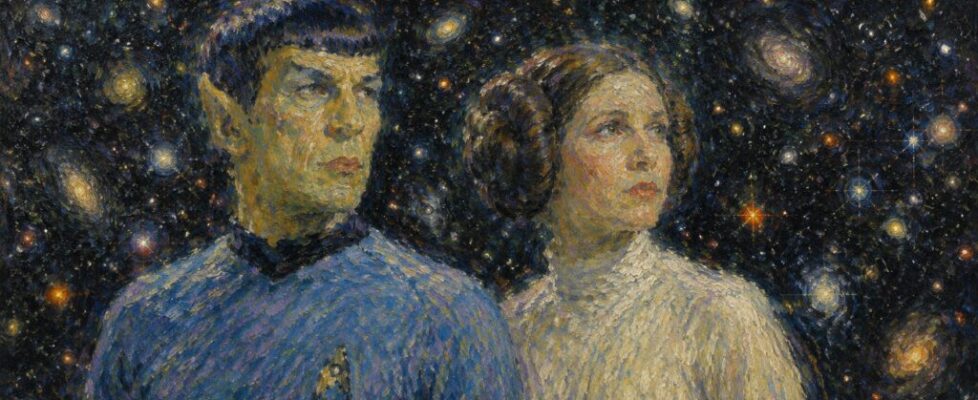
Much of what we think we know about outer space comes from film and television, but Hollywood’s job is more often to entertain than to educate. In this fun and informative presentation, Prof. Thomas Targett will sort fact from fiction, taking a tour through the worlds of Star Trek, Star Wars, and much more.
Dr. Thomas Targett is Professor of Physics & Astronomy at the Sonoma campus of California State University. His 2023 Wonderfest presentation, Fast & Faraway: The High-Redshift Universe, was equally far out. 🙂
HOW: This event is free and unticketed ... and valuable. But what value does it have FOR YOU (and, indirectly, for society)? Accordingly, please use the DONATE button (below) to support Wonderfest in its nonprofit mission to share the scientific outlook.
Just for fun (and for bragging rights), how many science facts lie within your grasp, and within the grasp of a few friends? That beautiful word science originates from the Latin word scientia, meaning “knowledge,” so it covers a lot of ground! This particular bit of information — involving the etymology of “science” — might be precisely what your team needs to claim victory in Wonderfest’s Team Science Quiz: a fun contest with questions, music, and visuals from all fields of science. Play solo or join up to three fellow Wondernauts to form a quiz quartet … and earn Wonderfest bragging rights for years to come.
Our science quiz host is Howard Rachelson, Marin’s Master of Trivia and author of the weekly Trivia Cafe column in the Pacific Sun newspaper.
HOW: This event is free and unticketed ... and valuable. But what value does it have FOR YOU (and, indirectly, for society)? Accordingly, please use the DONATE button (below) to support Wonderfest in its nonprofit mission to share the scientific outlook.
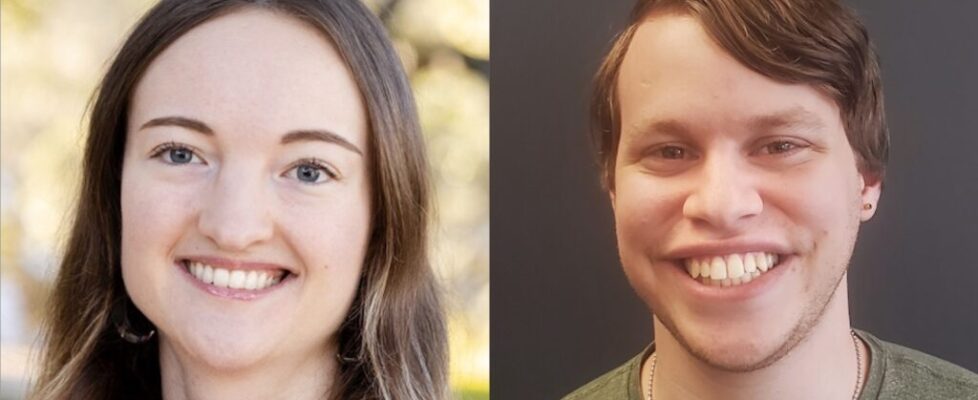
Wonderfest Science Envoys are early-career researchers with enhanced communication skills and aspirations. Following short talks on provocative modern science topics, these two Science Envoys will answer questions with insight and enthusiasm:
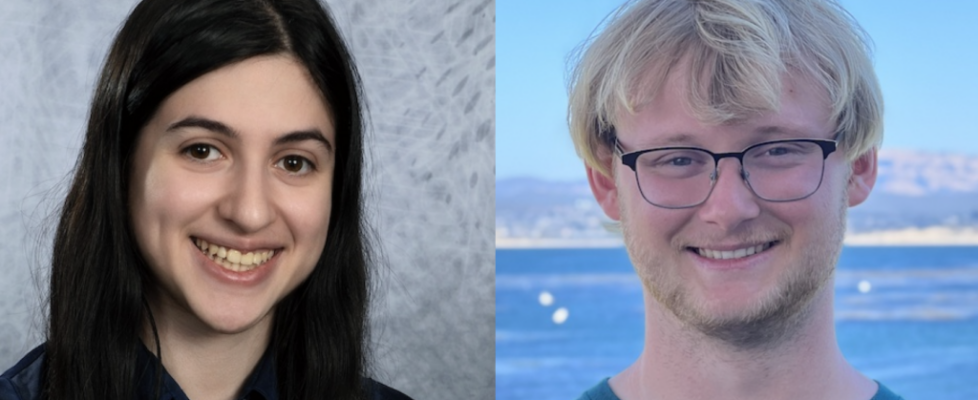
• UC Berkeley geophysicist Caroline Hasler on Measuring Geologic Time with Rock Clocks — In microscopically small crystals within rocks, radioactive elements decay at predictable rates and function as tiny clocks. These “rock clocks” help us to figure out the timing of major events in Earth history — from the moment of Earth’s formation to the asteroid impact that killed the dinosaurs.
• UC Berkeley astronomer Eli Wiston on Seeing Core-collapse Supernovae with Radio Telescopes — At the end of its life, a massive star will contract and explode in spectacular fashion, outshining the light of an entire galaxy. While most astronomers focus on the optical light given off by these stellar explosions, there is a wealth of new information to be gained by observing invisible wavelengths. With radio telescopes, we can study new aspects of supernovae: their stars’ activity in the years before death, their environments, and what they leave behind after the explosion fades.
This interactive science presentation, free and unticketed, is produced by Wonderfest in partnership with Marin Science Seminar.
WHAT: Ask a Science Envoy: RockClocks & Supernovae
HOW: This event is free and unticketed ... and valuable. But what value does it have FOR YOU (and, indirectly, for society)? Accordingly, please use the DONATE button (below) to support Wonderfest in its nonprofit mission to share the scientific outlook.
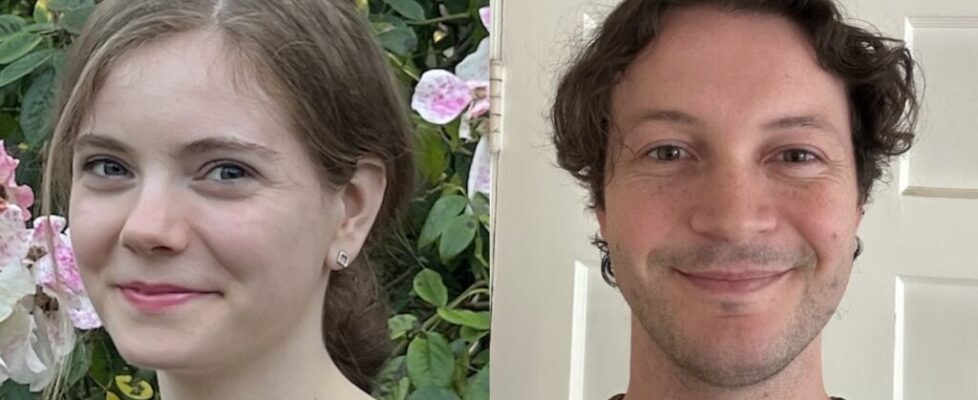
Wonderfest Science Envoys are early-career researchers with enhanced communication skills and aspirations. Following short talks on provocative modern science topics, these two Science Envoys will answer questions with insight and enthusiasm:
• UC Berkeley astronomer Natalie LeBaron on Origins of the Elements — From the oxygen we breathe to the gold in our jewelry and the calcium in our bones, most periodic table elements are forged by stars. How does the universe transforms simple hydrogen into the rich diversity of atoms that build planets, life, and everything we see around us? Beginning their lives in vast clouds of gas and ending in massive explosions, every star in the night sky creates and scatters ingredients for new worlds.
• UC Berkeley psychologist Colin Jacobs on Children’s Sense of Fairness — Our motivation to enact fairness shapes human behavior across societal and individual levels: from outrage at economic inequalities, to personal protest against not being considered in a discussion. As parents and teachers know, our motivation to insist upon fairness starts early, often through shouts of “that’s not fair,” or very strict regulation of turn-taking. What motivates children to object to unfairness, and how does this moral impulse develop throughout early childhood?
This interactive science presentation, free and unticketed, is produced by Wonderfest in partnership with Marin Science Seminar.
HOW: This event is free and unticketed ... and valuable. But what value does it have FOR YOU (and, indirectly, for society)? Accordingly, please use the DONATE button (below) to support Wonderfest in its nonprofit mission to share the scientific outlook.
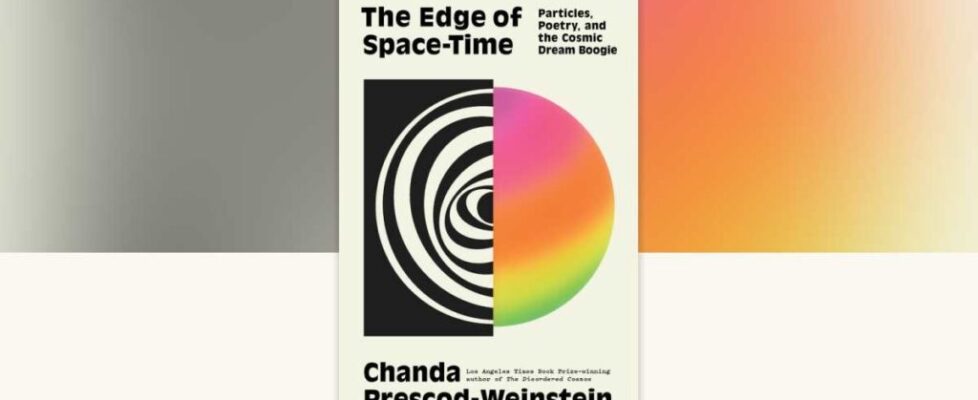
Wonderfest comes to San Francisco’s BookShop West Portal for a special author event featuring cosmologist Dr. Chanda Prescod-Weinstein. In her latest book, The Edge of Space-Time: Particles, Poetry, and the Cosmic Dream Boogie, Dr. Prescod-Weinstein “embraces cosmic wonder and takes us on a mind-altering journey to the boundaries of the universe, inviting us to spend time at the edge of what we know about space-time and about ourselves.”
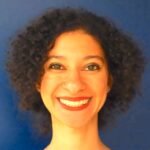
Dr. Chanda Prescod-Weinstein is Associate Professor of Physics and Core Faculty Member in Women’s and Gender Studies at the University of New Hampshire. She is the author of The Disordered Cosmos, and columnist for New Scientist and Physics World magazines.
Dr. Chanda Prescod-Weinstein
WHAT: The Edge of Space-Time
WHO: Dr. Chanda Prescod-Weinstein, Assoc. Professor of Physics, University of New Hampshire [https://chanda.science]
WHERE: BookShop West Portal, 80 West Portal Avenue, San Francisco CA 94127
Most every page of Andy Weir’s latest sci-fi novel, Project Hail Mary, glows with the promise of science and technology. In Weir’s first novel, 2011’s The Martian, the protagonist endures interplanetary travel, and struggles to survive on a harsh new world. However, in Project Hail Mary, the hero faces a far greater challenge: interstellar travel to collaborate with an ET in hope of saving an imperiled planet Earth! Are the wonderful science and technology of Project Hail Mary realistic? We shall see!
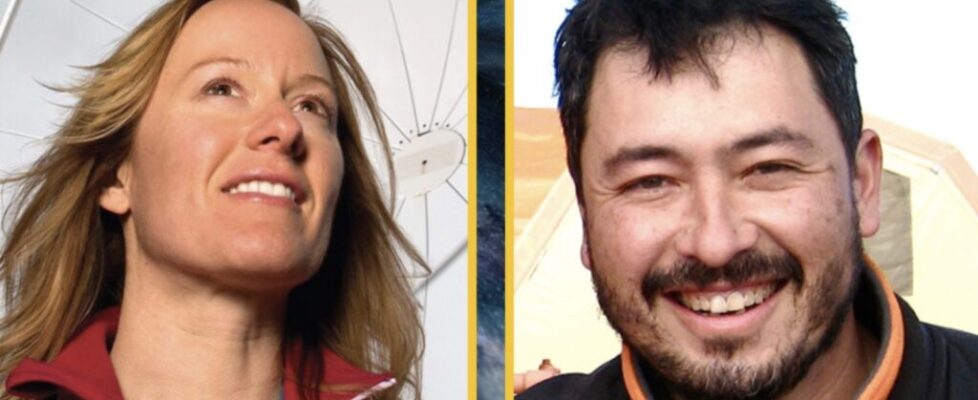
Wonderfest and the SETI Institute join the Commonwealth Club World Affairs to present two wonderful space scientists in conversation about The Science of Project Hail Mary: astrobiologist Dr. Maggie Turnbull and planetary scientist Dr. Pascal Lee.
Two types of tickets are available: in-person and online-only. Pre-register with the Commonwealth Club / World Affairs via the “Tickets” link, below. Use promo code WONDERNAUTS for a $10 ticket discount (which renders the online ticket entirely FREE).
WHERE: The Commonwealth Club, Taube Auditorium, 110 The Embarcadero, San Francisco CA 94105
WHEN: Thursday, March 26 — 6pm (1 hour)
COLLABORATORS: Commonwealth Club World Affairs of California and the SETI Institute
HOW: Get tickets by clicking the "Tickets" box, below. During purchase from the Commonwealth Club, use promo code WONDERNAUTS to secure a discount of $10 for either type of ticket, in-person or online.
The search for life in the universe invites deep exploration of our own world’s 4-billion-year habitability. We begin to see the cosmos as a vast and seamlesss network of relationships — a web that envelops our own Earth and the human heart. In this age of ecological disruption and social fragmentation, the personal journey of one astrobiologist, integrating scientific inquiry with contemplative awareness, can help deepen the capacity for compassion rather than despair. It may even help the next generation to build a healthy, humane, and resilient civilization.
Our Wonderfest speaker is astronomer and astrobiologist Dr.Margaret Turnbull. Maggie does research on planetary habitability at the SETI Institute.
Dr. Maggie Turnbull
WHAT: An Astronomer's View of Life and the Human Heart
WHO: Dr. Maggie Turnbull, Astrobiologist, SETI Institute
HOW: This event is free and unticketed ... and valuable. But what value does it have FOR YOU (and, indirectly, for society)? Accordingly, please use the DONATE button (below) to support Wonderfest in its nonprofit mission to share the scientific outlook.
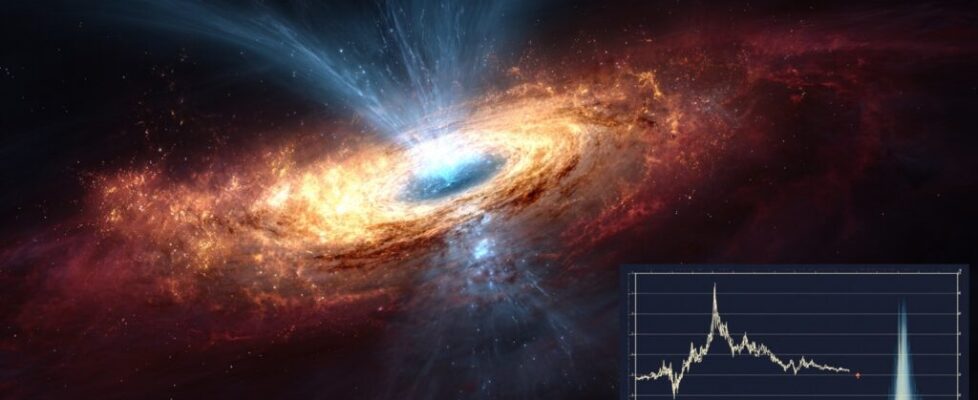
The most energetic phenomena in the universe tend to reveal themselves through intense, short-lived signals. These violent transient events include novae, supernovae, and mergers of both neutron stars and black holes. Their signals — their natural messages — can span the entire electromagnetic spectrum, and may include gravitational waves as well as bursts of subatomic particles. The burgeoning field of multi-messenger astronomy inspires new technical observing abilities as it challenges our understanding of astrophysics. In so many new ways, however, the glorious cosmos and its contents come into clearer focus.
Our Wonderfest speaker is Raffaella Margutti, Associate Professor of both Physics and Astronomy at UC Berkeley. Dr. Margutti received the 2022 New Horizons in Physics Prize, and she advises three recent Wonderfest Science Envoys.
HOW: This event is free and unticketed ... and valuable. But what value does it have FOR YOU (and, indirectly, for society)? Accordingly, please use the DONATE button (below) to support Wonderfest in its nonprofit mission to share the scientific outlook.
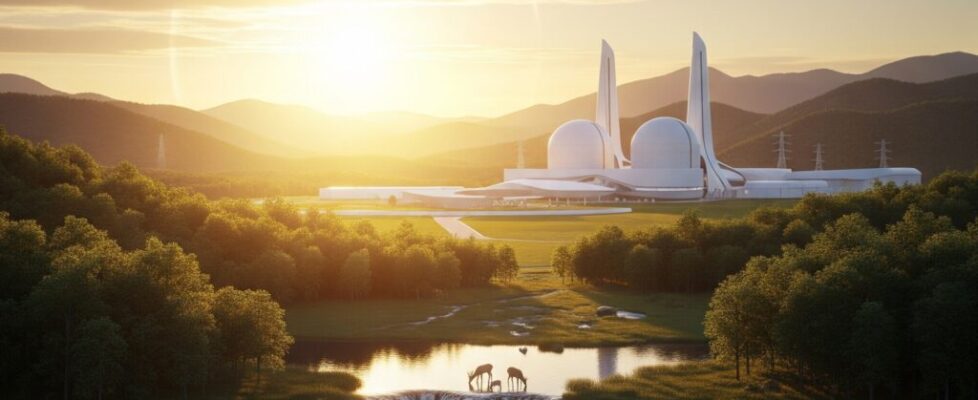
Fusion research aims to bring sun-like energy production safely to Earth. Recent advances have been momentous, including scientific breakthroughs at Lawrence Livermore Lab’s National Ignition Facility, where Earth’s most energetic lasers drive hydrogen atoms to fuse in a controlled thermonuclear reaction. What challenges remain as we work to put the world’s first fusion power plant on the grid?
Our Wonderfest speaker is Ellie Tubman, Assistant Professor of Nuclear Engineering at UC Berkeley. Dr. Tubman was Research Associate at the UK’s Imperial College, London.
Dr. Ellie Tubman
WHAT: The Future of Fusion Energy on Tap
WHO: Dr. Ellie Tubman, Asst. Professor of Nuclear Engineering
HOW: This event is free and unticketed ... and valuable. But what value does it have FOR YOU (and, indirectly, for society)? Accordingly, please use the DONATE button (below) to support Wonderfest in its nonprofit mission to share the scientific outlook.
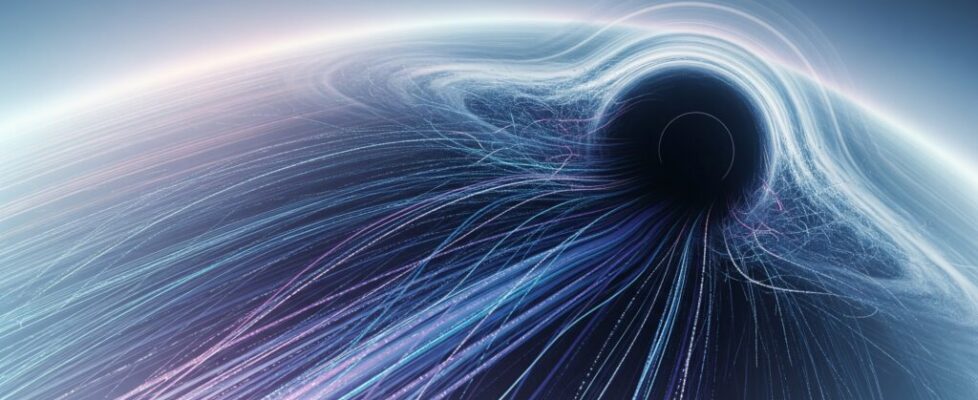
By allowing space and time to bend, Einstein’s theory of gravity, General Relativity, explains how apples fall, how planets move, how the universe expands, and how black holes form. Quantum Mechanics, on the other hand, describes subatomic physics — in a very different language that seems incompatible with General Relativity. Yet, unlike any other classical theory in physics, General Relativity “knows” about Quantum Mechanics. Einstein’s theory allows us to compute how many quantum states a black hole has, and how much quantum information fits in the universe. Somewhat like an oracle, it has revealed to us profound properties of quantum theory that have since been rigorously proven. Amazingly, gravity encodes quantum information using sophisticated tools that are central to emerging quantum technologies.
Our Wonderfest speaker is Raphael Bousso, Professor of Physics at UC Berkeley. Dr. Bousso leads the Bousso Group at the Berkeley Center for Theoretical Physics.
HOW: This event is free and unticketed ... and valuable. But what value does it have FOR YOU (and, indirectly, for society)? Accordingly, please use the DONATE button (below) to support Wonderfest in its nonprofit mission to share the scientific outlook.
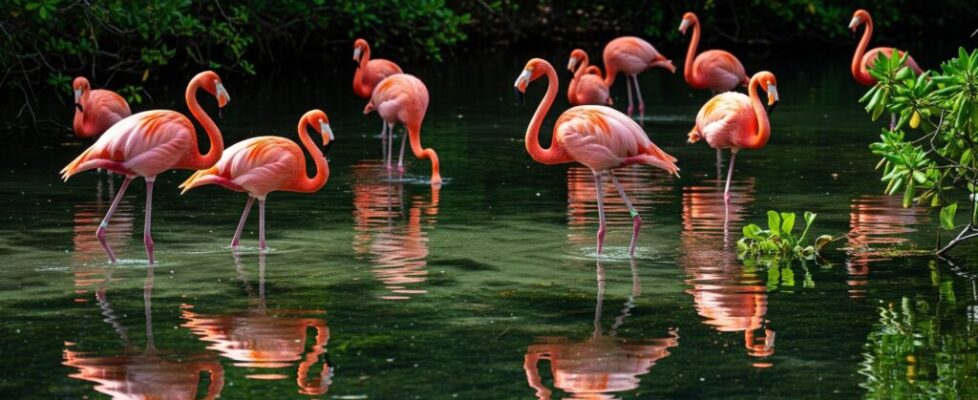
Basic physics shapes the natural world. Through evolution, creatures have figured out how to use the laws of physics to make biology flourish. Flamingos generate water vortices to trap food. Various birds and fish use vortex shedding and fluid turbulence to control movement. For small animals, electrostatic forces and/or capillary forces can reign over gravity to affect the critters’ very survival. Nature is a beautiful dance of biology and physics.
Our speaker is biophysicist Victor M. Ortega Jiménez, Assistant Professor in the Integrative Biology Department at UC Berkeley. Dr. Ortega-Jiménez directs Cal’s Ornithopterus laboratory in organismal dynamics.
Dr. Victor M. Ortega Jiménez
WHAT: Flamingo Vortex Traps: How Physics Redefines Nature
HOW: This event is free and unticketed ... and valuable. But what value does it have FOR YOU (and, indirectly, for society)? Accordingly, please use the DONATE button (below) to support Wonderfest in its nonprofit mission to share the scientific outlook.
When philosopher Thomas Nagel asked, “What is it like to be a bat?”, he was not asking about what it’s like for a human to be a bat — not the experience of, say, Batman. Nagel was vivifying the so-called “hard problem of consciousness”: What is it like for a bat to be a bat? More broadly, what is the nature of a bat’s — or of any — subjective experience? How does brain activity (from a third-person objective point of view) become a first-person feeling (from a subjective point of view)? Perhaps the “relativity” principles of Galileo and Einstein can help us understand this seemingly profound distinction between the first-person point of view (my experience) and the third-person point of view (another’s brain activity) as recognized by neuroscience.
Our speaker, physicist Nir Lahav, is a postdoctoral researcher in the Consciousness and Cognition Lab at Cambridge University. Dr. Lahav has developed what he and philosopher Zachariah Neemeh call ARelativistic Theory of Consciousness.
HOW: This event is free and unticketed ... and valuable. But what value does it have FOR YOU (and, indirectly, for society)? Accordingly, please use the DONATE button (below) to support Wonderfest in its nonprofit mission to share the scientific outlook.
Wonderfest Science Envoys are early-career researchers with enhanced communication skills and aspirations. Following short talks on provocative modern science topics, these two Science Envoys will answer questions with insight and enthusiasm:
• UC Berkeley astrophysicist Daniel Brethauer on Astronomically Rocking Out to Heavy Metals — The gold in jewelry, the uranium in a nuclear power plant, the caesium in atomic clocks: what do these all have in common? It turns out they were likely forged in the fires of a cosmic explosion known as a kilonova. These extremely energetic events reveal the origins of the periodic table’s heaviest elements.
• UC Berkeley ecologist Tyus Williams on Unraveling the Ecology of Domestic Cats — What if one of our greatest companions is potentially one of our greatest threats? When free to roam, domestic cats can severely disrupt wildlife communities. However, understanding cats’ behavior and how they’re influenced by their surroundings can allow us to develop better conservation strategies.
This interactive science presentation, free and unticketed, is produced by Wonderfest in partnership with Marin Science Seminar.
WHAT: Ask a Science Envoy: Kilonova Metals & Cat Ecology
WHO: Daniel Brethauer (UC Berkeley) & Tyus Williams (UC Berkeley), Wonderfest Science Envoys
HOW: This event is free and unticketed ... and valuable. But what value does it have FOR YOU (and, indirectly, for society)? Accordingly, please use the DONATE button (below) to support Wonderfest in its nonprofit mission to share the scientific outlook.
Wonderfest Science Envoys are early-career researchers with enhanced communication skills and aspirations. Following short talks on provocative modern science topics, these two Science Envoys will answer questions with insight and enthusiasm:
• UC Berkeley neuroscientist Stephanie Reeves on The Horizontal Saccade Bias — Humans make eye movements to explore the visual environment. One type of involuntary eye movement, termed a saccade, occurs 2-3 times per second and is one of the fastest movements that the human body can make. New research challenges previous assumptions about how and why saccades arise.
• Stanford astrophysicist Viraj Manwadkar on Tiny Galaxies and Big Cosmic Mysteries — The very smallest galaxies shed light on fundamental questions in physics and astronomy: They play an intriguing role in the formation of cosmic ecosystems, and they even inform our attempt to understand dark matter, the utterly mysterious stuff that constitutes 80% of the material universe.
This interactive science presentation, free and unticketed, is produced by Wonderfest in partnership with Marin Science Seminar.
WHAT: Ask a Science Envoy: Eye Movements & Tiny Galaxies
HOW: This event is free and unticketed ... and valuable. But what value does it have FOR YOU (and, indirectly, for society)? Accordingly, please use the DONATE button (below) to support Wonderfest in its nonprofit mission to share the scientific outlook.
Wonderfest Science Envoys are early-career researchers with special communication skills and aspirations. Following short talks on provocative modern science topics, these two Science Envoys will answer questions with insight and enthusiasm:
• UC Berkeley astrophysicist Natasha Abrams on Black Holes: Discovering the Invisible — Black holes are among the most extreme objects in the universe. They push the boundaries of our knowledge, holding many unsolved mysteries. This talk will explore black holes from “small” to enormous, including how to detect these invisible marvels. In the process, we will probe the very frontiers of astrophysics.
• Stanford marine biologist Will Johnson on The Structure of Kelp Forests — Kelp forests constitute one of the most diverse ecosystems on Earth, and they’re hidden right beneath the waves of our coastline. To research how these ecosystems function, we need to study what lives there. Come learn how scientific diving and modern genetics are helping us unravel the complex structure of kelp forests.
This interactive science presentation, free and unticketed, is produced by Wonderfest in partnership with Marin Science Seminar.
WHAT: Ask a Science Envoy: Black Holes; Kelp Forests
WHO: Natasha Abrams (UC Berkeley) & Will Johnson (Stanford), Wonderfest Science Envoys
HOW: What value does this free science experience have for you and, indirectly, for society? Accordingly, please donate to nonprofit Wonderfest via the Eventbrite box, below.
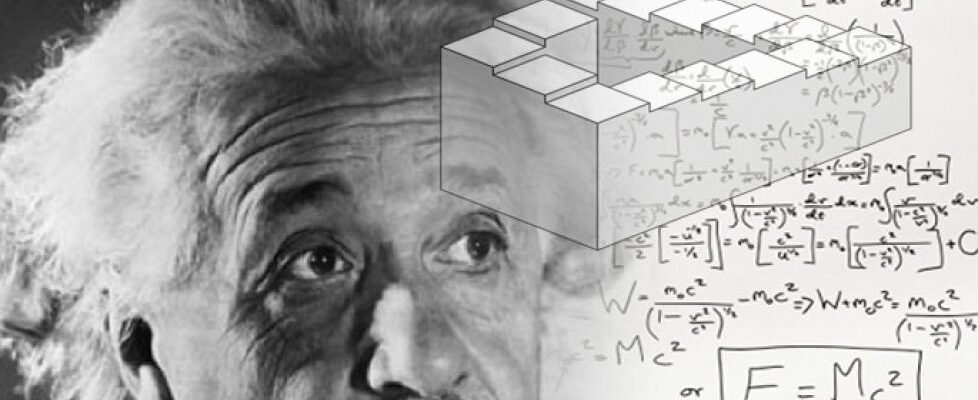
Around the world, people recognize that E=mc^2 oozes cosmic insight. But what does this “most famous equation” really say? What are energy and mass? And what makes the speed of light, c, so important? [Hint: mass, moving at speed c, doesn’t turn into energy!] Using little more than common experience and middle-school math, Einstein’s “special relativity” gem can come to life — with surprising insights into the nature of reality.
Our speaker is long-time physics teacher Tucker Hiatt, founding director of Wonderfest. Tucker has been a Visiting Scholar in the Stanford Chemistry Department, and is a recipient of the Amgen Award for Science Teaching Excellence.
WHEN: 2024-08-13 — 7pm, Tuesday, Aug 13 (1.5 hour)
HOW:
This event is free and unticketed ... and valuable. But what value do such science experiences have for you and, indirectly, for society? Accordingly, please consider making a donation to nonprofit Wonderfest via the Eventbrite box, below.
Wonderfest Science Envoys are early-career researchers with special communication skills and aspirations. Following short talks on provocative modern science topics, these three Science Envoys will answer questions with insight and enthusiasm:
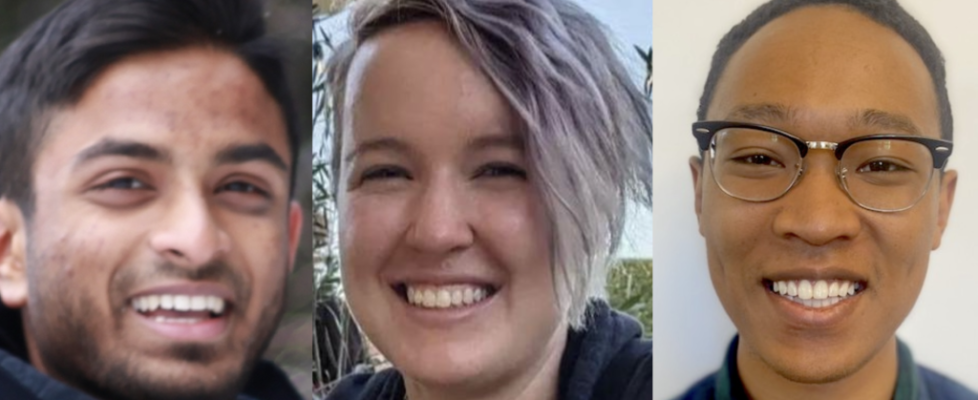
• Stanford ecologist Chinmay Sonawane on How Scavenging Animals Protect Human Health — Wildlife is rapidly disappearing globally. But why should we care? The loss of scavengers (consumers of already-dead animals) provides an intriguing example of how biodiversity loss has had, and will continue to have, profound consequences for human health.
• UC Berkeley physicist Bethany Suter on Direct Detection of Dark Matter — Ubiquitous, yet deeply mysterious, dark matter constitutes 85%(!) of the material universe. What do we know — and not know — of elusive dark matter particles? Novel laboratory materials may allow us to detect dark matter directly, shining light into the pervasive cosmic shadows.
• Stanford biophysicist Sean Waterton on Making Biomolecules from Electricity — Solar panels produce ever-more clean electricity. At the same time, human activity produces copious amounts of CO2. Modern research in synthetic biology allows us to use electricty and CO2 to create valuable molecules like fats and proteins — and, hopefully, more specialized molecules like medications.
This interactive science presentation, free and unticketed, is produced by Wonderfest in partnership with Marin Science Seminar.
WHAT: Ask a Science Envoy: Scavengers + Dark Matter + Biomolecules
What value does this free science experience have for you and, indirectly, for society? Accordingly, please consider making a donation to nonprofit Wonderfest via the Eventbrite box, below.
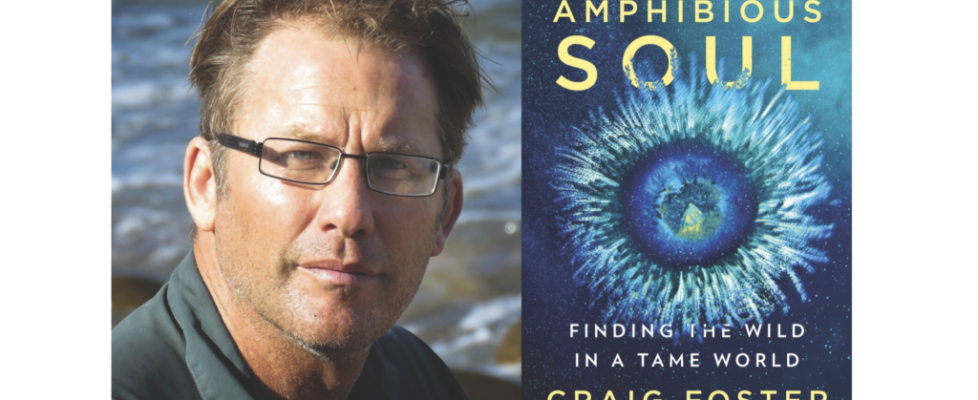
Naturalist Craig Foster has explored and studied some of Earth’s wildest environments. He has also experienced the demands of professional life in our big cities — experiences that might tend to deaden a capacity to appreciate natural beauty. Foster’s latest book, Amphibious Soul: Finding the Wild in a Tame World, vividly addresses the challenge of staying open to the wonders of nature. Of the book, Jane Goodall wrote, “[It] will transform how we think about being human … [and] inspire hope.” In this Commonwealth Club conversation, Foster will help us understand how to attend to earthly beauty and deepen our love for all living things.
Craig Foster is one of Earth’s leading nature filmmakers. Foster’s My Octopus Teacher won the 2021 Academy Award for Best Documentary. We can participate in this Commonwealth+Wonderfest event either in person or online.
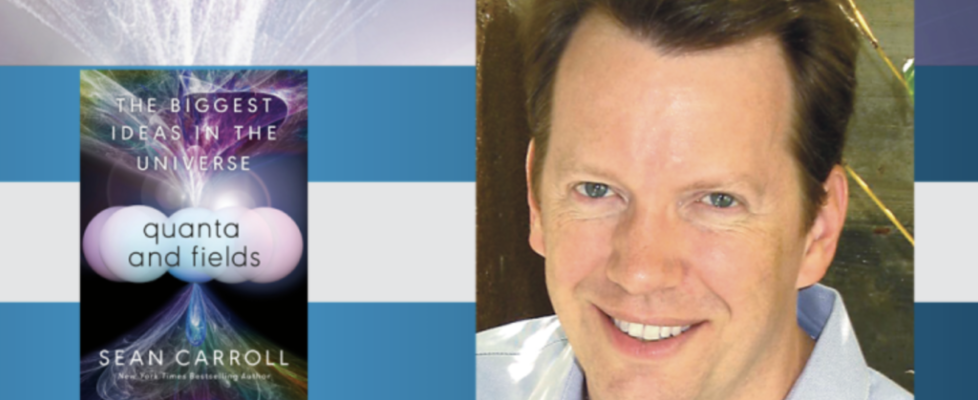
Arguably, quantum field theory (QFT) presents humanity’s deepest insights into the rules of reality, i.e., into the laws of existence. QFT allows us to describe — with remarkable accuracy — the particles and forces that animate the cosmos, including the stuff of mind and body. Note that calling QFT a theory pays the highest scientific compliment: QFT has vast scope, and QFT is supported by an extraordinary amount of evidence.
Wonderfest and the Commonwealth Club present physicist Sean Carroll to discuss key ideas in his latest book, The Biggest Ideas In the Universe: Quanta and Fields. As in his first Biggest Ideas book (Space, Time, and Motion), Dr. Carroll goes beyond analogies to show how physicists really think about nature’s underlying principles.
WHEN: 2024-05-14 — 3pm PT, Tuesday, May 14 (1 hour)
COLLABORATORS: The Commonwealth Club of California
HOW:
Use the "Tickets" link (below) to access the Commonwealth Club's event webpage. During online ticket purchase, use discount code WONDERFESTPROMO for a ticket price reduction of $10, making this entire Sean Carroll online experience FREE.