Particle Fever: Film Screening with Special Commentary, Feb 10
“Mind blowing.” – New York Times “It plays out with all the suspense of a thriller.” – Washington Post
Imagine being able to watch as Edison turned on his first light bulb, or as Franklin received his first jolt of electricity. Particle Fever follows six brilliant scientists during the launch of the Large Hadron Collider, marking the start-up of the biggest and most expensive experiment in the history of the planet, pushing the edge of human innovation.
- WHAT: Particle Fever: Film Screening with Special Commentary
- WHO: David Kaplan, Producer, Physicist, Co-Star
- WHEN: 6:30 PM, Tuesday, February 10, 2015
- WHERE: Lucie Stern Theater, 1305 Middlefield Road, Palo Alto <http://tinyurl.com/
kqp8lfj> - HOW: Co-produced with Commonwealth Club Silicon Valley. For full “Member” ticket discount, please follow these instructions:
1. Visit <http://www.commonwealthclub.org/events/2015-02-10/ particle-fever-special-film- screening>.
2. Add General Admission Member tickets into basket.
3. Proceed to Check Out page, and enter ticket & credit card info.
4. For the Member ID, enter wonderfest.
Wonderfest works every day to promote the scientific outlook. For as little as $1/month, why not become a Wonderfest Patron? As the Medici family were patrons of popular art in old Italy, you can become a patron of popular science and rationality in the modern Bay Area. (And you’ll get that tax-deduction that the Medici never did!) Please become a regular supporter of Wonderfest, and help enlarge the concept of scientific community.
If you shop at Amazon.com, why not shop at AmazonSmile? It doesn’t cost you a dime extra, selection and prices are the same, and a small percent supports Wonderfest and science! http://amazon.wonderfest.org.
Watch more videos: http://videos.wonderfest.org
Join us on:
http://facebook.com/wonderfest
http://twitter.com/wonderfest
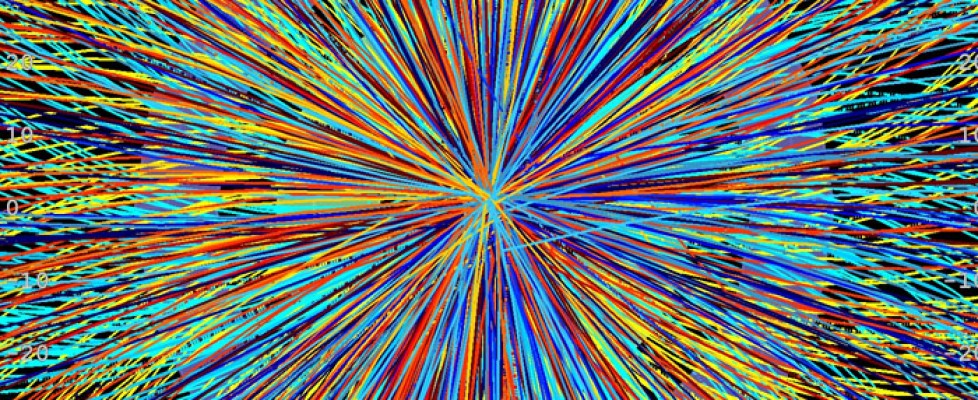
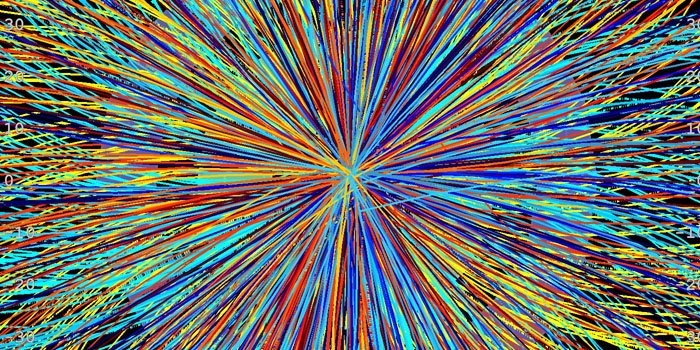
Photo: One of the LHC’s first lead-ion collisions, as recorded by the ALICE detector’s Inner Tracking System.
http://ow.ly/He9II