

Quantum Strangeness Beneath Our Everyday World
 Quantum theory is our best description of the micro-world. Quantum phenomena underly all processes in nature (except possibly gravitation). Some of these phenomena — superposition and entanglement, in particular — seem very strange to those of us living and functioning in the macro-world. Please join UC Berkeley’s Dr. Birgitta Whaley in exploring how quantum strangeness works — in nature and in information and computation — to make many important processes possible that we take for granted.
- WHAT: The Quantum Strangeness Beneath Our Everyday World
- WHO: Prof. Birgitta Whaley, Director, Quantum Information & Computation Center, UC Berkeley <http://www.cchem.berkeley.edu/kbwgrp/>
- WHEN: 7pm, Monday, July 6, 2015
- WHERE: PianoFight, 144 Taylor Street, San Francisco, CA <http://www.pianofight.com/>
- HOW: Please register below.
- WHY: Because we’re curious creatures.
Wonderfest works every day to promote the scientific outlook. For as little as $1/month, why not become a Wonderfest Patron? As the Medici family were patrons of popular art in old Italy, you can become a patron of popular science and rationality in the modern Bay Area. (And you’ll get that tax-deduction that the Medici never did!) Please become a regular supporter of Wonderfest, and help enlarge the concept of scientific community.
If you shop at Amazon.com, why not shop at AmazonSmile? It doesn’t cost you a dime extra, selection and prices are the same, and a small percent supports Wonderfest and science! http://amazon.wonderfest.org.
Watch more videos: http://videos.wonderfest.org
Join us on:
http://facebook.com/wonderfest
http://twitter.com/wonderfest
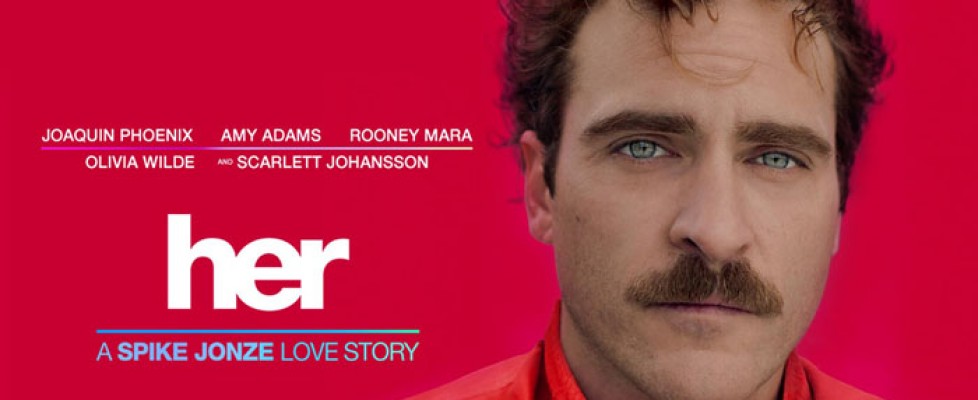
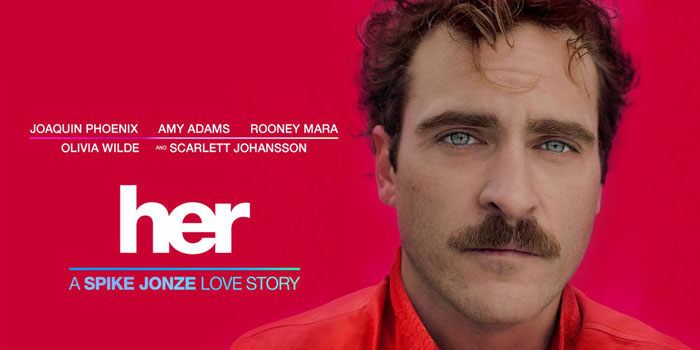 It’s a great pleasure of modern life to watch a wonderful movie, and then to discuss it with a smart friend. Even better when the movie is Her, Spike Jonze’s 2013 sci-fi-rom-com about a man who falls in love with a female-voiced operating system (think Siri) — and the smart friend is Peter Norvig, world expert in artificial intelligence.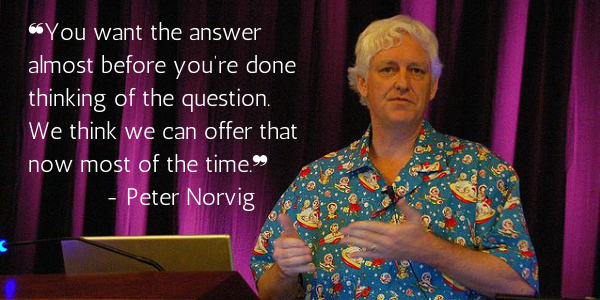
 Can 21st-century molecular biology answer age-old questions about the human experience? Can studying proteins and DNA help us understand how we make our choices in sex and love? How we communicate? Where our emotions come from? Or why we age and die? Using stories of people and animals, Peter Schattner will show how the amazing new world of molecular biology is revolutionizing our understanding of what it means to be human.
 Mathematician Blaise Pascal famously wrote, “The heart has reasons that reason cannot comprehend.” Perhaps. But, on Valentine’s Day Eve, and with the expert help of UCSF’s Thomas Lewis, Wonderfest and Ask a Scientist will give comprehension a try.
 What if our soundest, most reasonable judgments are beyond our control? Are the feelings of being rational and having free will generated by conscious decisions or involuntary brain mechanisms? Is there a way to resolve the conflict between our innate biology and our traditional beliefs? Dr. Robert A. Burton, author of A Skeptic’s Guide to the Mind, reveals what neuroscience can (and cannot) tell us about ourselves.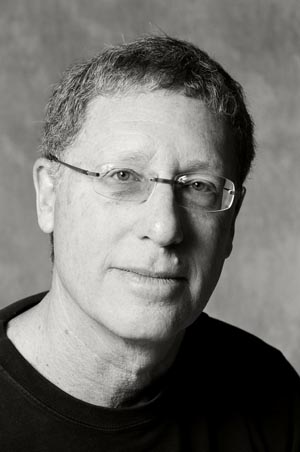
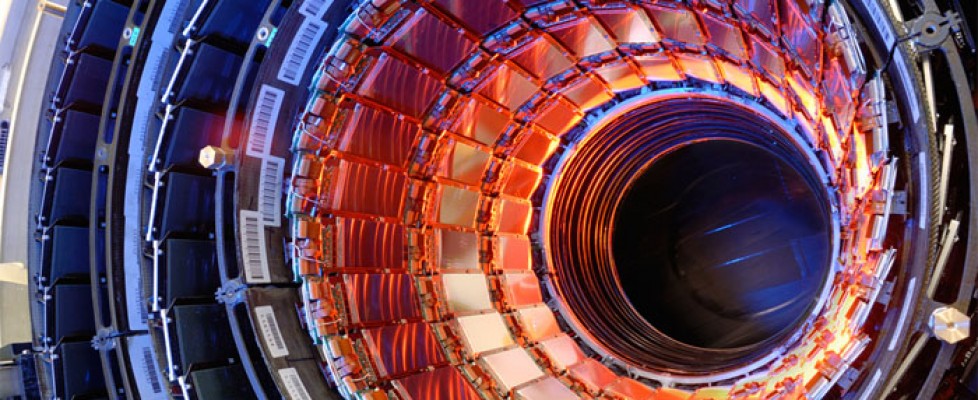

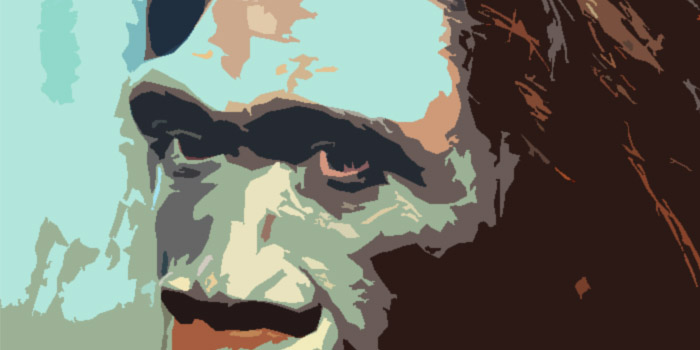 Who’s your (ancient) daddy? Did he walk upright? Could he control fire? Did he have a brow ridge that wouldn’t quit?! Then maybe he was a Homo of the erectus — not so sapient — type. Many new Homo erectus specimens have been added to the global repository in the past decades, and many new interpretations have followed. It is more that most can easily digest. Come join professor Henry Gilbert, discoverer of the
 Come laugh with Dr. Norm Goldblatt, physicist and laser engineer. He’ll take you on a tour of his crazy world that unites left and right brain. Come one come all, young or old. NOT for geeks only. Everyone will enjoy thinking and giggling. Laugh AT him or WITH him; he doesn’t care.