
Cosmology & Evolution – Apr 14
Wonderfest Science Envoys are early-career researchers with enhanced communication skills and aspirations. Following short talks on provocative modern science topics, these two Science Envoys will answer questions with insight and enthusiasm:
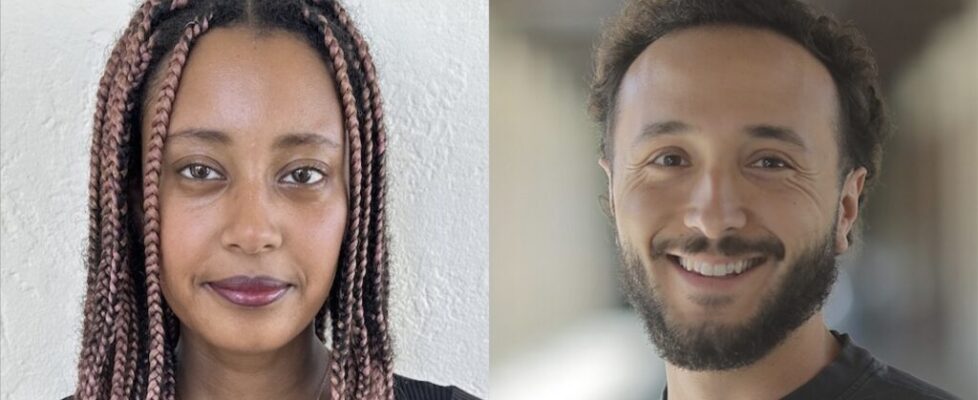
• Stanford physicist Mahlet Shiferaw on Learning Cosmology from Galaxies — The Universe is shaped by an invisible “cosmic web” of dark matter that guides where galaxies form. By comparing observations of galaxies to predictions from models, we can probe the nature of dark matter and dark energy. Cosmologists are now developing new modeling and inference techniques to unlock even more information from upcoming galaxy surveys.
• Stanford biologist Sebastian Somolinos on Give Evolution a Chance — When was the last time you watched evolution happen? Evolution is nature’s most powerful problem solver, yet creatures like horseshoe crabs remind us that it can also be slow and stubbornly conservative. To unlock evolution’s full creative potential, and to appreciate evolution more fully, we must learn how to accelerate it. We need to give evolution a chance.
This interactive science presentation, free and unticketed, is produced by Wonderfest in partnership with Marin Science Seminar.
Marin Science Seminar [https://marinscienceseminar.com]

Strong Aging – Jan 25
What can we do, today, to improve muscle strength and, accordingly, to increase healthy longevity, i.e., healthspan? It starts by understanding the science of strength and of muscle function, and then appreciating how muscle changes with aging. Ultimately, we find that healthspan increases with simple and effective evidence-based strategies for improving muscle health and function.
Our speaker, Dr. Greg Tranah, PhD, is Professor of Epidemiology & Biostatistics at UC San Francisco. He is also Senior Scientist at California Pacific Medical Center Research Institute.
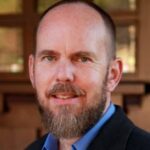
Dr. Greg Tranah
Berkeley Public Library [www.berkeleypubliclibrary.org]

Pills For Aging – Oct 24
How did society enable the distribution of drugs and supplements — principally in the form of pills — to billions of people? How, in particular, did “anti-aging treatments” come about? Can vitamins be efficacious against aging? Finally, what is the promise of recent supplements — developed based on our understanding of cellular biology — that influence aging in cells and model organisms, mainly mice?
Our speaker, Dr. Steve Cummings, is Professor Emeritus of Medicine, Epidemiology, and Biostatistics at UCSF. Dr. Cummings directs the San Francisco Coordinating Center, having designed and led many of the most important medical studies of human aging.
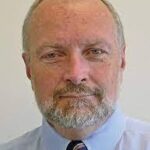
Dr. Steve Cummings
This event is FREE and unticketed ... and valuable. But what value does it have for YOU? Accordingly, please consider a donation to nonprofit Wonderfest via the Eventbrite window, below.

Healthy Aging – Aug 29
Modern insights into wise exercise, sleep, and diet are enhancing healthspan, the years of healthy life that one actually enjoys. This presentation focuses on human clinical data with actionable recommendations for lifestyle choices that can maximize the healthy years of life.
Our speaker, Dr. Greg Tranah, is Professor of Epidemiology and Biostatistics at UC San Francisco. He is also Director of Genetic Research at California Pacific Medical Center.
Dr. Greg Tranah, PhD
Since Wonderfest is COVID-cautious, consider wearing a mask (provided upon request). The warm feeling of Wondernaut(!) camaraderie radiates through masks and across wide seat-spacing.
This event is FREE and unticketed ... and valuable. But what value does it have for YOU? Accordingly, please consider a donation to nonprofit Wonderfest via the Eventbrite window, below.
Animal Behavior; Machine Learning – Apr 11
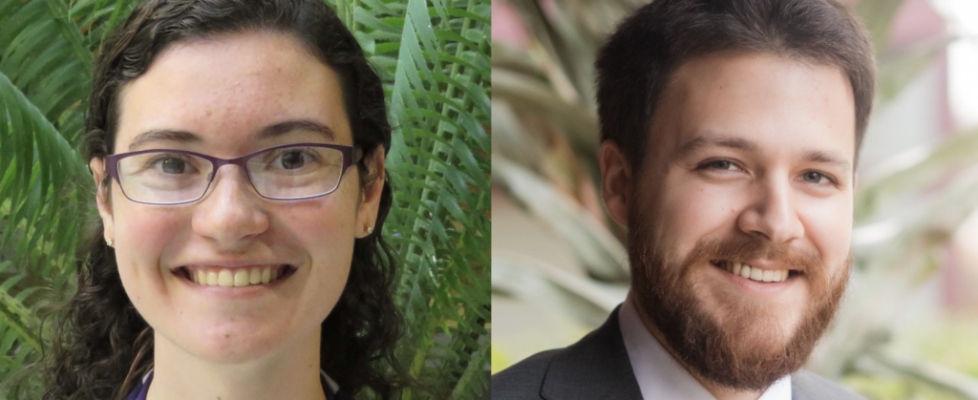
Wonderfest Science Envoys are early-career researchers with special communication skills and aspirations. Following short talks on provocative modern science topics, these two Science Envoys will answer questions with insight and enthusiasm:
• UC Berkeley zoologist Erin Person on What’s the Point? Animal Behavior and the Value of Niche Science — We share our planet with many strange and wonderful animals. As David Attenborough has taught us, their ways of life can be fascinating. But beyond satisfying our curiosity, studying animals can teach us about evolution, ecosystems, and even ourselves.
• Stanford statistician Ben Seiler on Understanding Machine Learning — Computers automate important decisions across our society. Unfortunately, we cannot always understand how and why complex algorithms and statistical models are making these decisions! How can we make such machine learning more transparent and interpretable?
This event is free. But what value do these science insights have FOR YOU? Accordingly, please use the space below to contribute to nonprofit Wonderfest, and help to promote the scientific outlook broadly — as through our outstanding Science Envoy Program.
Awe; Big Data – Apr 22
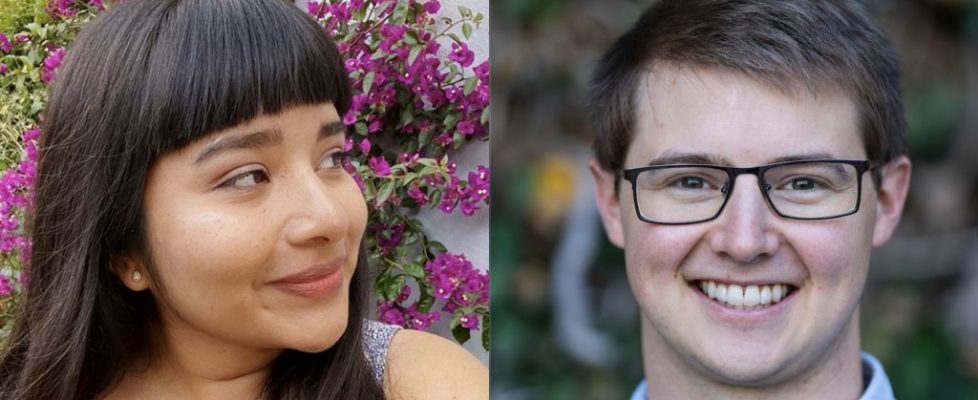
Wonderfest Science Envoys are early-career researchers with special communication skills and aspirations. Following short talks on provocative modern science topics, these two Science Envoys will answer questions with insight and enthusiasm:
• UC Berkeley psychologist Rebecca Corona on The Many Faces of Awe — Awe is unlike any other emotion. It possesses the power to grab us, shake us, and change the way we see the universe. Psychological research in national forests and during the COVID-19 pandemic helps us to plumb the depths — and the many aspects — of awe.
• UC Berkeley statistician Stephen Bates on Being Honest with Big Data — Huge datasets now touch every part of our lives, and this explosion of information allows scientists to ask (and answer!) more questions than ever. But the more questions we ask, the more easily we fall prey to the “cherry-picking” fallacy. New ideas from statistics allow scientists to make honest assessments of the evidence in big data.
This event is FREE. But what value do these science insights have FOR YOU? Accordingly, please use the space below to contribute to nonprofit Wonderfest, and help to promote the scientific outlook broadly — as through our outstanding Science Envoy Program.
Love in the Time of Facebook
Facebook is a great way to share news, keep in touch with friends, and make fun of old photos. It’s also a gold mine of information about human relationships. Data scientists have studied the communications of people who change their Facebook relationship status from “Single” to “In a relationship.” We now know how their timeline posts change, and how their use of positive wording (“love,” “nice,” “happy,” etc.) evolve. Aggregate, anonymized Facebook data tells us a lot about the formation of love, its duration, its stages, and the role of other factors like religion and age. Join Facebook scientist Dr. Carlos Diuk as he mines the data to explore love and relationships in the modern era.
- WHAT: Love in the Time of Facebook
- WHO: Dr. Carlos Diuk, Facebook Data Scientist
- WHEN: 7pm, Wednesday, March 18, 2015
- WHERE: Patreon HQ, 230 – 9th Street, San Francisco (close to BART Civic Center) <http://tinyurl.com/lljx2da>
- HOW: Purchase $5 tickets via Eventbrite, below. Complimentary snacks & drinks provided by Patreon. Co-produced with Ask a Scientist.
- WHY: Because we’re curious creatures.
Wonderfest works every day to promote the scientific outlook. For as little as $1/month, why not become a Wonderfest Patron? As the Medici family were patrons of popular art in old Italy, you can become a patron of popular science and rationality in the modern Bay Area. (And you’ll get that tax-deduction that the Medici never did!) Please become a regular supporter of Wonderfest, and help enlarge the concept of scientific community.
If you shop at Amazon.com, why not shop at AmazonSmile? It doesn’t cost you a dime extra, selection and prices are the same, and a small percent supports Wonderfest and science! http://amazon.wonderfest.org.
Watch more videos: http://videos.wonderfest.org
Join us on:
http://facebook.com/wonderfest
http://twitter.com/wonderfest