
Synthetic Astrobiology – Jun 9

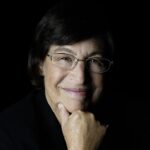
Dr. Lynn Rothschild

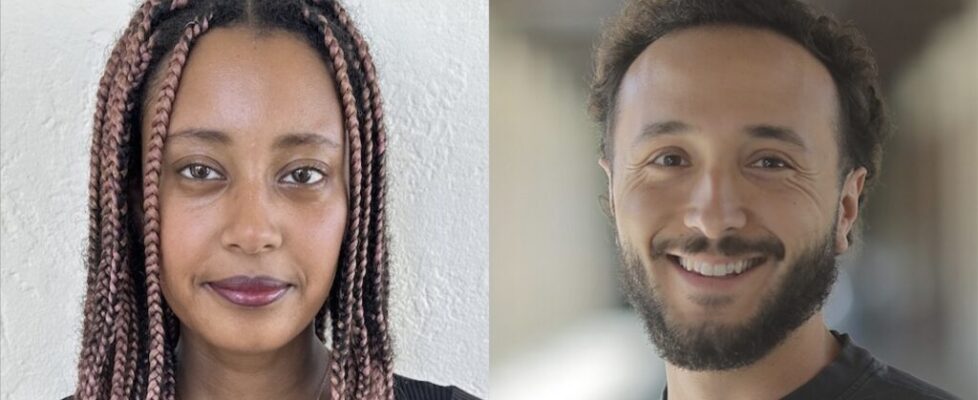
Wonderfest Science Envoys are early-career researchers with enhanced communication skills and aspirations. Following short talks on provocative modern science topics, these two Science Envoys will answer questions with insight and enthusiasm:
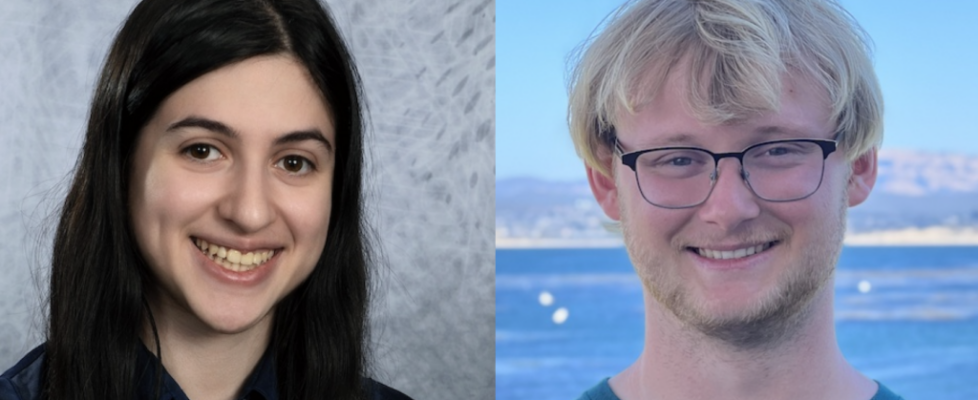
• Stanford physicist Mahlet Shiferaw on Learning Cosmology from Galaxies — The Universe is shaped by an invisible “cosmic web” of dark matter that guides where galaxies form. By comparing observations of galaxies to predictions from models, we can probe the nature of dark matter and dark energy. Cosmologists are now developing new modeling and inference techniques to unlock even more information from upcoming galaxy surveys.
• Stanford biologist Sebastian Somolinos on Give Evolution a Chance — When was the last time you watched evolution happen? Evolution is nature’s most powerful problem solver, yet creatures like horseshoe crabs remind us that it can also be slow and stubbornly conservative. To unlock evolution’s full creative potential, and to appreciate evolution more fully, we must learn how to accelerate it. We need to give evolution a chance.
This interactive science presentation, free and unticketed, is produced by Wonderfest in partnership with Marin Science Seminar.
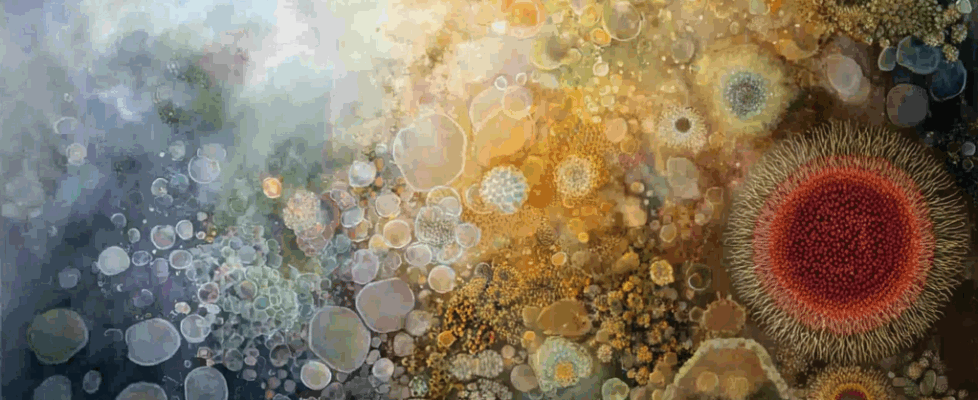
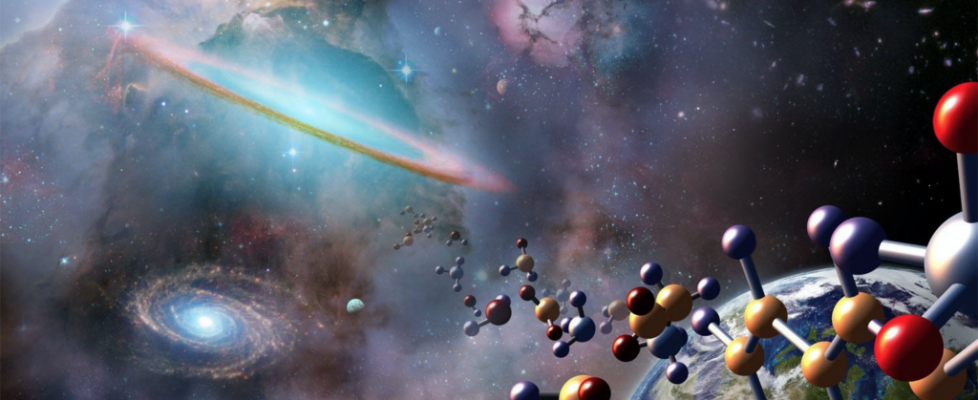
It’s an age-old question: How did life come about? Even the simplest creatures that exhibit the two hallmarks of life, namely metabolism and replication, are astoundingly complex. While the search for life’s origin has fascinated humans for centuries, recent breakthroughs point us in a more conclusive direction, and have remarkable implications. Among important side insights are the unexpected similarities between prebiotic and human innovation, and the central role that energy and information have played in transforming the planet over the last 4 billion years, leading right up to the present climate crisis.
Our Wonderfest speaker, Dr. Charles Marshall, is Distinguished Professor of Integrative Biology at UC Berkeley. He is also Director of the University of California Museum of Paleontology.

Diet, exercise, connection, and sleep are four key determining factors in human health. Sleep, in particular, plays a critical role in recovery and resilience. Fortunately, recent eye-opening (*ahem*) research can help us harness sleep science to improve everyday life and long-term health.
Our Wonderfest speaker, Greg Tranah, PhD, is Professor of Epidemiology & Biostatistics at UC San Francisco. He is also Senior Scientist at California Pacific Medical Center Research Institute.

Science is for everyone, and benefits everyone. But American science is in deep trouble. In a podcast entitled Cuts to Science Funding and Why They Matter, physicist and author Sean Carroll thunders that recent presidential executive orders constitute “an absolutely devastating blow to the way science gets done in the United States.” On Friday afternoon, March 7th, Wonderfest joins thousands of the thoughtful to Stand Up for Science at San Francisco’s Civic Center Plaza. Please join us!
Stand Up for Science is a grassroots organization led by five early-career scientists — along with many volunteers (like us) — who work to protect the American science enterprise.

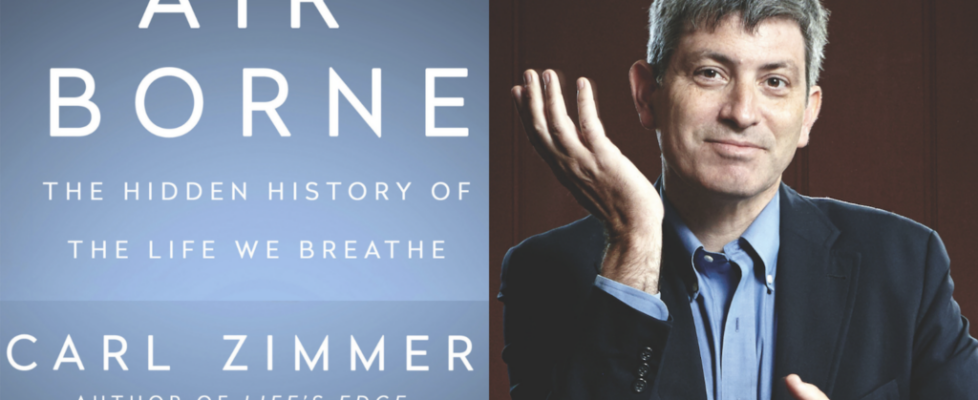
Earth’s air teems with invisible life. Each of us inhales roughly 100 gallons of air per hour, and the possible peril is, alas, anything but palpable: from gaseous pollutants to weaponized pathogens. The study of life in the atmosphere, aerobiology, is a particularly challenging subject. For example, scientists needed two years to finally agree that the Covid pandemic was caused by an airborne virus. Wonderfest joins the Commonwealth Club online to present science writer Carl Zimmer in discussion of his latest book, Air-Borne: The Hidden History of the Life We Breathe. The conversation will likely be breathtaking.
Carl Zimmer is the author of fifteen books about science, and his “Origins” column (on life’s diversity) appears regularly in the New York Times. Of Zimmer’s preceding book, Life’s Edge (2021), Nobel Laureate Jennifer Doudna wrote, “Carl Zimmer shows what a great suspense novel science can be. … Prepare to be enthralled.”
Use the "Tickets" link (below) to access the Commonwealth Club's event webpage. During online ticket purchase, use discount code WonderfestPromo for a ticket price reduction of $10, making this entire Carl Zimmer online experience FREE.
Wonderfest Science Envoys are early-career researchers with special communication skills and aspirations. Following short talks on provocative modern science topics, these two Science Envoys will answer questions with insight and enthusiasm:
• UC Berkeley astrophysicist Natasha Abrams on Black Holes: Discovering the Invisible — Black holes are among the most extreme objects in the universe. They push the boundaries of our knowledge, holding many unsolved mysteries. This talk will explore black holes from “small” to enormous, including how to detect these invisible marvels. In the process, we will probe the very frontiers of astrophysics.
• Stanford marine biologist Will Johnson on The Structure of Kelp Forests — Kelp forests constitute one of the most diverse ecosystems on Earth, and they’re hidden right beneath the waves of our coastline. To research how these ecosystems function, we need to study what lives there. Come learn how scientific diving and modern genetics are helping us unravel the complex structure of kelp forests.
This interactive science presentation, free and unticketed, is produced by Wonderfest in partnership with Marin Science Seminar.
How confident should we be? Overconfidence leads people to delude themselves with wishful thinking, take too many risks, pursue impossible goals, and waste their time on doomed ventures. Underconfidence dissuades people from taking risks that would pay off, and scares them away from trying things they would enjoy. Psychological studies offer evidence pointing to a middle way between these twin risks.
Our speaker is Dr. Don A. Moore, Professor and Chair in Leadership & Communication at UC Berkeley's Haas School of Business. His most recent book is Perfectly Confident: How to Calibrate Your Decisions Wisely.

This science event is FREE and unticketed ... and valuable. But what value does it have for YOU? Accordingly, please consider a donation to nonprofit Wonderfest via the Eventbrite window, below.
One of the defining features of all mammals is, surprisingly, the set of bones that form the hearing system. Those bones evolved from jaw components in our mammalian ancestors. In the evolutionary process of repurposing them for hearing, mammals came to possess a jaw configuration different from all other jawed vertebrates. Here is the story of how the unique jaws of mammals fundamentally changed the form and function of how we bite.
Our speaker is Dr. Jack Tseng, Associate Professor of Integrative Biology at UC Berkeley, where he directs the Functional Anatomy and Vertebrate Evolution (FAVE) Laboratory. Dr. Tseng’s specialties include the evolution of humanity’s best friend, the dog.

This event is FREE and unticketed ... and valuable. But what value does it have for YOU? Accordingly, please consider a donation to nonprofit Wonderfest via the Eventbrite window, below.
An August-24th New York Times article about audacious astronomer Avi Loeb concludes with this: “Now, that being said, if [Dr. Loeb] finds something, it’s life-changing … It will change everything.” What was “being said” referred to professional academic complaints about Dr. Loeb’s alleged “transgressions against scientific norms and protocols.” However, no one disputes the excitement of Prof. Loeb’s investigations. Wonderfest joins the Commonwealth Club to present controversial Harvard astronomer Avi Loeb in conversation about ideas in his latest book, Interstellar: The Search for Extraterrestrial Life and Our Future in the Stars. That conversation will explore some vital — if highly speculative — long-term questions: How do we prepare for first contact with ET? And how can our species itself become interstellar?
Dr. Avi Loeb is Professor of Science and former chair of the Astronomy Department at Harvard University. During this online event, he will be in conversation with the Commonwealth Club’s George Hammond.

Please pre-register with the Commonwealth Club (via the URL below) to receive a link — via email — to this live-stream event. Use discount code WonderfestPromo for $10 off the ticket price, rendering that ticket completely FREE.
How far off are the “goldilocks” worlds? These are the planets, orbiting other stars, that have just the right environmental traits to make life possible — not too hot, not too cold, etc. Will we be able to detect the chemical signals of alien life from so far away? In her new book, Life on Other Planets: A Memoir of Finding My Place in the Universe, Dr. Aomawa Shields discusses these questions alongside the personal challenges she’s encountered on the path to success in the thrilling field of astrobiology. Dr. Shields is in conversation with author and journalist Julia Flynn, and in touch with the online audience via the chat bar.
Dr. Aomawa Shields is Associate Professor of Physics & Astronomy at UC Irvine. She is also founding director of Rising Stargirls, dedicated to encouraging girls to explore the universe using theater, writing, and visual art.

Please pre-register with the Commonwealth Club (via the URL below) to receive a link — via email — to this live-stream event. Use discount code WonderfestPromo for $10 off the ticket price, rendering that ticket completely FREE.
Humanity has looked up at the stars for millennia and wondered whether we’re alone in the Universe. Yet only in the past few decades have we begun to discover planets outside our Solar System: to date, we’ve found over 4,000 such “exoplanets.” Further, we have statistical reasons to believe that roughly one billion exoplanets — in our Galaxy alone — are promising abodes for life. Come learn about exoplanets and the exciting search for Earth-like and potentially habitable worlds.
Our speaker, Andy Mayo, is a PhD student and researcher in the UC Berkeley Astronomy Department. He is also a Wonderfest Science Envoy.

What value will these insights have for you? Via the Eventbrite portal below, please consider a donation to nonprofit Wonderfest in accord with this value.