A few shark species are, indeed, dangerous wildlife. However, the public portrayal of these animals as villains and killers is overblown. What is the real life of a large shark like? How do they eat? How long do they live, and where do they migrate? Knowing about sharks in this way — especially how they think — helps us see them as part of our ocean world to be respected … and to be amazed by.
Our Wonderfest speaker is Dr.Stephen Palumbi, Professor of Marine Sciences at Stanford University. Steve is also Professor of Biology, Senior Fellow at Woods Institute for the Environment, and leader of The Palumbi Lab at Hopkins Marine Station, all at Stanford. This event is co-presented by Wonderfest and the San Francisco Public Library.
HOW: This event is free and unticketed ... and valuable. But what value does it have FOR YOU (and, indirectly, for society)? Accordingly, please use the DONATE button (below) to support Wonderfest in its nonprofit mission to share the scientific outlook.
Wonderfest Science Envoys are early-career researchers with enhanced communication skills and aspirations. Following short talks on provocative modern science topics, these two Science Envoys will answer questions with insight and enthusiasm:
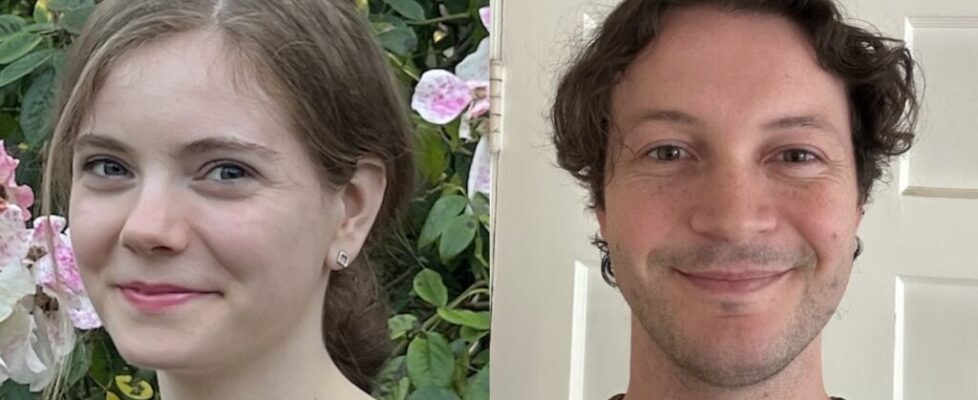
• UC Berkeley astronomer Natalie LeBaron on Origins of the Elements — From the oxygen we breathe to the gold in our jewelry and the calcium in our bones, most periodic table elements are forged by stars. How does the universe transforms simple hydrogen into the rich diversity of atoms that build planets, life, and everything we see around us? Beginning their lives in vast clouds of gas and ending in massive explosions, every star in the night sky creates and scatters ingredients for new worlds.
• UC Berkeley psychologist Colin Jacobs on Children’s Sense of Fairness — Our motivation to enact fairness shapes human behavior across societal and individual levels: from outrage at economic inequalities, to personal protest against not being considered in a discussion. As parents and teachers know, our motivation to insist upon fairness starts early, often through shouts of “that’s not fair,” or very strict regulation of turn-taking. What motivates children to object to unfairness, and how does this moral impulse develop throughout early childhood?
This interactive science presentation, free and unticketed, is produced by Wonderfest in partnership with Marin Science Seminar.
HOW: This event is free and unticketed ... and valuable. But what value does it have FOR YOU (and, indirectly, for society)? Accordingly, please use the DONATE button (below) to support Wonderfest in its nonprofit mission to share the scientific outlook.
Wonderfest Science Envoys are early-career researchers with enhanced communication skills and aspirations. Following short talks on provocative modern science topics, these two Science Envoys will answer questions with insight and enthusiasm:
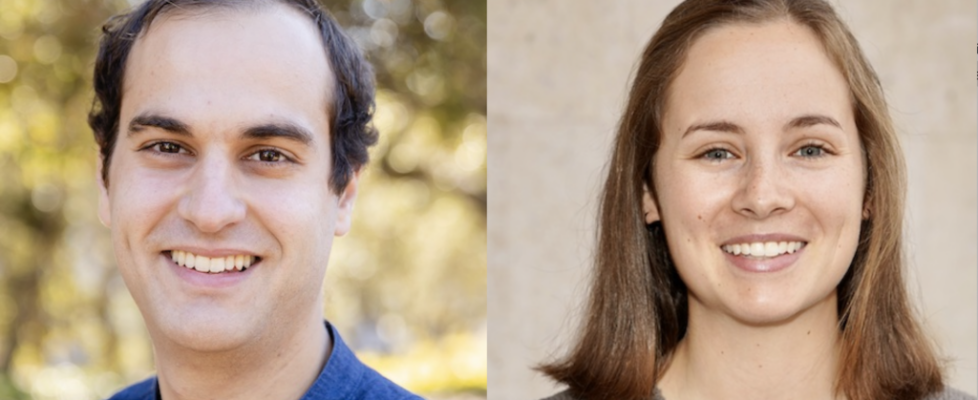
• Stanford physicist Maya Beleznay on Weighing Black Widow Pulsars — What would Robert Oppenheimer and a modern physicist have in common? Neither could tell you how many particles can fit in a city-size ball before collapsing into a black hole! Some neutron stars in our galaxy teeter on the edge of this maximum theoretical density. Observations of such “black widow pulsars” allow us to explore a regime of physics that cannot be probed in a lab on Earth.
• UC Berkeley vision scientist Lawrence Man on Retinal Remodeling in Degenerative Blindness — As our eyes’ light-sensitive cells begin to die, downstream retinal neurons undergo physiological changes. Unfortunately, this neural remodeling negatively affects the electrical properties of neurons, interfering with vision. Dedicated researchers are developing strategies and restorative technologies to overcome this retinal remodeling.
This interactive science presentation, free and unticketed, is produced by Wonderfest in partnership with Marin Science Seminar.
WHAT: Ask a Science Envoy: Pulsars & Blindness
WHO: Maya Beleznay (Stanford) & Lawrence Man (UC Berkeley), Wonderfest Science Envoys
HOW: This event is free and unticketed ... and valuable. But what value does it have FOR YOU (and, indirectly, for society)? Accordingly, please use the DONATE button (below) to support Wonderfest in its nonprofit mission to share the scientific outlook.
Wonderfest Science Envoys are early-career researchers with enhanced communication skills and aspirations. Following short talks on provocative modern science topics, these two Science Envoys will answer questions with insight and enthusiasm:
• UC Berkeley seismologist Savvas Marcou on Smartphones Map Ground Shaking in Our Neighborhoods — California is earthquake country. Everyone would love to know how much shaking the next temblor will deliver to their neighborhood. Fortunately, the humble smartphone, available in everyone’s pockets, can record and map ground shaking patterns in unprecedented resolution, and may transform how we think about the next big earthquake.
• Stanford neuroscientist Ashley Moses on Rethinking Histamine: From Molecule to Motivation — Though primarily known for its role in allergies, histamine influences cognition, mood, and sleep, as well. In fact, this understudied molecule is indispensable for brain health. By studying histamine’s role in motivated behaviors, we can uncover groundbreaking insights into neurological problems like depression, Parkinson’s Disease, and stress disorders.
This interactive science presentation, free and unticketed, is produced by Wonderfest in partnership with Marin Science Seminar.
WHAT: Ask a Science Envoy: Smartphone Seismology & Histamine Neurology
HOW: This event is free and unticketed ... and valuable. But what value does it have FOR YOU (and, indirectly, for society)? Accordingly, please use the DONATE button (below) to support Wonderfest in its nonprofit mission to share the scientific outlook.
When philosopher Thomas Nagel asked, “What is it like to be a bat?”, he was not asking about what it’s like for a human to be a bat — not the experience of, say, Batman. Nagel was vivifying the so-called “hard problem of consciousness”: What is it like for a bat to be a bat? More broadly, what is the nature of a bat’s — or of any — subjective experience? How does brain activity (from a third-person objective point of view) become a first-person feeling (from a subjective point of view)? Perhaps the “relativity” principles of Galileo and Einstein can help us understand this seemingly profound distinction between the first-person point of view (my experience) and the third-person point of view (another’s brain activity) as recognized by neuroscience.
Our speaker, physicist Nir Lahav, is a postdoctoral researcher in the Consciousness and Cognition Lab at Cambridge University. Dr. Lahav has developed what he and philosopher Zachariah Neemeh call ARelativistic Theory of Consciousness.
HOW: This event is free and unticketed ... and valuable. But what value does it have FOR YOU (and, indirectly, for society)? Accordingly, please use the DONATE button (below) to support Wonderfest in its nonprofit mission to share the scientific outlook.
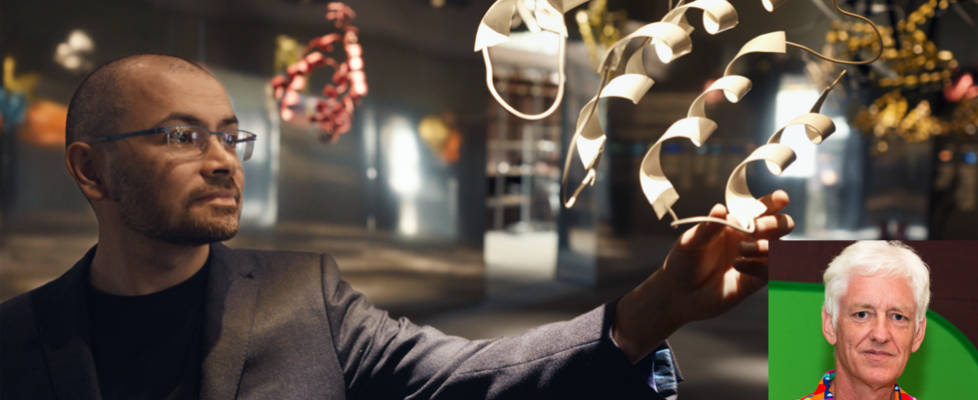
2024’s The Thinking Game takes us on a journey into DeepMind, one of Earth’s leading AI labs, as it strives to unravel the mysteries of artificial general intelligence (AGI). Inside DeepMind’s London headquarters, Nobel laureate Demis Hassabis and his team are pursuing the creation of AI that matches or surpasses human abilities on a wide range of tasks. Filmed over five years, the documentary puts viewers in the room for the pivotal moments of this quest, including the groundbreaking achievement of AlphaFold, a program that solved a 50-year grand challenge in biology. Immediately after The Thinking Game‘s screening, expert Peter Norvig will answer our AI questions.
Dr. Peter Norvig is a Fellow at Stanford’s Institute for Human-Centered Artificial Intelligence. He is Director of Research at Google, and he co-authored the most popular AI textbook, Artificial Intelligence: A Modern Approach, used in more than 1,500 universities in 135 countries.
My previous encounters with reality contribute to my internal mental predictions about the world that, in turn, help to shape my actual future experiences. So, seeing the “real world” (or hearing sounds, or feeling pain, or …) involves a personal, ideosyncratic filter/kaleidoscope. This prediction-based theory of mind is quite hopeful. More than a facile version of “positive thinking,” it suggests a realistic optimism where well-tuned expectations can actively help to bring about desired states and experiences.
Our speaker, Dr. Andy Clark, is Professor of Cognitive Philosophy at England’s University of Sussex. He will present ideas from — and answer questions about — his new book, The Experience Machine: How Our Minds Predict and Shape Reality.
Dr. Andy Clark
WHAT: The Experience Machine: Mental Prediction & Perceived Reality
This free, unticketed event is a joint production of Wonderfest and San Francisco's BookShop West Portal. In the space below, please support Wonderfest's nonprofit work in science outreach. (NOTE: Despite the Eventbrite wording, your thoughtful donation is not a "sale.")