
Animal Behavior – Apr 26

Dr. Eileen Lacey
Cameo Cinema [https://www.cameocinema.com/movie/hoppers-science-in-cinema-event]

The words sex and gender challenge us, even scientifically. Sex commonly refers to a creature’s physical and biological characteristics. Gender refers to behavior and self-presentation within a social group. Since nature is replete with social groups, we can take rich delight in trying to understand gender diversity among animals. This is a key topic in the new book by Dr. Nathan Lents: The Sexual Evolution: How 500 Million Years of Sex, Gender, and Mating Shape Modern Relationships. Wonderfest joins the San Francisco Public Library to explore gender diversity in the animal kingdom.
Our speaker is Dr. Nathan Lents, Professor of Biology and Director of the Cell and Molecular Biology program at John Jay College, part of the City University of New York (CUNY). This event is co-presented by Wonderfest and the San Francisco Public Library.

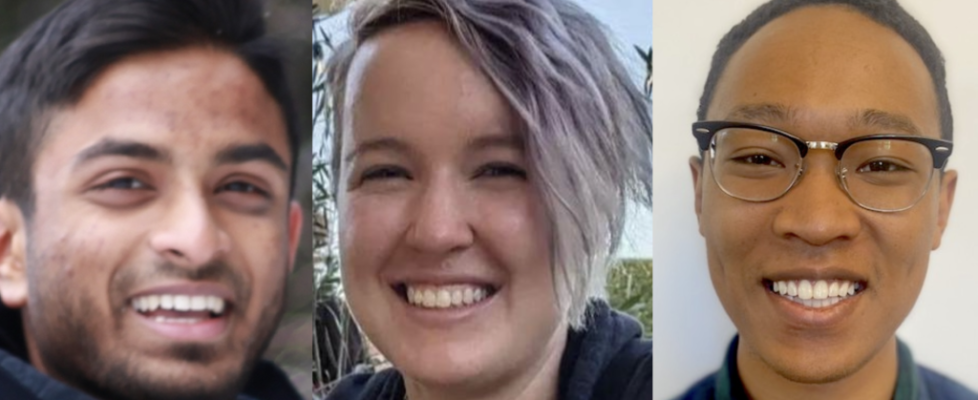
Wonderfest Science Envoys are early-career researchers with special communication skills and aspirations. Following short talks on provocative modern science topics, these three Science Envoys will answer questions with insight and enthusiasm:
• Stanford ecologist Chinmay Sonawane on How Scavenging Animals Protect Human Health — Wildlife is rapidly disappearing globally. But why should we care? The loss of scavengers (consumers of already-dead animals) provides an intriguing example of how biodiversity loss has had, and will continue to have, profound consequences for human health.
• UC Berkeley physicist Bethany Suter on Direct Detection of Dark Matter — Ubiquitous, yet deeply mysterious, dark matter constitutes 85%(!) of the material universe. What do we know — and not know — of elusive dark matter particles? Novel laboratory materials may allow us to detect dark matter directly, shining light into the pervasive cosmic shadows.
• Stanford biophysicist Sean Waterton on Making Biomolecules from Electricity — Solar panels produce ever-more clean electricity. At the same time, human activity produces copious amounts of CO2. Modern research in synthetic biology allows us to use electricty and CO2 to create valuable molecules like fats and proteins — and, hopefully, more specialized molecules like medications.
This interactive science presentation, free and unticketed, is produced by Wonderfest in partnership with Marin Science Seminar.
What value does this free science experience have for you and, indirectly, for society? Accordingly, please consider making a donation to nonprofit Wonderfest via the Eventbrite box, below.