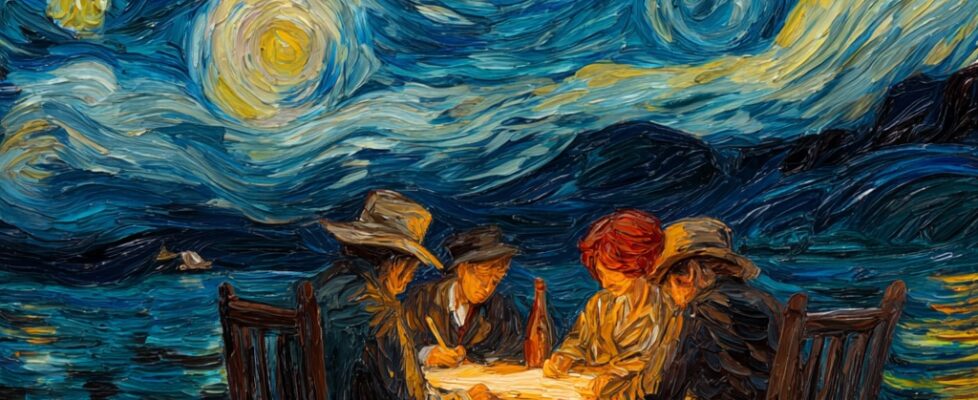
Just for fun (and for bragging rights), how many science facts lie within your grasp, and within the grasp of a few friends? That beautiful word science originates from the Latin word scientia, meaning “knowledge,” so it covers a lot of ground! This particular bit of information — involving the etymology of “science” — might be precisely what your team needs to claim victory in Wonderfest’s Team Science Quiz: a fun contest with questions, music, and visuals from all fields of science. Play solo or join up to three fellow Wondernauts to form a quiz quartet … and earn Wonderfest bragging rights for years to come.
Our science quiz host is Howard Rachelson, Marin’s Master of Trivia and author of the weekly Trivia Cafe column in the Pacific Sun newspaper.
HOW: This event is free and unticketed ... and valuable. But what value does it have FOR YOU (and, indirectly, for society)? Accordingly, please use the DONATE button (below) to support Wonderfest in its nonprofit mission to share the scientific outlook.
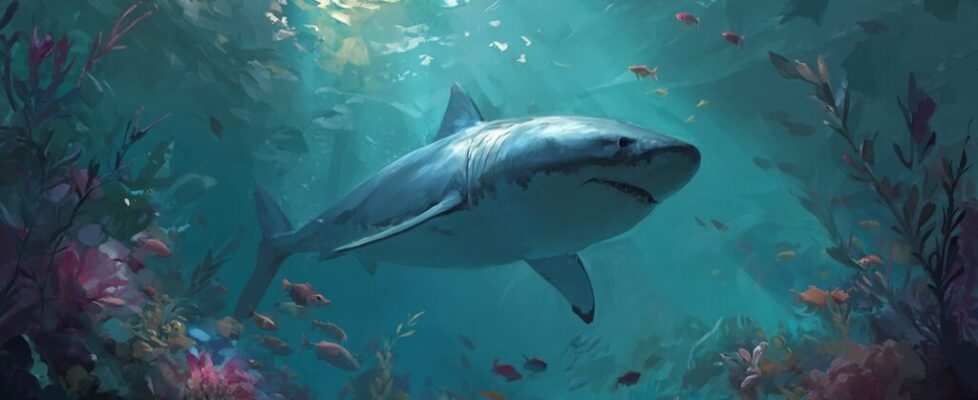
A few shark species are, indeed, dangerous wildlife. However, the public portrayal of these animals as villains and killers is overblown. What is the real life of a large shark like? How do they eat? How long do they live, and where do they migrate? Knowing about sharks in this way — especially how they think — helps us see them as part of our ocean world to be respected … and to be amazed by.
Our Wonderfest speaker is Dr.Stephen Palumbi, Professor of Marine Sciences at Stanford University. Steve is also Professor of Biology, Senior Fellow at Woods Institute for the Environment, and leader of The Palumbi Lab at Hopkins Marine Station, all at Stanford.
HOW: This event is free and unticketed ... and valuable. But what value does it have FOR YOU (and, indirectly, for society)? Accordingly, please use the DONATE button (below) to support Wonderfest in its nonprofit mission to share the scientific outlook.
It’s a science double feature! Wonderfest presents two half-hour talks — with Q&A (of course) — by outstanding UC Berkeley researchers:
• Biologist Dr. Stephen Gaughran on The Genetics of Extinction (and Survival) — Species are now disappearing faster than at any point in the last several million years. Decades of conservation and management has made real progress in protecting endangered species, yet we still struggle to understand why some recover while others go extinct. By combining new genomic technologies with evolutionary theory, we are entering a new era of species conservation — one where we can use a species’ evolutionary past to plan for its future survival.
• Chemist Dr. Colin Gould on Building Next-Generation Medicines with Light & Electricity — Modern medicines have revolutionized treatments for cancer, heart disease, chronic illness, and more. These therapeutics often consist of carefully engineered organic molecules, which are designed in an iterative process of chemical synthesis and biological testing. Alternative energy sources, such as light and electricity, can help to speed up drug discovery, while also making manufacturing more environmentally friendly.
WHAT: Genetics of Extinction (& Survival) + Next-Gen Meds with Light & Electricity
WHO: Dr. Stephen Gaughran & Dr. Colin Gould, UC Berkeley professors
HOW: This event is free and unticketed ... and valuable. But what value does it have FOR YOU (and, indirectly, for society)? Accordingly, please use the DONATE button (below) to support Wonderfest in its nonprofit mission to share the scientific outlook.
The USA has developed ground- and space-based telescopes that have helped revolutionize our view of the cosmos … and of ourselves. In this Commonwealth Club event, astrophysicist John Mulchaey explores current and future developments in telescope innovation, the state of national investment in those developments, the global collaboration on extremely large telescopes such as the Giant Magellan, and the future of American leadership in this particular leg of the modern space race.
Wonderfest joins Commonwealth Club World Affairs to present Dr. John Mulchaey, President of the Carnegie Institution for Science, in conversation with the George Hammond, author of Conversations with Socrates.
This event can be enjoyed in-person only. Pre-register with the Commonwealth Club / World Affairs via the “Tickets” link, below. Use promo code WONDERNAUTS for a $10 ticket discount.
Dr. John Mulchaey
WHAT: Tremendous Telescopes: The Future of US Space Observation
HOW: During the last stage of online ticket purchase from the Commonwealth Club (via the "Tickets" link, below), use promo code WONDERNAUTS to secure a discount of $10.
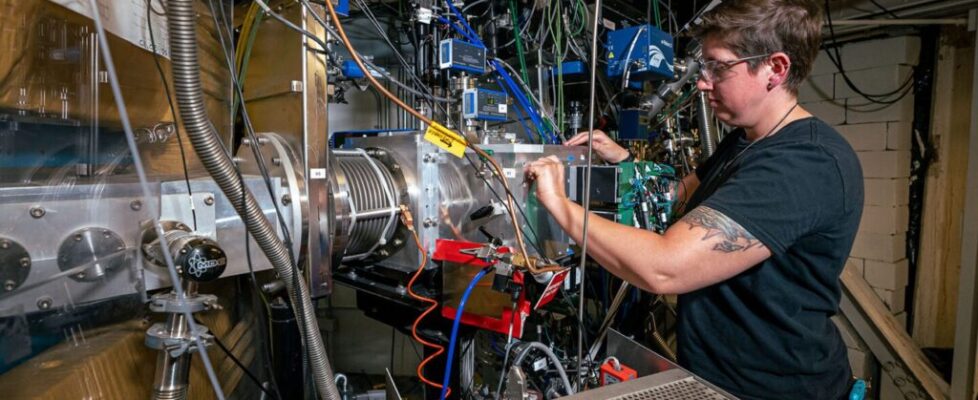
Like thoroughly scientific alchemists, nuclear chemists work to create elements that don’t exist naturally on Earth. These new super-heavy atoms could be long-lived, residing on proton-packed islands of stability off the far end of the periodic table. What new elements have most recently been added to the periodic table? How do scientists construct these fundamental novelties? How do investigators deduce the physical and chemical properties of the new elements from just a few ephemeral atoms?
Our Wonderfest speaker is Dr.Jacklyn Gates, leader of the Heavy Element Group in the Nuclear Science Division at Lawrence Berkeley National Laboratory.
HOW: This event is free and unticketed ... and valuable. But what value does it have FOR YOU (and, indirectly, for society)? Accordingly, please use the DONATE button (below) to support Wonderfest in its nonprofit mission to share the scientific outlook.
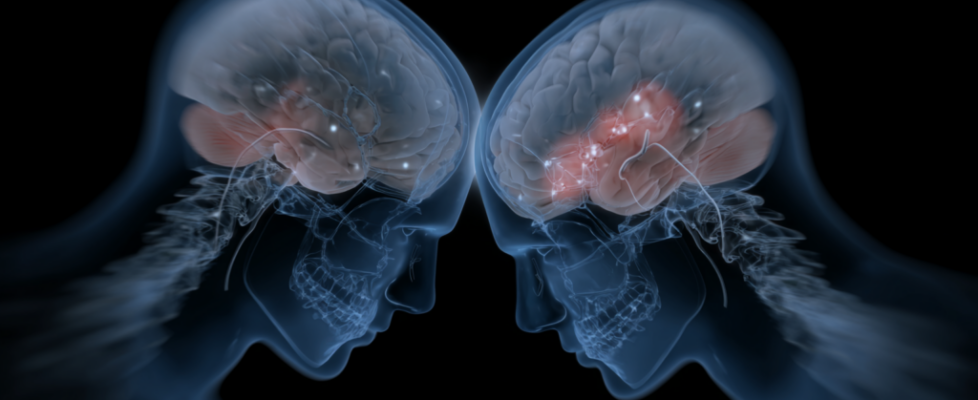
When minds “connect,” the underlying brains synchronize their activity. The stimuli that most potently evoke this neural synchrony includes, perhaps surprisingly, the sharing of stories. Neuroscience now recognizes that narrative constitutes not only the basis of conscious experience, but also the principal mechanism that shapes human selves and societies — for good or for ill.
Our Wonderfest speaker, Dr.Thomas Lewis, M.D., is Adjunct Professor at the University of San Francisco and Assistant Clinical Professor of Psychiatry at UC San Francisco. Dr. Lewis is co-author of A General Theory of Love.
Dr. Thomas Lewis
WHAT: Neural Synchrony
WHO: Dr. Thomas Lewis, Adjunct Professor, University of San Francisco [https://thomaslewis.com]
HOW: This event is free and unticketed ... and valuable. But what value does it have FOR YOU (and, indirectly, for society)? Accordingly, please use the DONATE button (below) to support Wonderfest in its nonprofit mission to share the scientific outlook.
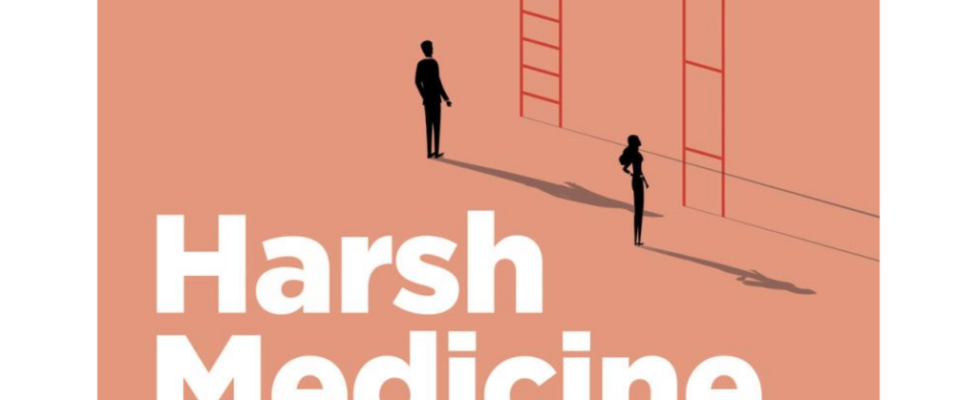
Despite decades of progress, women continue to face systemic barriers to success in medicine and science. This is the considered view of Dr. Jennifer Grandis, Distinguished Professor at UC San Francisco. In her new book, Harsh Medicine: Why Women Can’t Get Ahead in Science and Health Care, Dr. Grandis draws on case studies, rigorous analysis, and decades of experience to reveal how gender bias is embedded in the structures of academic medicine and scientific research. How do science policies, funding systems, promotion practices, and cultural norms disadvantage women throughout their careers in science and medicine?
Wonderfest joins the Commonwealth Club to present Dr. Jennifer Rubin Grandis in conversation with journalist Katie Hafner, co-creator and host of the “Lost Women of Science” podcast.
Two types of tickets are available: in-person and online-only. Pre-register with the Commonwealth Club / World Affairs via the “Tickets” link, below. Use promo code WONDERNAUTS for a $10 ticket discount (which renders the online ticket entirely FREE).
Dr. Jennifer Grandis, MD
WHAT: Harsh Medicine: Gender Bias in Science & Health Care
WHERE: The Commonwealth Club's Taube Auditorium, 110 The Embarcadero, San Francisco
WHEN: Monday, July 6 — 6pm (1 hour)
COLLABORATORS: Commonwealth Club World Affairs of California
HOW: Get tickets by clicking the "Tickets" box, below. In the final stage of online purchase from the Commonwealth Club, use promo code WONDERNAUTS to secure a discount of $10 for either type of ticket, in-person or online.
Charles Darwin was deeply troubled by the sudden appearance of complex animal life during the Cambrian Explosion about half a billion years ago, animal evolution’s Big Bang. He felt the sudden appearance of such diverse animal body-plans was inexplicable, fearing that it was the Achilles heel of his theory. What do we now know of this spectacular event? Drawing on the fossil record, ecology, developmental biology, genetics, and computer simulation, can we understand how and why the Cambrian Explosion occurred?
Our Wonderfest speaker, Dr.Charles Marshall, is Distinguished Professor of Integrative Biology at UC Berkeley. He is also Director of the University of California Museum of Paleontology.
Dr. Charles Marshall
WHAT: Animal Evolution's Big Bang: The Cambrian Explosion
HOW: This event is free and unticketed ... and valuable. But what value does it have FOR YOU (and, indirectly, for society)? Accordingly, please use the DONATE button (below) to support Wonderfest in its nonprofit mission to share the scientific outlook.
Synthetic biology — creating new capabilities with life — promises to foster an innovative future for planet Earth in fields as diverse as agriculture, pharmaceuticals, and nanotechnology. As humans move beyond Earth to long duration stays in the International Space Station, and then onward to the Moon and Mars, the challenges of supporting human life will need radical new solutions that synthetic biology can deliver. In turn, those new solutions will facilitate technical, industrial, and social improvements back here on our home planet.
Our Wonderfest speaker is Dr.Lynn Rothschild, Adjunct Professor of Molecular Biology, Cell Biology, and Biochemistry at Brown University. Dr. Rothschild also has a laboratory at NASA Ames Research Center, and teaches Astrobiology and Space Exploration at Stanford University.
Dr. Lynn Rothschild
WHAT: An Innovative Future for Planet Earth ... via Space
HOW: This event is free and unticketed ... and valuable. But what value does it have FOR YOU (and, indirectly, for society)? Accordingly, please use the DONATE button (below) to support Wonderfest in its nonprofit mission to share the scientific outlook.
Earth’s Arctic endures the dual threat of climate change and geopolitical competition. Sea ice is melting, and permafrost is thawing. At the same time, global interest is growing rapidly as the region continues to transform from frozen expanse to contested international waterway. The consequences of the emerging “Arctic Anthropocene” are truly global — from rising sea levels due to melting glaciers to tensions between great powers determined to protect their territories and resources, and the well-being of Indigenous peoples who have fought for centuries for rights and recognition.
Wonderfest joins Commonwealth Club World Affairs to present Dr. Mia Bennett, Associate Professor of Geography at the University of Washington, in conversation with Andrew Dudley, co-host of “Earth Live,” about her new book Unfrozen: The Fight for the Future of the Arctic.
This event can be enjoyed in-person only. Pre-register with the Commonwealth Club / World Affairs via the “Tickets” link, below. Use promo code WONDERNAUTS for a $10 ticket discount.
HOW: During the last stage of online ticket purchase from the Commonwealth Club (via the "Tickets" link, below), use promo code WONDERNAUTS to secure a discount of $10.
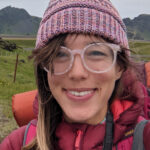
Wonderfest Science Envoys are early-career researchers with enhanced communication skills and aspirations. Following short talks on provocative modern science topics, these two Science Envoys will answer questions with insight and enthusiasm:
• UC Berkeley geophysicist Caroline Hasler on Measuring Geologic Time with Rock Clocks — In microscopically small crystals within rocks, radioactive elements decay at predictable rates and function as tiny clocks. These “rock clocks” help us to figure out the timing of major events in Earth history — from the moment of Earth’s formation to the asteroid impact that killed the dinosaurs.
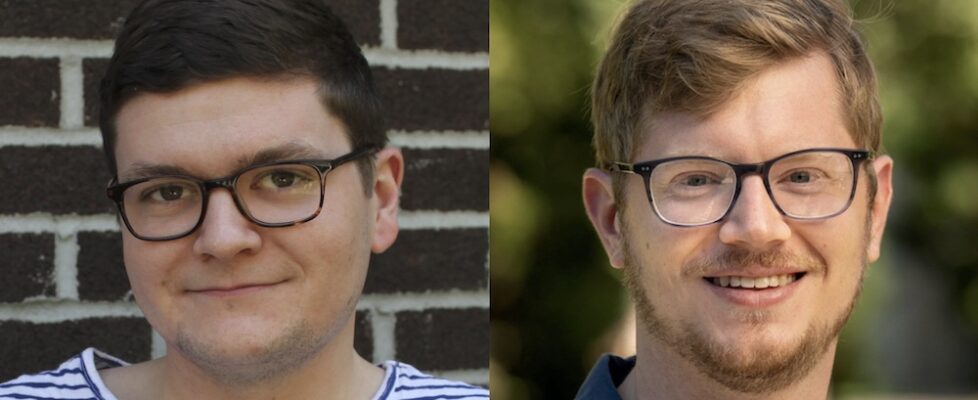
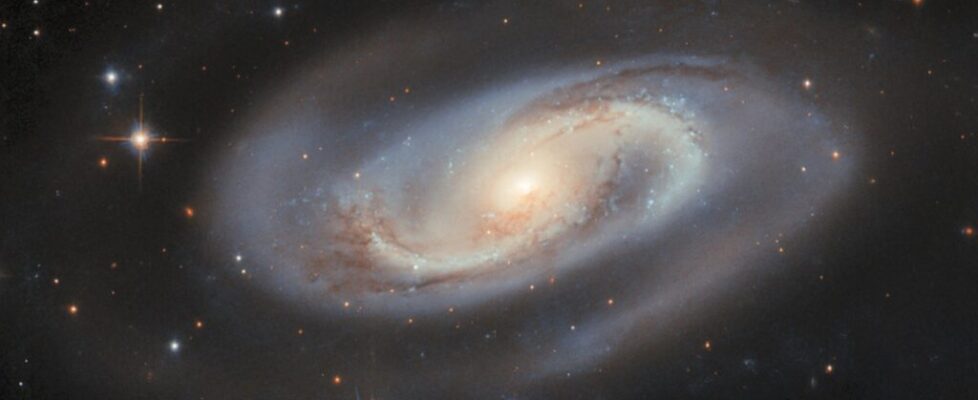
• UC Berkeley astronomer Eli Wiston on Seeing Core-collapse Supernovae with Radio Telescopes — At the end of its life, a massive star will contract and explode in spectacular fashion, outshining the light of an entire galaxy. While most astronomers focus on the optical light given off by these stellar explosions, there is a wealth of new information to be gained by observing invisible wavelengths. With radio telescopes, we can study new aspects of supernovae: their stars’ activity in the years before death, their environments, and what they leave behind after the explosion fades.
This interactive science presentation, free and unticketed, is produced by Wonderfest in partnership with Marin Science Seminar.
WHAT: Ask a Science Envoy: RockClocks & Supernovae
HOW: This event is free and unticketed ... and valuable. But what value does it have FOR YOU (and, indirectly, for society)? Accordingly, please use the DONATE button (below) to support Wonderfest in its nonprofit mission to share the scientific outlook.
A few shark species are, indeed, dangerous wildlife. However, the public portrayal of these animals as villains and killers is overblown. What is the real life of a large shark like? How do they eat? How long do they live, and where do they migrate? Knowing about sharks in this way — especially how they think — helps us see them as part of our ocean world to be respected … and to be amazed by.
Our Wonderfest speaker is Dr.Stephen Palumbi, Professor of Marine Sciences at Stanford University. Steve is also Professor of Biology, Senior Fellow at Woods Institute for the Environment, and leader of The Palumbi Lab at Hopkins Marine Station, all at Stanford. This event is co-presented by Wonderfest and the San Francisco Public Library.
HOW: This event is free and unticketed ... and valuable. But what value does it have FOR YOU (and, indirectly, for society)? Accordingly, please use the DONATE button (below) to support Wonderfest in its nonprofit mission to share the scientific outlook.
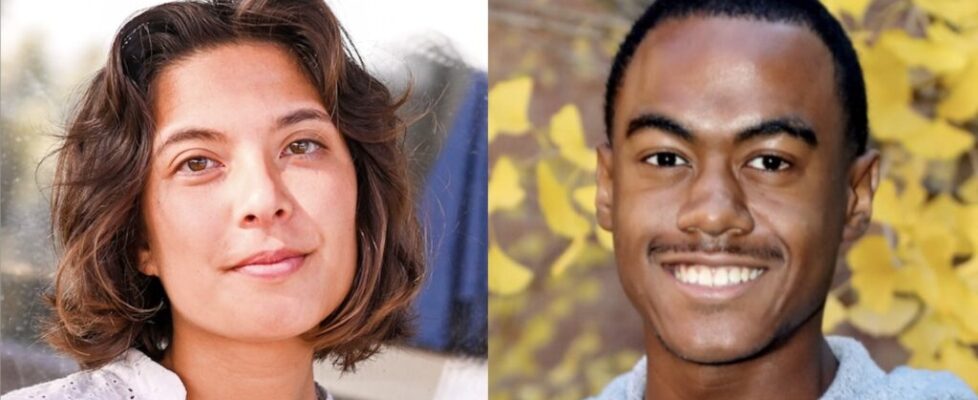
Wonderfest Science Envoys are early-career researchers with enhanced communication skills and aspirations. Following short talks on provocative modern science topics, these two Science Envoys will answer questions with insight and enthusiasm:
• Stanford biologist Marina Luccioni on Fish that Make Dreams — Hawaiian traditional knowledge from the 1400s references “nightmare fish.” Indeed, eating the heads of certain fish species does induce dizziness, severe hallucinations, and nightmares. How do these fish come to contain and accumulate neurotoxins, and how do those molecules cause hallucinations? Of equal importance, how do we do such science that is respectful of indigenous knowledge and fair to local communities and ecosystems?
• Stanford ecologist Ryan Rogers on What’s Up with Wetlands? — Tidal wetlands are environments of constant change: tides rise and fall, salinity shifts, and waters stay perpetually in motion. In these challenging conditions, seagrasses flourish, creating underwater meadows that support rich and diverse communities. Studying these ecosystems reveals how biodiversity sustains them, and why protecting wetlands and estuaries is critical for resilient coastlines.
This interactive science presentation, free and unticketed, is produced by Wonderfest in partnership with Marin Science Seminar.
HOW: This event is free and unticketed ... and valuable. But what value does it have FOR YOU (and, indirectly, for society)? Accordingly, please use the DONATE button (below) to support Wonderfest in its nonprofit mission to share the scientific outlook.
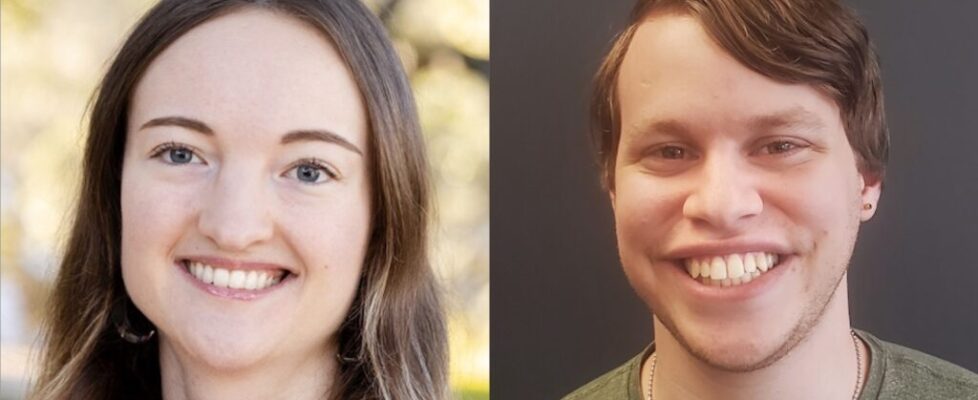
Wonderfest Science Envoys are early-career researchers with enhanced communication skills and aspirations. Following short talks on provocative modern science topics, these two Science Envoys will answer questions with insight and enthusiasm:
• UC Berkeley astronomer Natalie LeBaron on Origins of the Elements — From the oxygen we breathe to the gold in our jewelry and the calcium in our bones, most periodic table elements are forged by stars. How does the universe transforms simple hydrogen into the rich diversity of atoms that build planets, life, and everything we see around us? Beginning their lives in vast clouds of gas and ending in massive explosions, every star in the night sky creates and scatters ingredients for new worlds.
• UC Berkeley psychologist Colin Jacobs on Children’s Sense of Fairness — Our motivation to enact fairness shapes human behavior across societal and individual levels: from outrage at economic inequalities, to personal protest against not being considered in a discussion. As parents and teachers know, our motivation to insist upon fairness starts early, often through shouts of “that’s not fair,” or very strict regulation of turn-taking. What motivates children to object to unfairness, and how does this moral impulse develop throughout early childhood?
This interactive science presentation, free and unticketed, is produced by Wonderfest in partnership with Marin Science Seminar.
HOW: This event is free and unticketed ... and valuable. But what value does it have FOR YOU (and, indirectly, for society)? Accordingly, please use the DONATE button (below) to support Wonderfest in its nonprofit mission to share the scientific outlook.
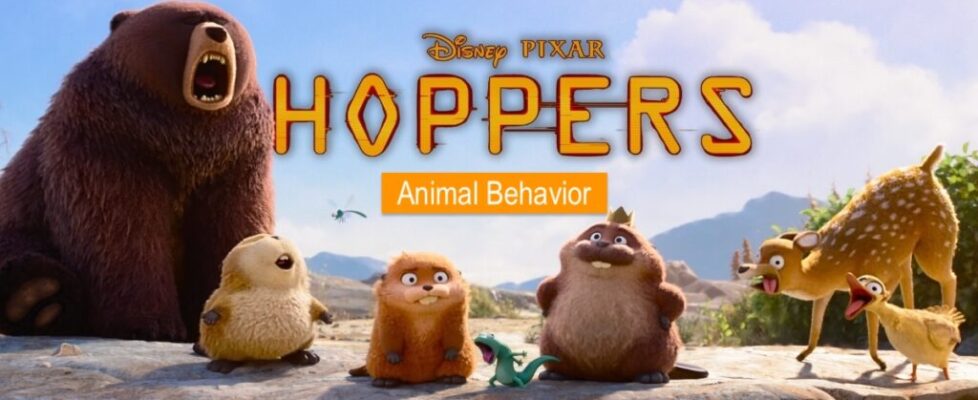
What if we could communicate — clearly and deeply — with animals? In Disney and Pixar’s new feature film HOPPERS, scientists have discovered how to “hop” human consciousness into lifelike robotic animals, allowing us to communicate with denizens of the animal world as animals. Wonderfest comes to the Napa Valley to help present this special Science In Cinema event. Immediately following the screening of HOPPERS, UC Berkeley biologist Dr. Eileen Lacey answers our questions about animal behavior in HOPPERS and in the real world.
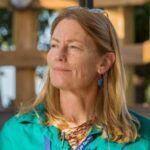
Dr. Eileen A. Lacey is Professor and Chair in Biological Sciences at UC Berkeley’s Department of Integrative Biology. At Cal’s Lacey Lab, her research focuses principally on vertebrate social behavior. Dr. Lacey also works with Cal’s Museum of Vertebrate Zoology.
HOW: For advance ticket purchase ($10) at the Cameo Cinema event webpage (linked directly above), scroll down and click the "1:00 PM" box under "Times & Tickets."
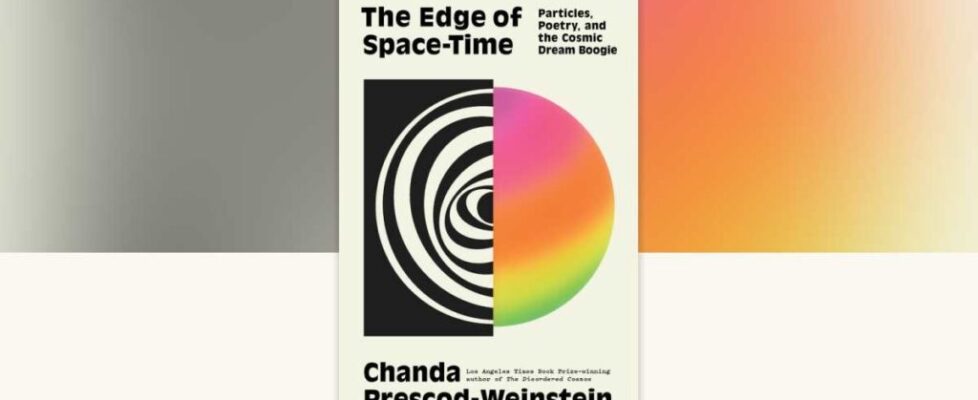
Wonderfest comes to San Francisco’s BookShop West Portal for a special author event featuring cosmologist Dr. Chanda Prescod-Weinstein. In her latest book, The Edge of Space-Time: Particles, Poetry, and the Cosmic Dream Boogie, Dr. Prescod-Weinstein “embraces cosmic wonder and takes us on a mind-altering journey to the boundaries of the universe, inviting us to spend time at the edge of what we know about space-time and about ourselves.”
Dr. Chanda Prescod-Weinstein is Associate Professor of Physics and Core Faculty Member in Women’s and Gender Studies at the University of New Hampshire. She is the author of The Disordered Cosmos, and columnist for New Scientist and Physics World magazines.
Dr. Chanda Prescod-Weinstein
WHAT: The Edge of Space-Time
WHO: Dr. Chanda Prescod-Weinstein, Assoc. Professor of Physics, University of New Hampshire [https://chanda.science]
WHERE: BookShop West Portal, 80 West Portal Avenue, San Francisco CA 94127
Wonderfest Science Envoys are early-career researchers with enhanced communication skills and aspirations. Following short talks on provocative modern science topics, these two Science Envoys will answer questions with insight and enthusiasm:
• Stanford physicist Mahlet Shiferaw on Learning Cosmology from Galaxies — The Universe is shaped by an invisible “cosmic web” of dark matter that guides where galaxies form. By comparing observations of galaxies to predictions from models, we can probe the nature of dark matter and dark energy. Cosmologists are now developing new modeling and inference techniques to unlock even more information from upcoming galaxy surveys.
• Stanford biologist Sebastian Somolinos on Give Evolution a Chance — When was the last time you watched evolution happen? Evolution is nature’s most powerful problem solver, yet creatures like horseshoe crabs remind us that it can also be slow and stubbornly conservative. To unlock evolution’s full creative potential, and to appreciate evolution more fully, we must learn how to accelerate it. We need to give evolution a chance.
This interactive science presentation, free and unticketed, is produced by Wonderfest in partnership with Marin Science Seminar.
HOW: This event is free and unticketed ... and valuable. But what value does it have FOR YOU (and, indirectly, for society)? Accordingly, please use the DONATE button (below) to support Wonderfest in its nonprofit mission to share the scientific outlook.
Most every page of Andy Weir’s latest sci-fi novel, Project Hail Mary, glows with the promise of science and technology. In Weir’s first novel, 2011’s The Martian, the protagonist endures interplanetary travel, and struggles to survive on a harsh new world. However, in Project Hail Mary, the hero faces a far greater challenge: interstellar travel to collaborate with an ET in hope of saving an imperiled planet Earth! Are the wonderful science and technology of Project Hail Mary realistic? We shall see!
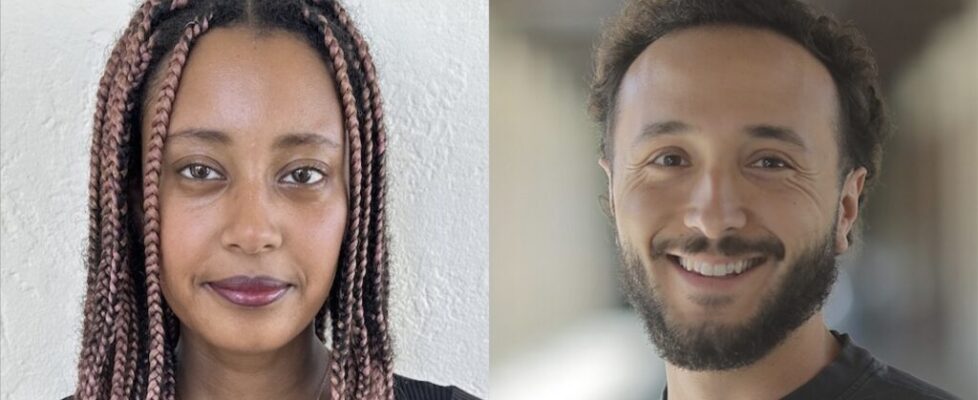
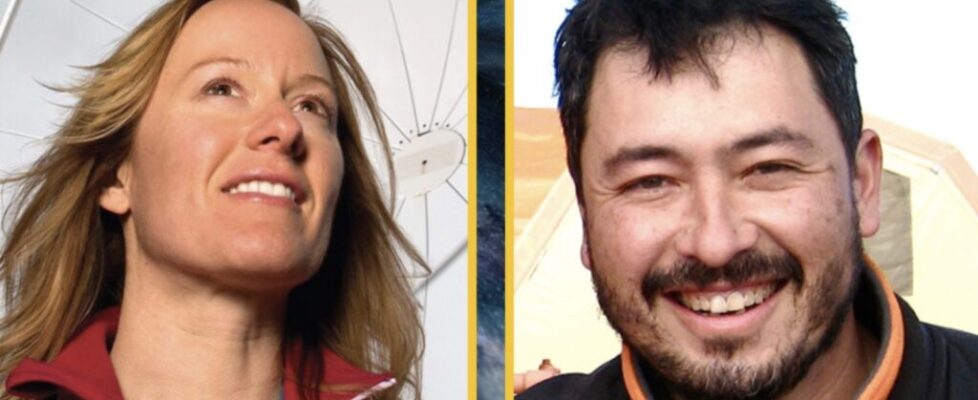
Wonderfest and the SETI Institute join the Commonwealth Club World Affairs to present two wonderful space scientists in conversation about The Science of Project Hail Mary: astrobiologist Dr. Maggie Turnbull and planetary scientist Dr. Pascal Lee.
Two types of tickets are available: in-person and online-only. Pre-register with the Commonwealth Club / World Affairs via the “Tickets” link, below. Use promo code WONDERNAUTS for a $10 ticket discount (which renders the online ticket entirely FREE).
WHERE: The Commonwealth Club, Taube Auditorium, 110 The Embarcadero, San Francisco CA 94105
WHEN: Thursday, March 26 — 6pm (1 hour)
COLLABORATORS: Commonwealth Club World Affairs of California and the SETI Institute
HOW: Get tickets by clicking the "Tickets" box, below. During purchase from the Commonwealth Club, use promo code WONDERNAUTS to secure a discount of $10 for either type of ticket, in-person or online.
The search for life in the universe invites deep exploration of our own world’s 4-billion-year habitability. We begin to see the cosmos as a vast and seamlesss network of relationships — a web that envelops our own Earth and the human heart. In this age of ecological disruption and social fragmentation, the personal journey of one astrobiologist, integrating scientific inquiry with contemplative awareness, can help deepen the capacity for compassion rather than despair. It may even help the next generation to build a healthy, humane, and resilient civilization.
Our Wonderfest speaker is astronomer and astrobiologist Dr.Margaret Turnbull. Maggie does research on planetary habitability at the SETI Institute.
Dr. Maggie Turnbull
WHAT: An Astronomer's View of Life and the Human Heart
WHO: Dr. Maggie Turnbull, Astrobiologist, SETI Institute
HOW: This event is free and unticketed ... and valuable. But what value does it have FOR YOU (and, indirectly, for society)? Accordingly, please use the DONATE button (below) to support Wonderfest in its nonprofit mission to share the scientific outlook.
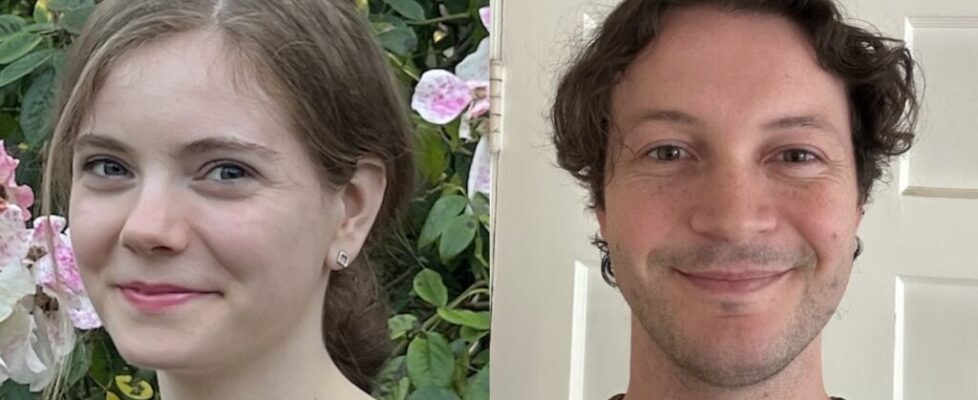
Wonderfest Science Envoys are early-career researchers with enhanced communication skills and aspirations. Following short talks on provocative modern science topics, these two Science Envoys will answer questions with insight and enthusiasm:
• Stanford physicist Maya Beleznay on Weighing Black Widow Pulsars — What would Robert Oppenheimer and a modern physicist have in common? Neither could tell you how many particles can fit in a city-size ball before collapsing into a black hole! Some neutron stars in our galaxy teeter on the edge of this maximum theoretical density. Observations of such “black widow pulsars” allow us to explore a regime of physics that cannot be probed in a lab on Earth.
• UC Berkeley vision scientist Lawrence Man on Retinal Remodeling in Degenerative Blindness — As our eyes’ light-sensitive cells begin to die, downstream retinal neurons undergo physiological changes. Unfortunately, this neural remodeling negatively affects the electrical properties of neurons, interfering with vision. Dedicated researchers are developing strategies and restorative technologies to overcome this retinal remodeling.
This interactive science presentation, free and unticketed, is produced by Wonderfest in partnership with Marin Science Seminar.
WHAT: Ask a Science Envoy: Pulsars & Blindness
WHO: Maya Beleznay (Stanford) & Lawrence Man (UC Berkeley), Wonderfest Science Envoys
HOW: This event is free and unticketed ... and valuable. But what value does it have FOR YOU (and, indirectly, for society)? Accordingly, please use the DONATE button (below) to support Wonderfest in its nonprofit mission to share the scientific outlook.