
RockClocks & Supernovae – May 26
Wonderfest Science Envoys are early-career researchers with enhanced communication skills and aspirations. Following short talks on provocative modern science topics, these two Science Envoys will answer questions with insight and enthusiasm:
• UC Berkeley geophysicist Caroline Hasler on Measuring Geologic Time with Rock Clocks — In microscopically small crystals within rocks, radioactive elements decay at predictable rates and function as tiny clocks. These “rock clocks” help us to figure out the timing of major events in Earth history — from the moment of Earth’s formation to the asteroid impact that killed the dinosaurs.
• UC Berkeley astronomer Eli Wiston on Seeing Core-collapse Supernovae with Radio Telescopes — At the end of its life, a massive star will contract and explode in spectacular fashion, outshining the light of an entire galaxy. While most astronomers focus on the optical light given off by these stellar explosions, there is a wealth of new information to be gained by observing invisible wavelengths. With radio telescopes, we can study new aspects of supernovae: their stars’ activity in the years before death, their environments, and what they leave behind after the explosion fades.
This interactive science presentation, free and unticketed, is produced by Wonderfest in partnership with Marin Science Seminar.
Marin Science Seminar [https://marinscienceseminar.com]
DreamFish & Wetlands – May 10
Wonderfest Science Envoys are early-career researchers with enhanced communication skills and aspirations. Following short talks on provocative modern science topics, these two Science Envoys will answer questions with insight and enthusiasm:
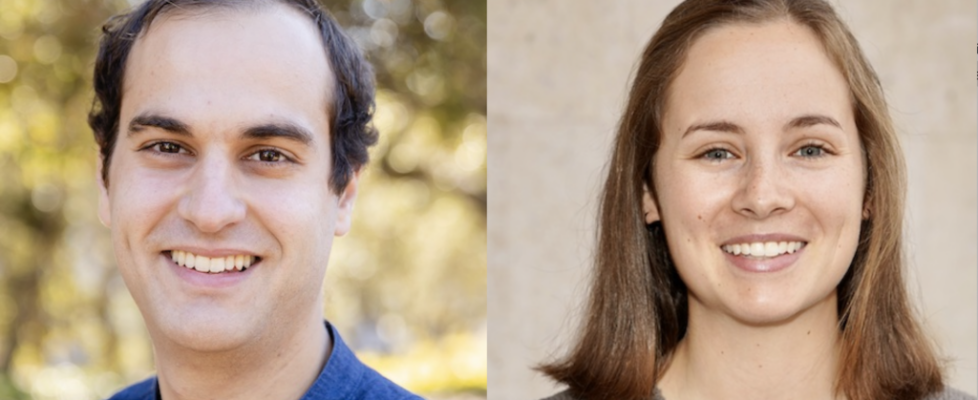
• Stanford biologist Marina Luccioni on Fish that Make Dreams — Hawaiian traditional knowledge from the 1400s references “nightmare fish.” Indeed, eating the heads of certain fish species does induce dizziness, severe hallucinations, and nightmares. How do these fish come to contain and accumulate neurotoxins, and how do those molecules cause hallucinations? Of equal importance, how do we do such science that is respectful of indigenous knowledge and fair to local communities and ecosystems?
• Stanford ecologist Ryan Rogers on What’s Up with Wetlands? — Tidal wetlands are environments of constant change: tides rise and fall, salinity shifts, and waters stay perpetually in motion. In these challenging conditions, seagrasses flourish, creating underwater meadows that support rich and diverse communities. Studying these ecosystems reveals how biodiversity sustains them, and why protecting wetlands and estuaries is critical for resilient coastlines.
This interactive science presentation, free and unticketed, is produced by Wonderfest in partnership with Marin Science Seminar.
Marin Science Seminar [https://marinscienceseminar.com]
Elements & Fairness – Apr 28
Wonderfest Science Envoys are early-career researchers with enhanced communication skills and aspirations. Following short talks on provocative modern science topics, these two Science Envoys will answer questions with insight and enthusiasm:
• UC Berkeley astronomer Natalie LeBaron on Origins of the Elements — From the oxygen we breathe to the gold in our jewelry and the calcium in our bones, most periodic table elements are forged by stars. How does the universe transforms simple hydrogen into the rich diversity of atoms that build planets, life, and everything we see around us? Beginning their lives in vast clouds of gas and ending in massive explosions, every star in the night sky creates and scatters ingredients for new worlds.
• UC Berkeley psychologist Colin Jacobs on Children’s Sense of Fairness — Our motivation to enact fairness shapes human behavior across societal and individual levels: from outrage at economic inequalities, to personal protest against not being considered in a discussion. As parents and teachers know, our motivation to insist upon fairness starts early, often through shouts of “that’s not fair,” or very strict regulation of turn-taking. What motivates children to object to unfairness, and how does this moral impulse develop throughout early childhood?
This interactive science presentation, free and unticketed, is produced by Wonderfest in partnership with Marin Science Seminar.
Marin Science Seminar [https://marinscienceseminar.com]
Cosmology & Evolution – Apr 14
Wonderfest Science Envoys are early-career researchers with enhanced communication skills and aspirations. Following short talks on provocative modern science topics, these two Science Envoys will answer questions with insight and enthusiasm:
• Stanford physicist Mahlet Shiferaw on Learning Cosmology from Galaxies — The Universe is shaped by an invisible “cosmic web” of dark matter that guides where galaxies form. By comparing observations of galaxies to predictions from models, we can probe the nature of dark matter and dark energy. Cosmologists are now developing new modeling and inference techniques to unlock even more information from upcoming galaxy surveys.
• Stanford biologist Sebastian Somolinos on Give Evolution a Chance — When was the last time you watched evolution happen? Evolution is nature’s most powerful problem solver, yet creatures like horseshoe crabs remind us that it can also be slow and stubbornly conservative. To unlock evolution’s full creative potential, and to appreciate evolution more fully, we must learn how to accelerate it. We need to give evolution a chance.
This interactive science presentation, free and unticketed, is produced by Wonderfest in partnership with Marin Science Seminar.
Marin Science Seminar [https://marinscienceseminar.com]
Pulsars & Blindness – Mar 10
Wonderfest Science Envoys are early-career researchers with enhanced communication skills and aspirations. Following short talks on provocative modern science topics, these two Science Envoys will answer questions with insight and enthusiasm:
• Stanford physicist Maya Beleznay on Weighing Black Widow Pulsars — What would Robert Oppenheimer and a modern physicist have in common? Neither could tell you how many particles can fit in a city-size ball before collapsing into a black hole! Some neutron stars in our galaxy teeter on the edge of this maximum theoretical density. Observations of such “black widow pulsars” allow us to explore a regime of physics that cannot be probed in a lab on Earth.
• UC Berkeley vision scientist Lawrence Man on Retinal Remodeling in Degenerative Blindness — As our eyes’ light-sensitive cells begin to die, downstream retinal neurons undergo physiological changes. Unfortunately, this neural remodeling negatively affects the electrical properties of neurons, interfering with vision. Dedicated researchers are developing strategies and restorative technologies to overcome this retinal remodeling.
This interactive science presentation, free and unticketed, is produced by Wonderfest in partnership with Marin Science Seminar.
Marin Science Seminar [https://marinscienceseminar.com]
Smartphone Seismology & Histamine Neurology – May 27
Wonderfest Science Envoys are early-career researchers with enhanced communication skills and aspirations. Following short talks on provocative modern science topics, these two Science Envoys will answer questions with insight and enthusiasm:
• UC Berkeley seismologist Savvas Marcou on Smartphones Map Ground Shaking in Our Neighborhoods — California is earthquake country. Everyone would love to know how much shaking the next temblor will deliver to their neighborhood. Fortunately, the humble smartphone, available in everyone’s pockets, can record and map ground shaking patterns in unprecedented resolution, and may transform how we think about the next big earthquake.
• Stanford neuroscientist Ashley Moses on Rethinking Histamine: From Molecule to Motivation — Though primarily known for its role in allergies, histamine influences cognition, mood, and sleep, as well. In fact, this understudied molecule is indispensable for brain health. By studying histamine’s role in motivated behaviors, we can uncover groundbreaking insights into neurological problems like depression, Parkinson’s Disease, and stress disorders.
This interactive science presentation, free and unticketed, is produced by Wonderfest in partnership with Marin Science Seminar.
Marin Science Seminar [https://marinscienceseminar.com]
