

Pulsars & Blindness – Mar 10
Wonderfest Science Envoys are early-career researchers with enhanced communication skills and aspirations. Following short talks on provocative modern science topics, these two Science Envoys will answer questions with insight and enthusiasm:
• Stanford physicist Maya Beleznay on Weighing Black Widow Pulsars — What would Robert Oppenheimer and a modern physicist have in common? Neither could tell you how many particles can fit in a city-size ball before collapsing into a black hole! Some neutron stars in our galaxy teeter on the edge of this maximum theoretical density. Observations of such “black widow pulsars” allow us to explore a regime of physics that cannot be probed in a lab on Earth.
• UC Berkeley vision scientist Lawrence Man on Retinal Remodeling in Degenerative Blindness — As our eyes’ light-sensitive cells begin to die, downstream retinal neurons undergo physiological changes. Unfortunately, this neural remodeling negatively affects the electrical properties of neurons, interfering with vision. Dedicated researchers are developing strategies and restorative technologies to overcome this retinal remodeling.
This interactive science presentation, free and unticketed, is produced by Wonderfest in partnership with Marin Science Seminar.
Marin Science Seminar [https://marinscienceseminar.com]
Smartphone Seismology & Histamine Neurology – May 27
Wonderfest Science Envoys are early-career researchers with enhanced communication skills and aspirations. Following short talks on provocative modern science topics, these two Science Envoys will answer questions with insight and enthusiasm:
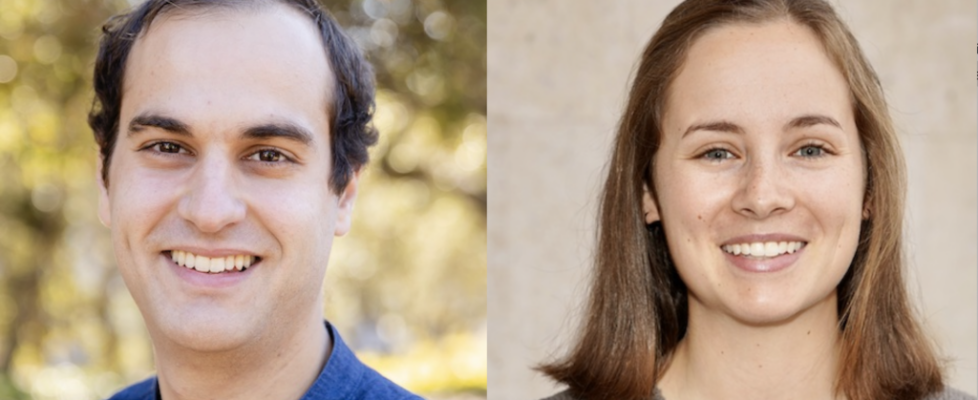
• UC Berkeley seismologist Savvas Marcou on Smartphones Map Ground Shaking in Our Neighborhoods — California is earthquake country. Everyone would love to know how much shaking the next temblor will deliver to their neighborhood. Fortunately, the humble smartphone, available in everyone’s pockets, can record and map ground shaking patterns in unprecedented resolution, and may transform how we think about the next big earthquake.
• Stanford neuroscientist Ashley Moses on Rethinking Histamine: From Molecule to Motivation — Though primarily known for its role in allergies, histamine influences cognition, mood, and sleep, as well. In fact, this understudied molecule is indispensable for brain health. By studying histamine’s role in motivated behaviors, we can uncover groundbreaking insights into neurological problems like depression, Parkinson’s Disease, and stress disorders.
This interactive science presentation, free and unticketed, is produced by Wonderfest in partnership with Marin Science Seminar.
Marin Science Seminar [https://marinscienceseminar.com]