Love in the Time of Facebook
Facebook is a great way to share news, keep in touch with friends, and make fun of old photos. It’s also a gold mine of information about human relationships. Data scientists have studied the communications of people who change their Facebook relationship status from “Single” to “In a relationship.” We now know how their timeline posts change, and how their use of positive wording (“love,” “nice,” “happy,” etc.) evolve. Aggregate, anonymized Facebook data tells us a lot about the formation of love, its duration, its stages, and the role of other factors like religion and age. Join Facebook scientist Dr. Carlos Diuk as he mines the data to explore love and relationships in the modern era.
- WHAT: Love in the Time of Facebook
- WHO: Dr. Carlos Diuk, Facebook Data Scientist
- WHEN: 7pm, Wednesday, March 18, 2015
- WHERE: Patreon HQ, 230 – 9th Street, San Francisco (close to BART Civic Center) <http://tinyurl.com/lljx2da>
- HOW: Purchase $5 tickets via Eventbrite, below. Complimentary snacks & drinks provided by Patreon. Co-produced with Ask a Scientist.
- WHY: Because we’re curious creatures.
Wonderfest works every day to promote the scientific outlook. For as little as $1/month, why not become a Wonderfest Patron? As the Medici family were patrons of popular art in old Italy, you can become a patron of popular science and rationality in the modern Bay Area. (And you’ll get that tax-deduction that the Medici never did!) Please become a regular supporter of Wonderfest, and help enlarge the concept of scientific community.
If you shop at Amazon.com, why not shop at AmazonSmile? It doesn’t cost you a dime extra, selection and prices are the same, and a small percent supports Wonderfest and science! http://amazon.wonderfest.org.
Watch more videos: http://videos.wonderfest.org
Join us on:
http://facebook.com/wonderfest
http://twitter.com/wonderfest

 What if our soundest, most reasonable judgments are beyond our control? Are the feelings of being rational and having free will generated by conscious decisions or involuntary brain mechanisms? Is there a way to resolve the conflict between our innate biology and our traditional beliefs? Dr. Robert A. Burton, author of A Skeptic’s Guide to the Mind, reveals what neuroscience can (and cannot) tell us about ourselves.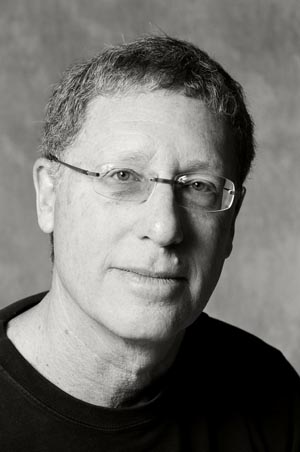
 Who’s your (ancient) daddy? Did he walk upright? Could he control fire? Did he have a brow ridge that wouldn’t quit?! Then maybe he was a Homo of the erectus — not so sapient — type. Many new Homo erectus specimens have been added to the global repository in the past decades, and many new interpretations have followed. It is more that most can easily digest. Come join professor Henry Gilbert, discoverer of the