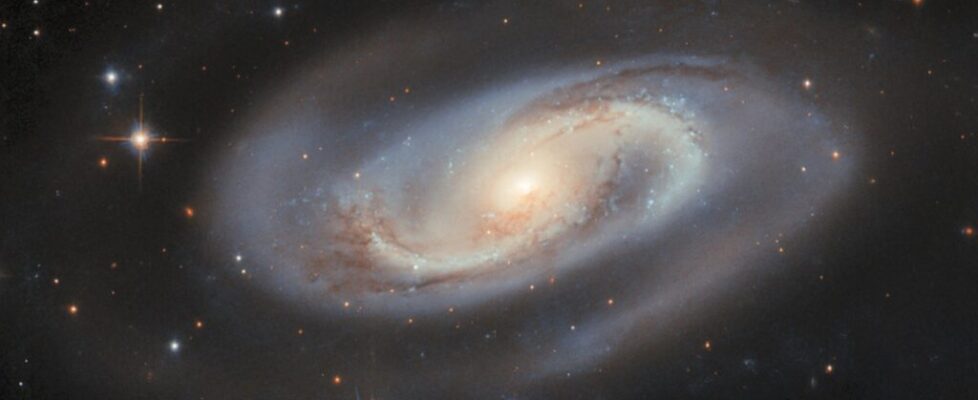
The USA has developed ground- and space-based telescopes that have helped revolutionize our view of the cosmos … and of ourselves. In this Commonwealth Club event, astrophysicist John Mulchaey explores current and future developments in telescope innovation, the state of national investment in those developments, the global collaboration on extremely large telescopes such as the Giant Magellan, and the future of American leadership in this particular leg of the modern space race.
Wonderfest joins Commonwealth Club World Affairs to present Dr. John Mulchaey, President of the Carnegie Institution for Science, in conversation with the George Hammond, author of Conversations with Socrates.
This event can be enjoyed in-person only. Pre-register with the Commonwealth Club / World Affairs via the “Tickets” link, below. Use promo code WONDERNAUTS for a $10 ticket discount.
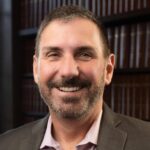
Dr. John Mulchaey
WHAT: Tremendous Telescopes: The Future of US Space Observation
HOW: During the last stage of online ticket purchase from the Commonwealth Club (via the "Tickets" link, below), use promo code WONDERNAUTS to secure a discount of $10.
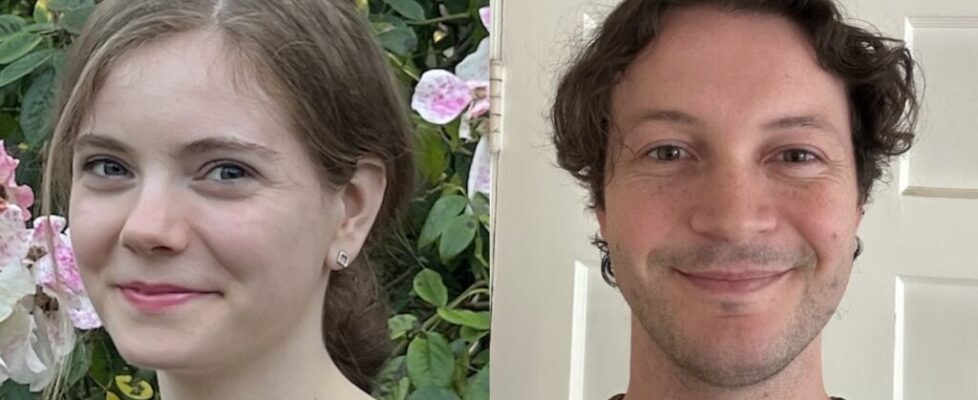
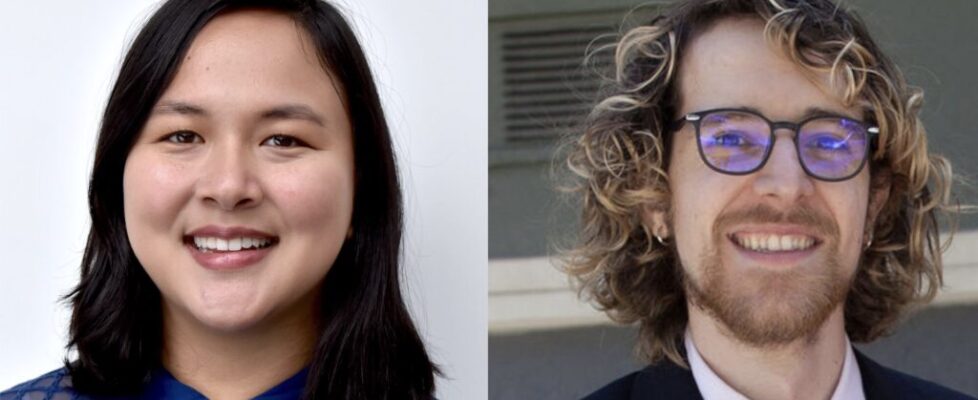
Wonderfest Science Envoys are early-career researchers with enhanced communication skills and aspirations. Following short talks on provocative modern science topics, these two Science Envoys will answer questions with insight and enthusiasm:
• UC Berkeley astronomer Natalie LeBaron on Origins of the Elements — From the oxygen we breathe to the gold in our jewelry and the calcium in our bones, most periodic table elements are forged by stars. How does the universe transforms simple hydrogen into the rich diversity of atoms that build planets, life, and everything we see around us? Beginning their lives in vast clouds of gas and ending in massive explosions, every star in the night sky creates and scatters ingredients for new worlds.
• UC Berkeley psychologist Colin Jacobs on Children’s Sense of Fairness — Our motivation to enact fairness shapes human behavior across societal and individual levels: from outrage at economic inequalities, to personal protest against not being considered in a discussion. As parents and teachers know, our motivation to insist upon fairness starts early, often through shouts of “that’s not fair,” or very strict regulation of turn-taking. What motivates children to object to unfairness, and how does this moral impulse develop throughout early childhood?
This interactive science presentation, free and unticketed, is produced by Wonderfest in partnership with Marin Science Seminar.
HOW: This event is free and unticketed ... and valuable. But what value does it have FOR YOU (and, indirectly, for society)? Accordingly, please use the DONATE button (below) to support Wonderfest in its nonprofit mission to share the scientific outlook.
The search for life in the universe invites deep exploration of our own world’s 4-billion-year habitability. We begin to see the cosmos as a vast and seamlesss network of relationships — a web that envelops our own Earth and the human heart. In this age of ecological disruption and social fragmentation, the personal journey of one astrobiologist, integrating scientific inquiry with contemplative awareness, can help deepen the capacity for compassion rather than despair. It may even help the next generation to build a healthy, humane, and resilient civilization.
Our Wonderfest speaker is astronomer and astrobiologist Dr.Margaret Turnbull. Maggie does research on planetary habitability at the SETI Institute.
Dr. Maggie Turnbull
WHAT: An Astronomer's View of Life and the Human Heart
WHO: Dr. Maggie Turnbull, Astrobiologist, SETI Institute
HOW: This event is free and unticketed ... and valuable. But what value does it have FOR YOU (and, indirectly, for society)? Accordingly, please use the DONATE button (below) to support Wonderfest in its nonprofit mission to share the scientific outlook.
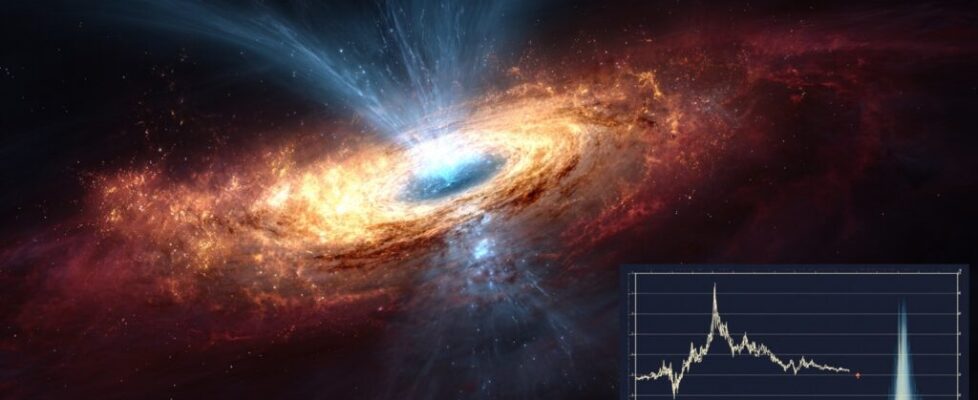
The most energetic phenomena in the universe tend to reveal themselves through intense, short-lived signals. These violent transient events include novae, supernovae, and mergers of both neutron stars and black holes. Their signals — their natural messages — can span the entire electromagnetic spectrum, and may include gravitational waves as well as bursts of subatomic particles. The burgeoning field of multi-messenger astronomy inspires new technical observing abilities as it challenges our understanding of astrophysics. In so many new ways, however, the glorious cosmos and its contents come into clearer focus.
Our Wonderfest speaker is Raffaella Margutti, Associate Professor of both Physics and Astronomy at UC Berkeley. Dr. Margutti received the 2022 New Horizons in Physics Prize, and she advises three recent Wonderfest Science Envoys.
HOW: This event is free and unticketed ... and valuable. But what value does it have FOR YOU (and, indirectly, for society)? Accordingly, please use the DONATE button (below) to support Wonderfest in its nonprofit mission to share the scientific outlook.
Next Scientist is a new Wonderfest series of online presentations. Every Next Scientist Zoom consists of two 30-minute presentations (including 10 minutes of Q&A), each featuring a young researcher describing next-level science:
UC Berkeley arachnologist Trinity Walls on Creepy or Captivating: A Spider Scientist’s Perspective — How have recent discoveries about spiders changed beliefs that have been passed down for generations? Can we see that the study of spiders is beneficial to society? One person’s life-long journey — from curious child to rigorous researcher — reveals spider science to be an avenue of creative self-expression that offers rich insights into nature.
UC Berkeley astrophysicist Tyler Cox on Creating the Largest-Ever Maps of the Universe — New datasets from the James Webb Space Telescope have begun to reveal some of the oldest known galaxies in the universe. But what lies beyond these extremely remote objects, and what more can we learn by going deeper? Next-generation experiments are working to map the most distant regions of the universe to help explain the origins of the first galaxies.
WHAT: Next Scientist: Spider Love & Deep Cosmic Maps
WHO: Trinity Walls & Tyler Cox, Wonderfest Next Scientists
WHEN: 2023-11-07 — 7:30pm, Tuesday, Nov 7 (1 hour)
HOW:
This free, online, science presentation is produced by Wonderfest in partnership with the Castro Valley Educational Foundation and Castro Valley Science.
What value does this experience — and these insights — have for YOU? Accordingly, please support nonprofit Wonderfest, the Bay Area Beacon of Science, by donating via the Eventbrite space, below.
The past few decades of astronomical discovery have been breathtaking: thirty years of awe-inspiring images from two Space Telescopes (Hubble & Webb), thousands of planets found circling nearby stars, mind-bending and spacetime-bending gravity waves and, quite recently, a stunning image of the black hole at the center of the Milky Way. What is the value of all of these discoveries? Can learning about our place in the Universe inspire us, as Carl Sagan put it, to preserve and cherish the Pale Blue Dot?
Our speaker, Dr. Adrienne Cool, is Professor of Physics & Astronomy at San Francisco State University. She is also co-founder of Astronomers for Planet Earth, an international organization working to address climate change from a cosmic perspective.
WHEN: 2023-06-20 — 7pm, Tuesday, June 20 (1.5 hour)
HOW:
Since Wonderfest is COVID-cautious, consider wearing a mask; the warm feeling of Wondernaut(!) camaraderie radiates through masks and across wide seat-spacing.
This event is FREE and unticketed ... and valuable. But what value does it have for you? Accordingly please consider a donation to nonprofit Wonderfest via the Eventbrite window, below.
Wonderfest Science Envoys are early-career researchers with special communication skills and aspirations. Following short talks on provocative modern science topics, these two Science Envoys will answer questions with insight and enthusiasm:
• Stanford neuroeconomist Tara Srirangarajan on Neural Engagement With Nature Imagery — The power of Internet media to capture attention, inspire emotions, and motivate behavior pervades much of modern life. Nature imagery — from pets to wildlife to landscapes — engages the public toward a variety of ends. Understanding the neural mechanisms that underlie the effect of such imagery can drive prosocial action on climate change and other environmental issues.
• UC Berkeley computer scientist Micah Carroll on Manipulation via Social Media Algorithms — A new class of AI algorithm is working to maximize user engagement across social media — actually trying to change the user in order to make more money for parent Internet companies. When we browse online social content, e.g. on Instagram or TikTok, exactly how will AI play with our minds?
WHAT: Ask a Science Envoy: Neural Engagement & Algorithmic Manipulation
WHEN: 2022-05-17 — 8pm, Tuesday, May 17th (1 hour)
HOW:
This event is free. But what value do these science insights have FOR YOU? Accordingly, please use the space below to contribute to nonprofit Wonderfest, and help to promote the scientific outlook broadly — as through our outstanding Science Envoy Program.
Wonderfest Science Envoys are early-career researchers with special communication skills and aspirations. Following short talks on provocative modern science topics, these two Science Envoys will answer questions with insight and enthusiasm:
• Stanford neuroscientist Douglas Steven Miller on Why Can’t I Remember? — Memory is a fundamental component of life. However, memory within and across individuals can vary. By studying attention, we can illuminate key components of these differences and perhaps strengthen our memory.
• UC Berkeley astrophysicist Sergiy Vasylyev on Cosmic Fireworks — Some stars go out with a bang: a cataclysmic explosion known as a supernova. Supernovae allow us to study the composition and dynamics of the Universe. Astronomers are able to use certain properties of light and atoms to peer inside the extreme environments of these cosmic fireworks from the safety of planet Earth.
WHAT: Ask a Science Envoy: Memory & Supernovae
WHO: Douglas S. Miller (Stanford) & Sergiy Vasylyev (UC Berkeley), Wonderfest Science Envoys
This event is free. But what value do these science insights have FOR YOU? Accordingly, please use the space below to contribute to nonprofit Wonderfest, and help to promote the scientific outlook broadly — as through our outstanding Science Envoy Program.
The Drake Equation famously “quantifies our ignorance" regarding the number, N, of technological civilizations in our galaxy. Even though planets are plentiful, and even though life may be a natural — even common — product of cosmic chemistry, we may truly be the only galactic civilization capable of interstellar communication. I.e., perhaps N~1.
Our speaker, Pascal Lee, is a planetary scientist at the SETI Institute, and co-founder of the Mars Institute. During the video premiere of "N~1: Alone in the Milky Way," Dr. Lee will answer questions in the YouTube "chat" bar. Live Q&A will continue, immediately afterward, via Google "Meet."
WHEN: 2020-10-24 — 7:30pm PDT, Sat, Oct 24 (1.5 hr)
HOW:
This event is co-produced by Wonderfest and the Mount Tamalpais Astronomy Program. Visit the Mt Tam Astronomy YouTube channel ("WHERE" link, above) to set a reminder for the YouTube Premiere on Saturday, October 24th. One week thereafter, the video can be viewed at the Wonderfest Science YouTube channel: https://www.youtube.com/wonderfestscience.
BTW, if you benefit from science events like this, please donate accordingly — via the inaptly-named "Tickets" box below — to help nonprofit Wonderfest share the scientific outlook.
Join San Francisco's "Urban Astronomer" Paul Salazar and KPOO's DJ Marilynn for a VIRTUAL guided tour of the glorious night sky.
Just find a dark, unobstructed view of the sky, and tune into KPOO-FM (89.5 MHz) or visit <https://kpoo.com/stream> with a smart phone. Then, look upward and let SF's Urban Astronomer guide you toward the setting Moon, Jupiter, and Saturn in the west, and then toward Mars, the Pleiades star cluster, and the Andromeda Galaxy in the east. (Folks stuck indoors or under clouds can participate "virtually" via a free astronomy app such as SkyView Lite.) Stargazing households congregating in backyards and socially-distanced strangers on sidewalks will feel united by the grandeur — and the wonder — of the night sky.
From a dark location with a clear view of the sky, use a radio or Internet-ready phone to tune into the KPOO-FM broadcast (89.5 MHz) or live-stream (https://kpoo.com/stream).
This event is part of the Bay Area Science Festival. Big thanks to Andy Fraknoi, former Chair of the Foothill College Astronomy Department (and 1st recipient of Wonderfest's Sagan Prize!), for inspiration.
Just as Earth has an atmosphere, and stars (like the Sun) have coronas, galaxies are embedded in invisible halos of atomic gases. As galaxies evolve, these gaseous halos exhibit many interesting phenomena similar to rains and droughts on Earth. What do these enormous galactic climate systems look like, how are they studied, and how do they behave?
Our speaker, Dr. Yong Zheng, earned her astronomy PhD at Columbia University, and is now a Miller posdoctoral scholar in the UC Berkeley Astronomy Department. During the video Premiere of "Galactic Weather," Dr. Zheng will answer questions in the YouTube "chat" bar. Live Q&A will continue, immediately afterward, via Google "Meet."
Dr. Yong Zheng
WHAT: Galactic Weather
WHO: Dr. Yong Zheng, Miller Postdoctoral Scholar, Astronomy Department, UC Berkeley
WHEN: 2020-08-22 — 7:30pm, Sat, August 22 (1.5 hr)
HOW:
This event is co-produced by Wonderfest and the Mount Tamalpais Astronomy Program. In mid-August, when the "Galactic Weather" video is formally posted, visit the Mt Tam Astronomy YouTube channel ("WHERE" link, above) to set a reminder for the actual Premiere on Saturday, August 22nd. Thereafter, the video can be viewed at the Wonderfest Science YouTube channel: <https://www.youtube.com/wonderfestscience>.
BTW, if you benefit from science events like this, please donate accordingly — via the inaptly-named "Tickets" box below — to help nonprofit Wonderfest share the scientific outlook.
The Big Bang Theory, describing the origin of our universe, is very well established today. We have ample evidence that the universe originated from a hot "singularity," then expanded and cooled over time. Nevertheless, there is still a missing piece of the cosmic puzzle: How did the first stars form?! This presentation will explore the observational challenges we face in answering such a fundamental question.
Our speaker, Deepthi Gorthi, is a 5th-year doctoral researcher in the UC Berkeley Astronomy Department. She is also a Wonderfest Science Envoy. During the video Premiere of "The Very First Stars," Deepthi will answer questions in the YouTube "chat" bar. Live Q&A will continue, immediately afterward, via Google "Meet."
This event is co-produced by Wonderfest and the Mount Tamalpais Astronomy Program. In mid-July, when the "First Stars" video Premiere event is formally posted, visit the Mt Tam Astronomy YouTube channel ("WHERE" link, above) to set a reminder for the actual Premiere on Saturday, July 25th. Thereafter, the video can be viewed at the Wonderfest Science YouTube channel: <https://www.youtube.com/channel/UCccr2q6IgFSOglvh66VFSLw>.
BTW, what value will this admission-free event have FOR YOU? Please donate accordingly — via the inaptly-named "Tickets" box below — to help nonprofit Wonderfest share the scientific outlook.
The age of astrobiology has begun. We have a whole solar system — and a galaxy of star-warmed worlds beyond — to explore for life. How do we look for life here and way out there? How will we know it when we find it? Our exploration begins at Earth. We must apply what we are learning about our own amazing home planet to our search for life beyond.
Our Speaker, Dr. Penny Boston, was Director of NASA's Astrobiology Institute at Ames Research Center. Access her presentation at the Mt Tam Astronomy YouTube channel, linked below. Dr. Boston will answer questions during the video premiere AND, afterward, via Google "Meet."
Dr. Penelope Boston
WHAT: Astrobiology Under Our Feet and Out to the Stars
WHO: Dr. Penelope Boston, Former Director, NASA Astrobiology Institute
This Wonderfest + Mt Tam Astronomy presentation will take place ONLINE as a YouTube video "Premiere" with LIVE Q&A.
Public health protection has moved this presentation from its originally-planned Mount Tamalpais venue to the Mt.Tam Astronomy YouTube channel. Please "tune in" at the originally-planned event start-time (7:30pm, Saturday, June 27) at the following website: https://www.youtube.com/channel/UCccr2q6IgFSOglvh66VFSLw Thereafter, the video will also be available at the Wonderfest Science YouTube channel: https://www.youtube.com/channel/UC-755eqlqZRcflOQTL-jOZg
This online event is jointly presented by the Friends of Mt. Tam, the San Francisco Amateur Astronomers, and Wonderfest.