The USA has developed ground- and space-based telescopes that have helped revolutionize our view of the cosmos … and of ourselves. In this Commonwealth Club event, astrophysicist John Mulchaey explores current and future developments in telescope innovation, the state of national investment in those developments, the global collaboration on extremely large telescopes such as the Giant Magellan, and the future of American leadership in this particular leg of the modern space race.
Wonderfest joins Commonwealth Club World Affairs to present Dr. John Mulchaey, President of the Carnegie Institution for Science, in conversation with the George Hammond, author of Conversations with Socrates.
This event can be enjoyed in-person only. Pre-register with the Commonwealth Club / World Affairs via the “Tickets” link, below. Use promo code WONDERNAUTS for a $10 ticket discount.
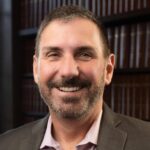
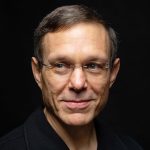
Dr. John Mulchaey
WHAT: Tremendous Telescopes: The Future of US Space Observation
HOW: During the last stage of online ticket purchase from the Commonwealth Club (via the "Tickets" link, below), use promo code WONDERNAUTS to secure a discount of $10.
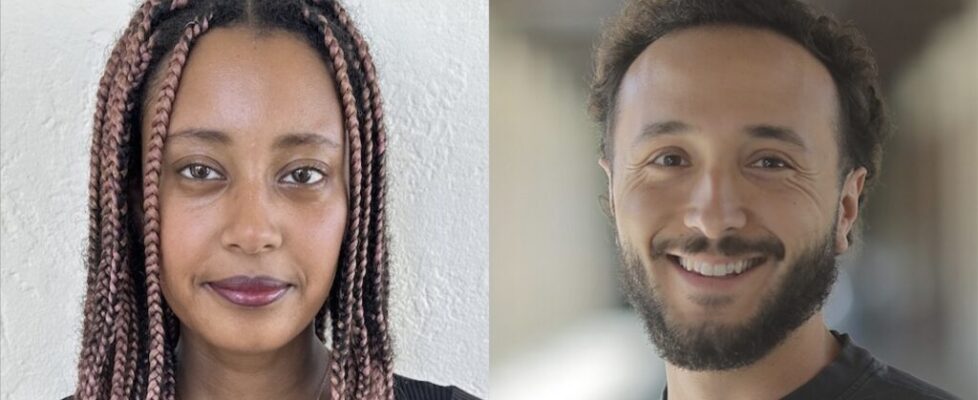
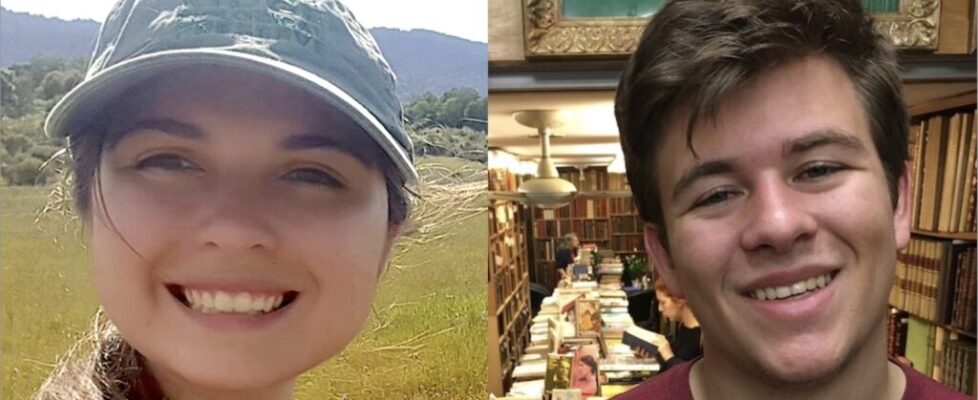
Wonderfest Science Envoys are early-career researchers with enhanced communication skills and aspirations. Following short talks on provocative modern science topics, these two Science Envoys will answer questions with insight and enthusiasm:
• Stanford physicist Mahlet Shiferaw on Learning Cosmology from Galaxies — The Universe is shaped by an invisible “cosmic web” of dark matter that guides where galaxies form. By comparing observations of galaxies to predictions from models, we can probe the nature of dark matter and dark energy. Cosmologists are now developing new modeling and inference techniques to unlock even more information from upcoming galaxy surveys.
• Stanford biologist Sebastian Somolinos on Give Evolution a Chance — When was the last time you watched evolution happen? Evolution is nature’s most powerful problem solver, yet creatures like horseshoe crabs remind us that it can also be slow and stubbornly conservative. To unlock evolution’s full creative potential, and to appreciate evolution more fully, we must learn how to accelerate it. We need to give evolution a chance.
This interactive science presentation, free and unticketed, is produced by Wonderfest in partnership with Marin Science Seminar.
HOW: This event is free and unticketed ... and valuable. But what value does it have FOR YOU (and, indirectly, for society)? Accordingly, please use the DONATE button (below) to support Wonderfest in its nonprofit mission to share the scientific outlook.
An August-24th New York Times article about audacious astronomer Avi Loeb concludes with this: “Now, that being said, if [Dr. Loeb] finds something, it’s life-changing … It will change everything.” What was “being said” referred to professional academic complaints about Dr. Loeb’s alleged “transgressions against scientific norms and protocols.” However, no one disputes the excitement of Prof. Loeb’s investigations. Wonderfest joins the Commonwealth Club to present controversial Harvard astronomer Avi Loeb in conversation about ideas in his latest book, Interstellar: The Search for Extraterrestrial Life and Our Future in the Stars. That conversation will explore some vital — if highly speculative — long-term questions: How do we prepare for first contact with ET? And how can our species itself become interstellar?
Dr. Avi Loeb is Professor of Science and former chair of the Astronomy Department at Harvard University. During this online event, he will be in conversation with the Commonwealth Club’s George Hammond.
Please pre-register with the Commonwealth Club (via the URL below) to receive a link — via email — to this live-stream event. Use discount code WonderfestPromo for $10 off the ticket price, rendering that ticket completely FREE.
Wonderfest Science Envoys are early-career researchers with special communication skills and aspirations. Following short talks on provocative modern science topics, these two Science Envoys will answer questions with insight and enthusiasm:
• Stanford paleobiologist Dr. Maria Viteri on Exhuming the Dead to Save the Living — Earth is experiencing a crisis in biodiversity. Surprisingly, the fossil record offers key insights for understanding this crisis, and one scientist’s lifelong fascination with dinosaurs — leading to a career in conservation biology — is helping to combat the biodiversity challenge of the present … and of the future.
• UC Berkeley astrophysicist Tyler Cox on Creating the Largest-Ever Maps of the Universe — New datasets from the James Webb Space Telescope have begun to reveal some of the oldest known galaxies in the universe. But what lies beyond these extremely remote objects, and what more can we learn by going deeper? Next-generation experiments are working to map the most distant regions of the universe to help explain the origins of the first galaxies.
WHAT: Ask a Science Envoy: Biodiversity & Cosmic Maps
WHO: Maria Viteri & Tyler Cox, Wonderfest Science Envoys
This free, online, science presentation is produced by Wonderfest in partnership with the Berkeley Public Library.
What value do these science insights have for you? Accordingly, please consider making a donation to nonprofit Wonderfest via the Eventbrite box, below. (Note: No "sales" or "tickets" are involved; it's just a thoughtful contribution to help Wonderfest promote science understanding and the scientific outlook.)
The Drake Equation famously “quantifies our ignorance" regarding the number, N, of technological civilizations in our galaxy. Even though planets are plentiful, and even though life may be a natural — even common — product of cosmic chemistry, we may truly be the only galactic civilization capable of interstellar communication. I.e., perhaps N~1.
Our speaker, Pascal Lee, is a planetary scientist at the SETI Institute, and co-founder of the Mars Institute. During the video premiere of "N~1: Alone in the Milky Way," Dr. Lee will answer questions in the YouTube "chat" bar. Live Q&A will continue, immediately afterward, via Google "Meet."
WHEN: 2020-10-24 — 7:30pm PDT, Sat, Oct 24 (1.5 hr)
HOW:
This event is co-produced by Wonderfest and the Mount Tamalpais Astronomy Program. Visit the Mt Tam Astronomy YouTube channel ("WHERE" link, above) to set a reminder for the YouTube Premiere on Saturday, October 24th. One week thereafter, the video can be viewed at the Wonderfest Science YouTube channel: https://www.youtube.com/wonderfestscience.
BTW, if you benefit from science events like this, please donate accordingly — via the inaptly-named "Tickets" box below — to help nonprofit Wonderfest share the scientific outlook.
Join San Francisco's "Urban Astronomer" Paul Salazar and KPOO's DJ Marilynn for a VIRTUAL guided tour of the glorious night sky.
Just find a dark, unobstructed view of the sky, and tune into KPOO-FM (89.5 MHz) or visit <https://kpoo.com/stream> with a smart phone. Then, look upward and let SF's Urban Astronomer guide you toward the setting Moon, Jupiter, and Saturn in the west, and then toward Mars, the Pleiades star cluster, and the Andromeda Galaxy in the east. (Folks stuck indoors or under clouds can participate "virtually" via a free astronomy app such as SkyView Lite.) Stargazing households congregating in backyards and socially-distanced strangers on sidewalks will feel united by the grandeur — and the wonder — of the night sky.
From a dark location with a clear view of the sky, use a radio or Internet-ready phone to tune into the KPOO-FM broadcast (89.5 MHz) or live-stream (https://kpoo.com/stream).
This event is part of the Bay Area Science Festival. Big thanks to Andy Fraknoi, former Chair of the Foothill College Astronomy Department (and 1st recipient of Wonderfest's Sagan Prize!), for inspiration.
Just as Earth has an atmosphere, and stars (like the Sun) have coronas, galaxies are embedded in invisible halos of atomic gases. As galaxies evolve, these gaseous halos exhibit many interesting phenomena similar to rains and droughts on Earth. What do these enormous galactic climate systems look like, how are they studied, and how do they behave?
Our speaker, Dr. Yong Zheng, earned her astronomy PhD at Columbia University, and is now a Miller posdoctoral scholar in the UC Berkeley Astronomy Department. During the video Premiere of "Galactic Weather," Dr. Zheng will answer questions in the YouTube "chat" bar. Live Q&A will continue, immediately afterward, via Google "Meet."
Dr. Yong Zheng
WHAT: Galactic Weather
WHO: Dr. Yong Zheng, Miller Postdoctoral Scholar, Astronomy Department, UC Berkeley
WHEN: 2020-08-22 — 7:30pm, Sat, August 22 (1.5 hr)
HOW:
This event is co-produced by Wonderfest and the Mount Tamalpais Astronomy Program. In mid-August, when the "Galactic Weather" video is formally posted, visit the Mt Tam Astronomy YouTube channel ("WHERE" link, above) to set a reminder for the actual Premiere on Saturday, August 22nd. Thereafter, the video can be viewed at the Wonderfest Science YouTube channel: <https://www.youtube.com/wonderfestscience>.
BTW, if you benefit from science events like this, please donate accordingly — via the inaptly-named "Tickets" box below — to help nonprofit Wonderfest share the scientific outlook.
The Big Bang Theory, describing the origin of our universe, is very well established today. We have ample evidence that the universe originated from a hot "singularity," then expanded and cooled over time. Nevertheless, there is still a missing piece of the cosmic puzzle: How did the first stars form?! This presentation will explore the observational challenges we face in answering such a fundamental question.
Our speaker, Deepthi Gorthi, is a 5th-year doctoral researcher in the UC Berkeley Astronomy Department. She is also a Wonderfest Science Envoy. During the video Premiere of "The Very First Stars," Deepthi will answer questions in the YouTube "chat" bar. Live Q&A will continue, immediately afterward, via Google "Meet."
This event is co-produced by Wonderfest and the Mount Tamalpais Astronomy Program. In mid-July, when the "First Stars" video Premiere event is formally posted, visit the Mt Tam Astronomy YouTube channel ("WHERE" link, above) to set a reminder for the actual Premiere on Saturday, July 25th. Thereafter, the video can be viewed at the Wonderfest Science YouTube channel: <https://www.youtube.com/channel/UCccr2q6IgFSOglvh66VFSLw>.
BTW, what value will this admission-free event have FOR YOU? Please donate accordingly — via the inaptly-named "Tickets" box below — to help nonprofit Wonderfest share the scientific outlook.
Michael Kuhlen, Postdoctoral Fellow at the Theoretical Astrophysics Center, UC Berkeley
More than 80% of the material universe consists of stuff we don’t understand. This “dark matter” gravitates, but it does very little else; in particular, it doesn’t emit, reflect, or even absorb light. Over the next decade, a combination of astronomical observations and particle physics experiments hold great promise to finally shed light on the nature of dark matter.
This lecture will be followed by a guided tour of the night sky provided by Paul Salazar, the Urban Astronomer. Then, true space cadets are invited to walk to the nearby Rock Spring parking lot to peer through telescopes of the San Francisco Amateur Astronomers.