Team Science Quiz – TBD

Howard Rachelson

Wonderfest Science Envoys are early-career researchers with enhanced communication skills and aspirations. Following short talks on provocative modern science topics, these two Science Envoys will answer questions with insight and enthusiasm:
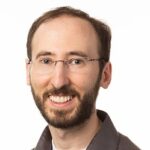
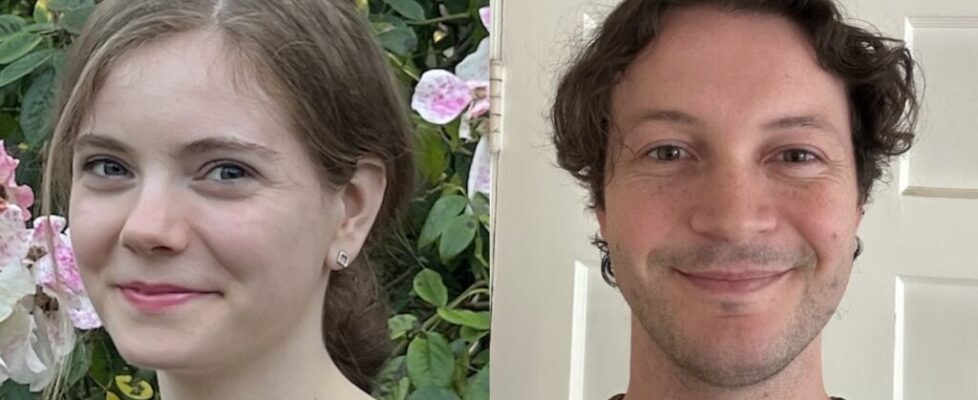
• UC Berkeley astronomer Natalie LeBaron on Origins of the Elements — From the oxygen we breathe to the gold in our jewelry and the calcium in our bones, most periodic table elements are forged by stars. How does the universe transforms simple hydrogen into the rich diversity of atoms that build planets, life, and everything we see around us? Beginning their lives in vast clouds of gas and ending in massive explosions, every star in the night sky creates and scatters ingredients for new worlds.
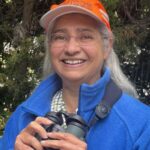
• UC Berkeley psychologist Colin Jacobs on Children’s Sense of Fairness — Our motivation to enact fairness shapes human behavior across societal and individual levels: from outrage at economic inequalities, to personal protest against not being considered in a discussion. As parents and teachers know, our motivation to insist upon fairness starts early, often through shouts of “that’s not fair,” or very strict regulation of turn-taking. What motivates children to object to unfairness, and how does this moral impulse develop throughout early childhood?
This interactive science presentation, free and unticketed, is produced by Wonderfest in partnership with Marin Science Seminar.
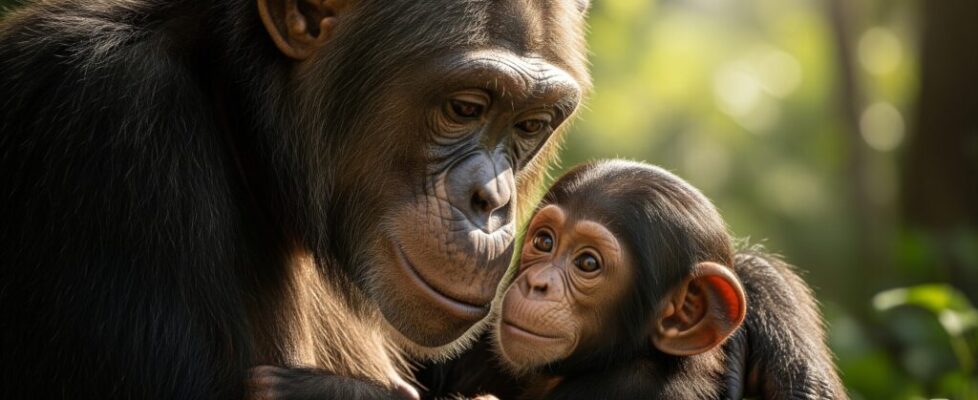
A common model of AI suggests that there is a single measure of intelligence, often called AGI, and that AI systems are agents who can possess more or less of this intelligence. Cognitive science, in contrast, suggests that there are multiple forms of intelligence and that these intelligences trade-off against each other and have a distinctive developmental profile and evolutionary history. Exploitation (the pursuit of goals, resources, and utilities) characterizes adult cognition. However, exploration (seeking information about the world) characterizes childhood cognition, and empowerment (of others, through care and teaching) characterizes cognition in elderhood. The combination of these three different kinds of intelligence, across the course of a life, explains human success.
Our Wonderfest speaker, Dr. Alison Gopnik, is Distinguished Professor of Psychology at UC Berkeley. She is also Affiliate Professor of Philosophy at Cal, and a member of the Berkeley AI Research Group. In 2021, Dr. Gopnik received Wonderfest’s Carl Sagan Prize for Science Popularization.

Love may not “make the world go ’round,” but it surely makes the ride more joyous. The outward displays of love are familiar and simple: a reassuring touch, a passionate kiss, a bedtime story told to a drowsy child. But what is going on inside the brains of people in a loving relationship? Surprisingly, neuroscience can now inform us about the bonds of affection, and how, over each lifetime, love acts to sustain our body and even prolong our life.
Wonderfest’s speaker is psychologist Thomas B. Lewis, M.D., Adjunct Professor at the University of San Francisco and Asst. Clinical Professor of Psychiatry at UCSF. Dr. Lewis is co-author of A General Theory of Love.

When philosopher Thomas Nagel asked, “What is it like to be a bat?”, he was not asking about what it’s like for a human to be a bat — not the experience of, say, Batman. Nagel was vivifying the so-called “hard problem of consciousness”: What is it like for a bat to be a bat? More broadly, what is the nature of a bat’s — or of any — subjective experience? How does brain activity (from a third-person objective point of view) become a first-person feeling (from a subjective point of view)? Perhaps the “relativity” principles of Galileo and Einstein can help us understand this seemingly profound distinction between the first-person point of view (my experience) and the third-person point of view (another’s brain activity) as recognized by neuroscience.
Our speaker, physicist Nir Lahav, is a postdoctoral researcher in the Consciousness and Cognition Lab at Cambridge University. Dr. Lahav has developed what he and philosopher Zachariah Neemeh call A Relativistic Theory of Consciousness.

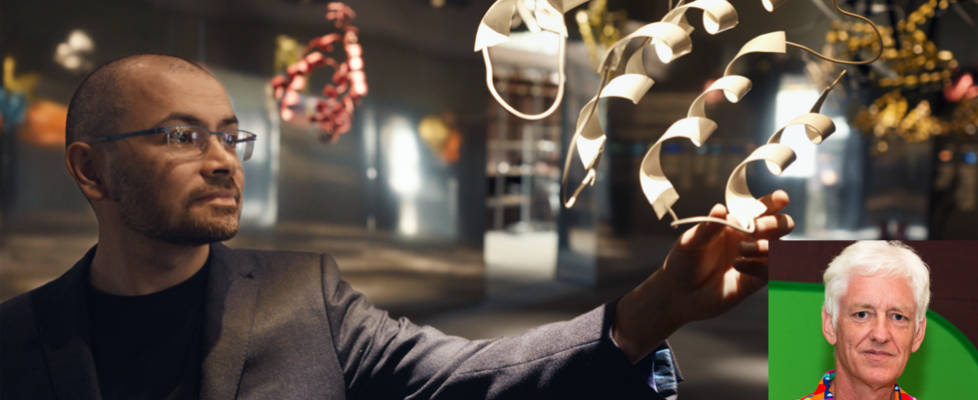
2024’s The Thinking Game takes us on a journey into DeepMind, one of Earth’s leading AI labs, as it strives to unravel the mysteries of artificial general intelligence (AGI). Inside DeepMind’s London headquarters, Nobel laureate Demis Hassabis and his team are pursuing the creation of AI that matches or surpasses human abilities on a wide range of tasks. Filmed over five years, the documentary puts viewers in the room for the pivotal moments of this quest, including the groundbreaking achievement of AlphaFold, a program that solved a 50-year grand challenge in biology. Immediately after The Thinking Game‘s screening, expert Peter Norvig will answer our AI questions.
Dr. Peter Norvig is a Fellow at Stanford’s Institute for Human-Centered Artificial Intelligence. He is Director of Research at Google, and he co-authored the most popular AI textbook, Artificial Intelligence: A Modern Approach, used in more than 1,500 universities in 135 countries.

Insufficient sleep dramatically changes how we feel and think, about ourselves and about others. Even a single night of sleep loss elevates levels of anxiety, depression, and asocial behavior in healthy adults. If sleep loss is chronic, this association can develop into a clinical mental disorder. Since 40% of adults in the US suffer from chronic insufficient sleep, researchers need — and are finding — a better understanding of the interaction between sleep and socio-emotional well-being.
Our speaker is sleep expert Eti Ben-Simon, PhD, Research Scientist at The Center for Human Sleep Science, UC Berkeley.

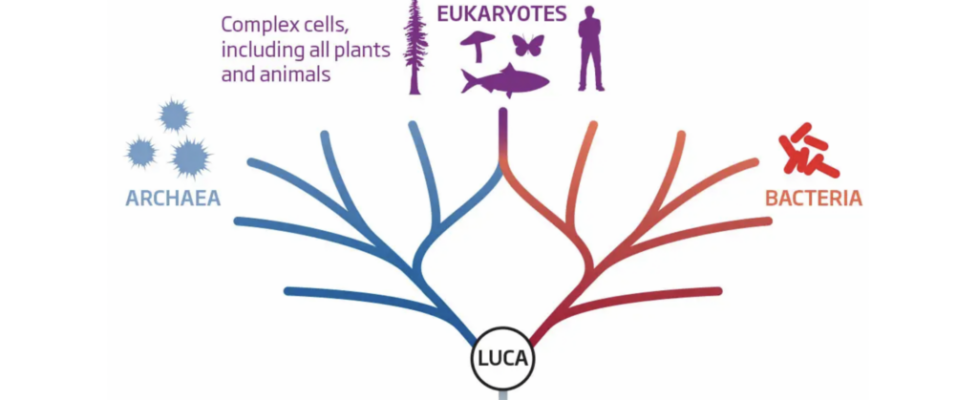
All known lifeforms rely on the same molecular mechanism to translate information carried by DNA and RNA into proteins. This translation is accomplished by an incredibly complex system involving many dozens of very large and precisely interacting molecules. All viruses, bacteria, plants, and animals ultimately inherited this common molecular machinery from our Last Universal Common Ancestor (LUCA). But all of this — and much more — had to evolve prior to LUCA. Without this translation machinery, the “genetic code” isn’t information about anything! So, origins-of-life theories can’t just assume that DNA and RNA intrinsically have information. Even the most widely accepted “RNA-World” origin-of-life theory begs the question: What is the origin of life’s information?
Our speaker, Dr. Terrence Deacon, is Professor Emeritus of Anthropology at UC Berkeley. He is the author of two particularly influential books: The Symbolic Species: The Co-evolution of Language and the Brain and Incomplete Nature: How Mind Emerged from Matter.

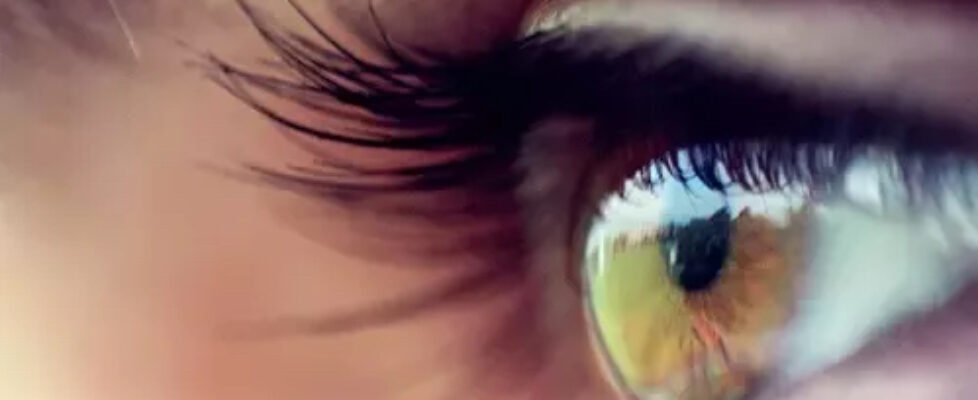
It’s a classic question of color perception: Is my red the same as your red? Using special optical systems that bypass normal visual processes in the eye (optical blur, eye movements), researchers are able to send sensory information to the human brain that it has never experienced before. The BIG question is: If you give novel sensory experiences to the adult brain, will it invent new subjective perceptions to attribute to them?!
Our speaker is neuroscientist Austin Roorda, Professor of Vision Science and Optometry at UC Berkeley. Dr. Roorda’s lab at Cal explores how human brains convert two-dimensional images on the retina into such a rich perceptual experience.

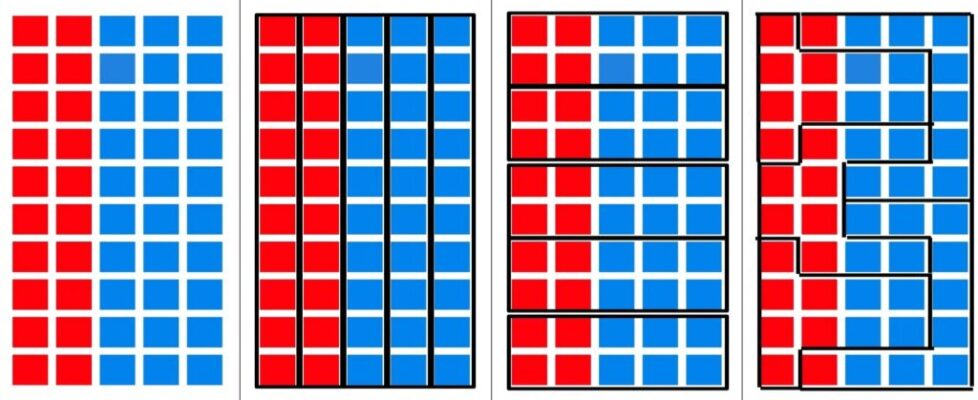
In principle, we all love to hate political gerrymandering. But how can we learn to deal with it, to manage it, ... to hack it? In the past decade, mathematicians and computer scientists have developed inventive and revealing tools to find all kinds of gerrymanders: from the pretty-but-partisan, to the hidden firewall. Join us to explore some ugly maps and some beautiful ideas about how to hack gerrymandering.
Our speaker, mathematician Dr. Ellen Veomett, is Associate Professor of Computer Science at the University of San Francisco. She helped design the nationally-acclaimed GEO metric to analyze redistricting maps created since the 2020 census.

This event is free and unticketed ... and valuable. But what value does it have for YOU? Accordingly, please use the space below to support Wonderfest in its nonprofit mission to share the scientific outlook.
Darwin’s theory of natural selection sheds light on nearly every aspect of evolutionary biology. However, it does not address the source of varying structures and functions that are subsequently culled or preserved by natural selection. Advances in cellular and molecular biology are now bringing these generative processes to light. Such technical advances hint at processes that are complementary to natural selection (but on which natural selection depends) that can be called Inverse Darwinism — and that are changing our understanding of evolution.
Our speaker, Dr. Terrence Deacon, is Professor of Anthropology at UC Berkeley. He is the author of two particularly influential books: The Symbolic Species: The Co-evolution of Language and the Brain and Incomplete Nature: How Mind Emerged from Matter.

This event is free and unticketed ... and valuable. But what value does it have for YOU? Accordingly, please use the space below to support Wonderfest in its nonprofit mission to share the scientific outlook.

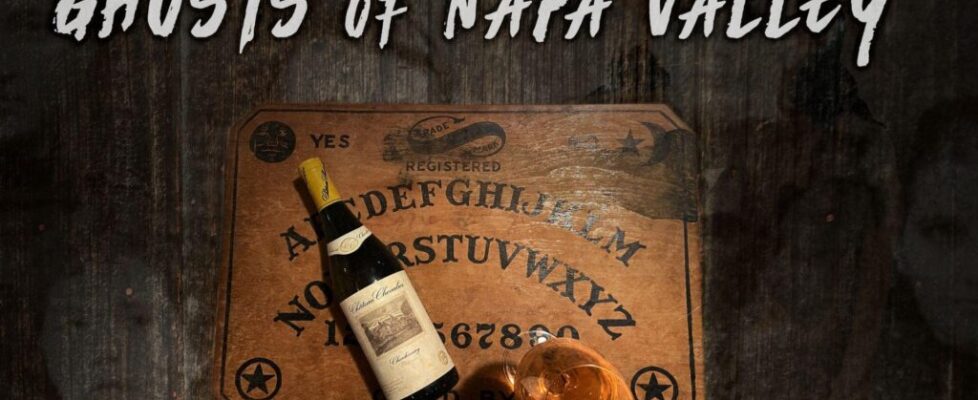
Is it merely fun to play with the idea of ghosts, or do ghosts truly exist? Naturally, evidence of non-corporeal spirits is hard to come by. Where should we look? Perhaps the ghostly haunt of choice is an abandoned winery in beautiful Napa Valley! Isn’t that where many spirits would be dying to go?
Soon after All Hallows’ Eve 2024, Wonderfest joins Cameo Cinema for Nightmare on Main Street: Ghosts of Napa Valley. And, immediately following the 90-minute screening of Ghosts of Napa Valley, Dr. Eugenie Scott will help us address the ghost question — and why it is that scary stories are found all over the world among diverse cultures.
Dr. Genie Scott is a physical anthropologist with potent credentials in scientific skepticism. She is the President of the Bay Area Skeptics, and a founding Boardmember of Wonderfest. Dr. Scott has earned high praise as a science communicator, including the Public Welfare Medal of the U.S. National Academy of Sciences.

Your $10 movie ticket (via the link below) includes Ghosts of Napa Valley seating PLUS spirited insights from Dr. Scott.
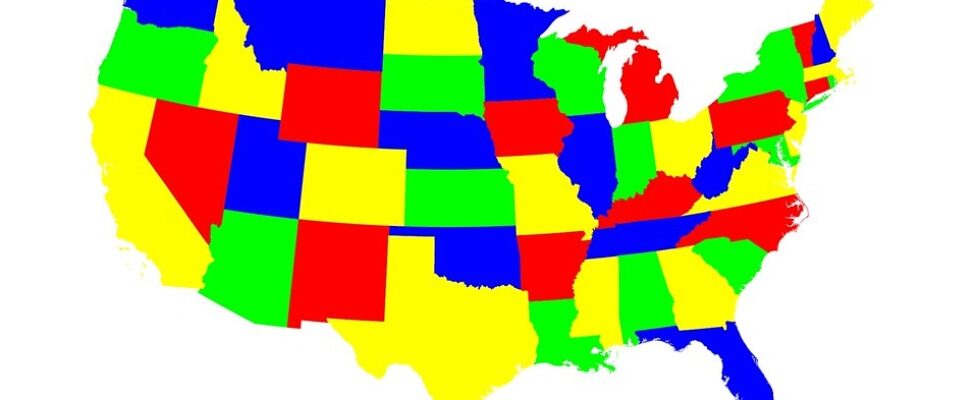
Mathematicians have spent decades wrestling with questions about coloring. Here’s one famous example: how many colors do mapmakers need to ensure that no two adjacent regions have the same color? Mathematicians struggled with that for over 100 years! In this colorful presentation, we’ll share these coloring problems, the exciting breakthroughs, and the problems which still need to be solved today.
Our speaker is Dr. Cornelia Van Cott, Professor of Mathematics (and department chair) at the University of San Francisco. As a geometric topologist, she studies knots, surfaces, and … the occasional just-colorful-enough map.

This event is free and unticketed ... and valuable. But what value do such science events have for you and for society at large? Accordingly, please consider a donation to nonprofit Wonderfest via the Eventbrite box, below.
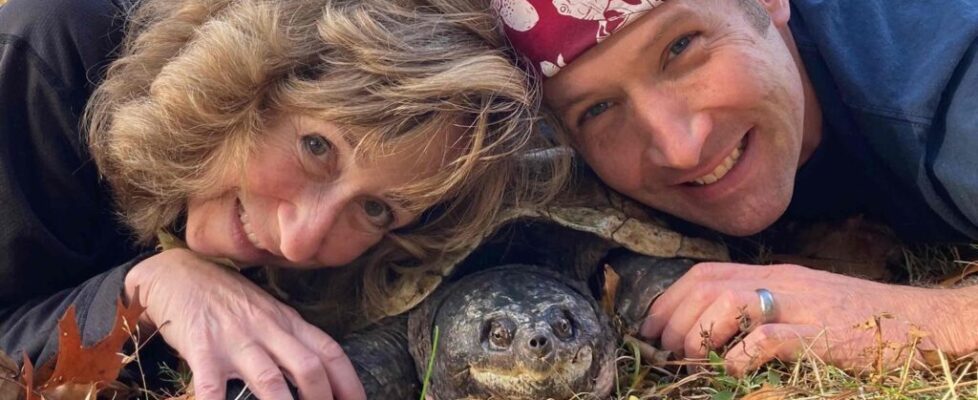
Ancient and unhurried, long-lived and majestic, turtles — some individuals living longer than 200 years — have a lineage that stretches back to the time of the dinosaurs. In literary terms, turtles are “the perfect conduits for meditations on aging, disability, and chosen family,” according to Scientific American. Such meditations suffuse the book Of Time and Turtles: Mending the World, Shell by Shattered Shell. Author Sy Montgomery and illustrator Matt Patterson join BookShop West Portal, the Turtle Survival Alliance, and Wonderfest for this special book event.
Sy Montgomery is the author of 16 non-fiction nature titles, including The Soul of an Octopus, a National Book Award finalist. She has been honored with a Sibert Medal, three honorary degrees, and two Science Book and Film Prizes from the American Association for the Advancement of Science.
Advance event registration is required (link below), and such registration is FREE for Wondernauts with promo code WONDERTURTLE. Simply add "General Admission for 1 (NO BOOK)" to your cart. [Book purchase and author signing are still available at the event.] During "CheckOut," within "Order Details," apply WONDERTURTLE as a "coupon" to transform the ordinary admission fee from $20 to $0.
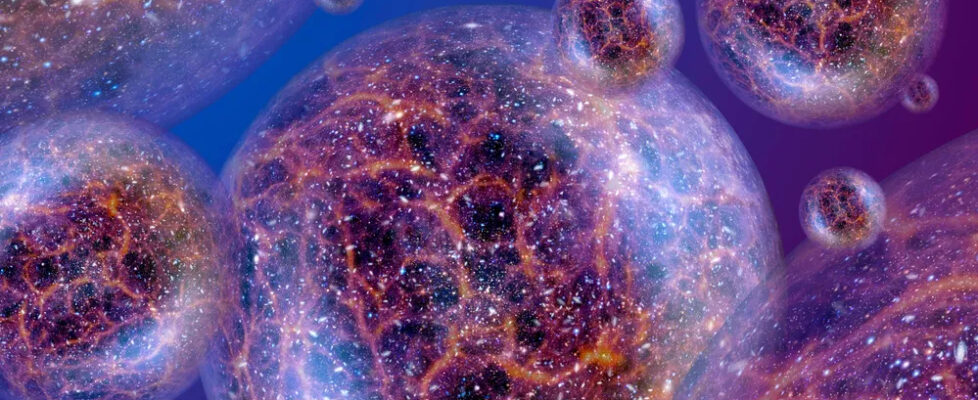
Despite implications of the prefix “uni,” many scientists now think that there might be more than a single universe! Our universe may be just one example in a far larger “multiverse,” but an unusually complex one that is conducive to the existence of life. Come learn — and inquire — about the relevant lines of reasoning and their profound implications.
Our speaker, Dr. Alex Filippenko, is one of Earth’s most highly cited astronomers. He was the only person to serve on both teams that simultaneously discovered the Nobel-worthy accelerating expansion of the universe. Alex earned Wonderfest’s Carl Sagan Prize for Science Popularization, and he was voted UC Berkeley’s “Best Professor” a record nine times!

This event is free and unticketed ... and valuable. But what value do such science events have for you and for society at large? Accordingly, please consider a donation to nonprofit Wonderfest via the Eventbrite box, below.
Every second, we encounter enormous amounts of sensory information. How does the brain extract the most relevant bits from this information firehose? Attention is one important brain mechanism for selecting certain aspects of the environment for enhanced processing. A better understanding of attention’s effect on perception improves a wide variety of human activities, including making policy for cell phone use while driving, improving performance of airport luggage screeners, and optimizing teaching methods in the classroom.
Our speaker is Dr. Michael Silver, Professor of Neuroscience and of Optometry & Vision Science at UC Berkeley. Dr. Silver also directs Cal’s Center for the Science of Psychedelics.

This event is free and unticketed ... and valuable. But what value do such science experiences have for you and for society at large? Accordingly, please consider a donation to nonprofit Wonderfest via the Eventbrite box, below.
Since 1950, when physicist Enrico Fermi casually posed the question, the mystery has only deepened: Why hasn’t ET visited us? Current evidence and reasoning suggest that life has been evolving in the cosmos for billions of years. Moreover, low-speed interstellar travel requires relatively modest technology. So why is the UFO evidence so poor, and the success of SETI so … negative? This special Wonderfest event will feature more “audience participation” than usual. Bring your questions — and possible answers — to address Fermi’s fabulous question.
Our host and speaker is Dan Werthimer, Chief Technologist at the Berkeley SETI Research Center. Dan is a SETI pioneer who has earned Wonderfest’s Carl Sagan Prize for Science Popularization.

This event is free and unticketed ... and valuable. But what value do such FREE science experiences have for you and, indirectly, for society? Accordingly, please consider making a donation to nonprofit Wonderfest via the Eventbrite box, below.
The nearest black hole lurks 1,500 light-years from Earth (~ 10 quadrillion miles!), and it neither emits nor reflects light. How can we possibly detect — far less investigate — such wondrous holes in the fabric of spacetime? High-precision astrometry is the key: adaptive optics allow ground-based telescopes to see through our turbulent atmosphere using ordinary light, and space telescopes provide high-resolution images in other parts of the electromagnetic spectrum. Today, high technology affords astronomers many ways to discover and explore the intriguing space around black hole singularities.
Our speaker, Dr. Jessica Lu, is Associate Professor of Astronomy at UC Berkeley. She also runs Cal’s Moving Universe Lab, and she chairs the Astronomy Department.

What value do such FREE science experiences have for you and, indirectly, for society? Accordingly, please consider making a donation to nonprofit Wonderfest via the Eventbrite box, below.
Human minds love to discover patterns, to find intuitive explanations, and, most of all, to be certain. Yet our world is complicated and filled with randomness. Statistical thinking provides us with practical tools for making sense of an uncertain world. It can lead us to make surprising conclusions from the data of everyday life. And it also teaches us useful humility in the face of uncertainty.
Our speaker, Dr. Jacob Bien, is Professor of Statistics at the University of Southern California. He is also a founding member of Wonderfest’s Board of Directors.

What value does this FREE event have for YOU? Accordingly, please consider using the Eventbrite space (below) to help nonprofit Wonderfest in its mission of science outreach.
As poet Carl Sandburg observed: “The fog comes on little cat feet. It sits looking over harbor and city on silent haunches, and then moves on.” What is the nature of The City’s renowned Karl the Fog? Do those super-fine droplets consist of more than just water? Why does our beloved(?) Karl creep over the Bay Area so often, and will that creeping continue in light of climate change?
Our speaker, Alicia Torregrosa, knows Karl inside and out. As Program Officer at the U.S. Geological Survey, Alicia is a physical scientist who led the USGS Pacific Coastal Fog Project, yielding an international and interdisciplinary expansion of coastal fog research.

What value do such free science experiences have for you and, indirectly, for society? Accordingly, please consider making a donation to nonprofit Wonderfest via the Eventbrite box, below.