
Physical activity is powerful medicine: it can promote health and change the trajectory of aging. Science has taught us much about the pathways of disease, the causes of aging, and the mechanisms by which exercise exerts its benefits. Now, targeted exercise strategies can slow the aging process and improve both health and fitness.
Our speaker, Dr. Anne Friedlander, is Adjunct Professor in Human Biology at Stanford University. She has broad research experience in the areas of enhancing human performance, physiology in extreme environments, and using physical activity to promote healthy aging.
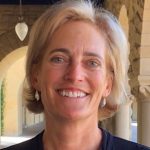
Anne Friedlander
WHAT: Exercise and Aging
WHO: Anne Friedlander, Adjunct Professor of Physiology, Stanford
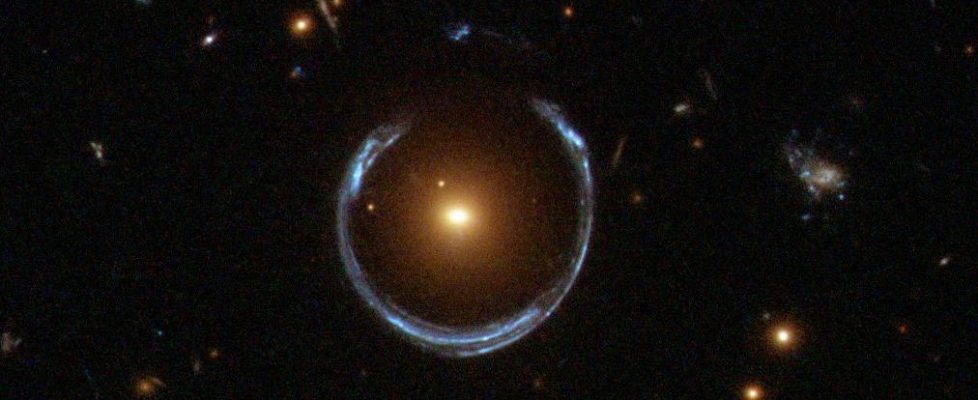
One hundred years ago, Einstein predicted that light rays would bend in the space near a massive object — much as light rays refract in an optical lens. Today, we use this fact to weigh galaxies, to discover planets of other stars, and to “see” invisible black holes. How did this idea of gravitational lensing come about, and how do we use it today to probe all fields of astrophysics?
Our speaker, Fatima Abdurrahman, is a 5th-year PhD student and researcher in the Astronomy Department at UC Berkeley. She is also a Wonderfest Science Envoy. This event is part of the 2021 Mt. Tam Astronomy Program.
As an old adage (mistakenly attributed to Confucius) notes, it’s difficult to find a black cat in a dark room, especially when there is no cat. Conspiracy theories have long been prevalent in the United States, but today they seem to be especially popular — from politics to popular culture — particularly on social media. In the spirit of another adage, “even paranoids have enemies”: there are real conspiracies, and some of them are important and even dangerous. How do we distinguish the real conspiracies from the tinfoil-hat ones?
Our speaker, Dr. Eugenie Scott, is former executive director of the National Center for Science Education. She is an internationally-known expert on science denialism and the creationism/evolution controversy. Dr. Scott has won numerous awards from scientific and educational institutions, including ten honorary doctoral degrees.
Eugenie Scott
WHAT: How To Think About Conspiracy Theories
WHO: Eugenie Scott, Former Executive Director, National Center for Science Education
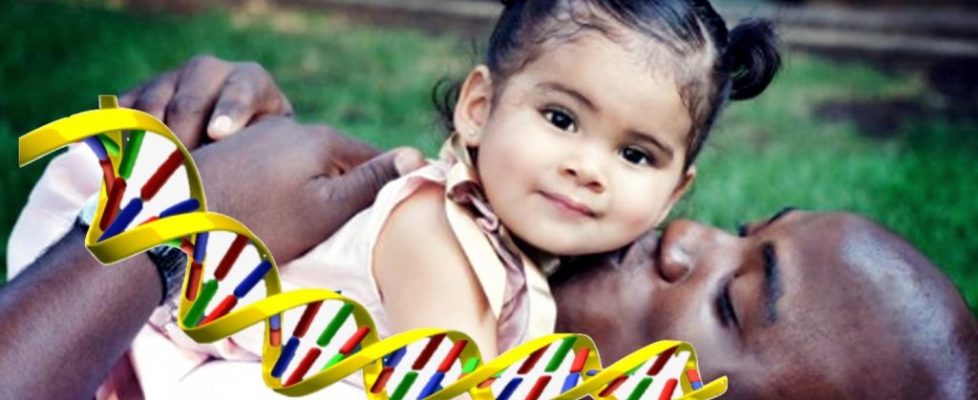
Now that nearly 40 million people have had DNA tests, we’ve reached a tipping point. Virtually all Americans are affected — tested or not — and millions have been impacted by significant revelations in their immediate families. Libby Copeland’s new book, The Lost Family: How DNA Testing Is Upending Who We Are, explores the science, the ethics, and the cultural transformations that this intimate self-knowledge allows.
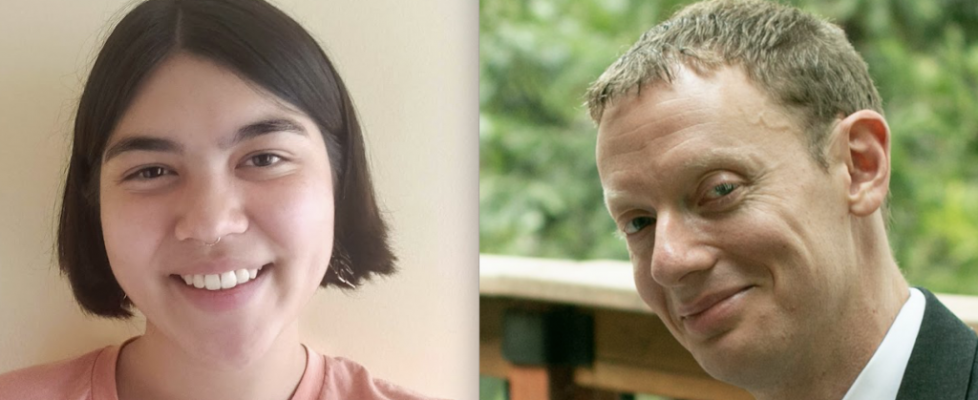
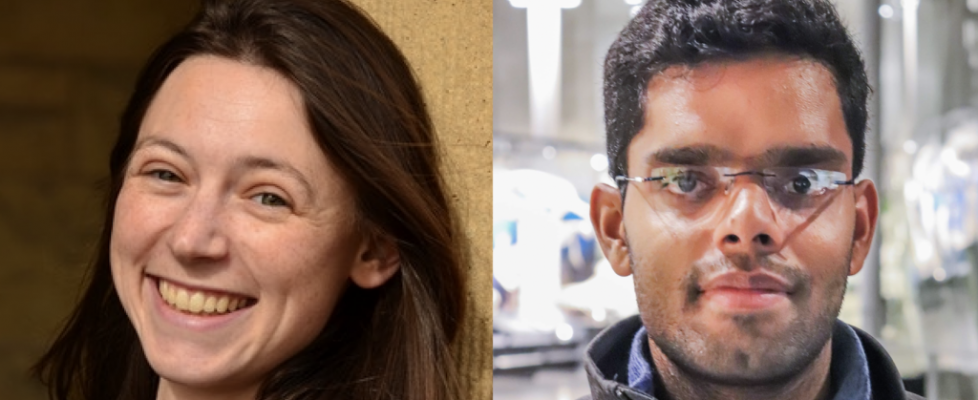
Libby Copeland has written for the Washington Post, the New York Times, the Atlantic, and New York magazine, among other media. During this Berkeley Public Library event, she will be interviewed by Madison Lehmer, graduate student in UC Berkeley’s department of Cell and Molecular Biology.
Wonderfest Science Envoys are early-career researchers with special communication skills and aspirations. Following short talks on provocative modern science topics, these two Science Envoys will answer questions with insight and enthusiasm:
• UC Berkeley psychologist Rebecca Corona on The Many Faces of Awe — Awe is unlike any other emotion. It possesses the power to grab us, shake us, and change the way we see the universe. Psychological research in national forests and during the COVID-19 pandemic helps us to plumb the depths — and the many aspects — of awe.
• UC Berkeley statistician Stephen Bates on Being Honest with Big Data — Huge datasets now touch every part of our lives, and this explosion of information allows scientists to ask (and answer!) more questions than ever. But the more questions we ask, the more easily we fall prey to the “cherry-picking” fallacy. New ideas from statistics allow scientists to make honest assessments of the evidence in big data.
This event is FREE. But what value do these science insights have FOR YOU? Accordingly, please use the space below to contribute to nonprofit Wonderfest, and help to promote the scientific outlook broadly — as through our outstanding Science Envoy Program.
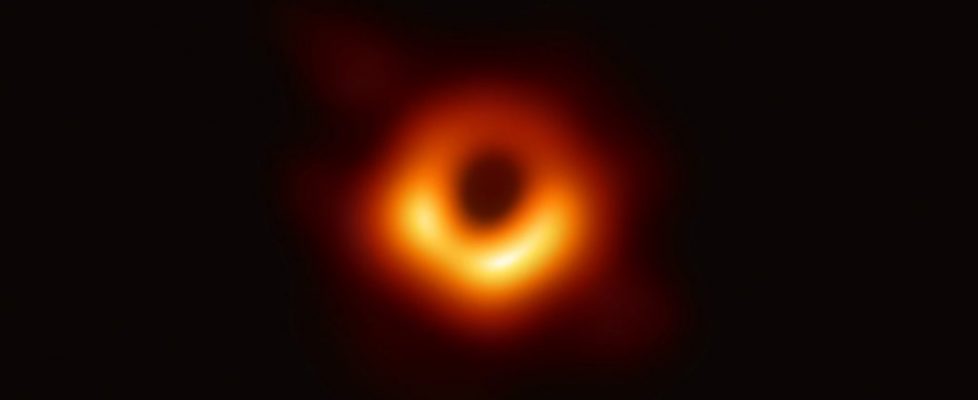
Black holes are among the most remarkable predictions of Einstein’s theory of gravity: so much material is compressed into such a small volume that nothing, not even light, can escape. Black holes have also captured the public imagination, and are commonly featured in popular culture, from Star Trek to Hollywood movies. In Spring 2019, the multinational Event Horizon Telescope (EHT) released the first real (non-Hollywood!) picture of gas around a black hole and the “shadow” cast as that gas swirls in. How did the EHT do it, and what have its combined observations taught us about black holes?
Our speaker, Eliot Quataert, is Professor of Astronomy and Astrophysical Science at Princeton University. He has received numerous national awards for his research including a Simons Investigator award and the American Astronomical Society’s Warner Prize. Dr. Quataert is an elected member of the American Academy of Arts and Sciences AND of the National Academy of Sciences.
Eliot Quataert
WHAT: Black Hole Portrait: How We Got Our First Picture
WHO: Eliot Quataert, Professor of Astronomy and Astrophysical Science, Princeton University
This free event is co-produced by Wonderfest and the Mt. Tam Astronomy Program. Please use the space below to help nonprofit Wonderfest share the excitement of science with the general public.
If appearance and essence were the same thing, there would be no need for science. – Michio Kaku
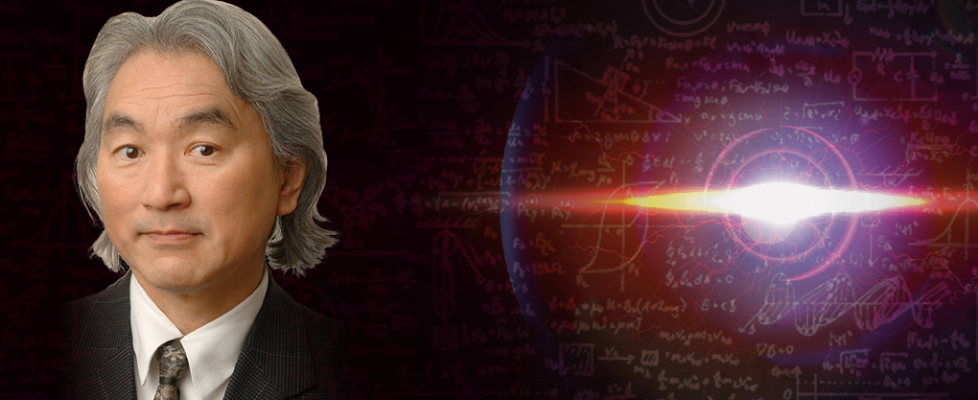
As science grows, physicists get closer to understanding the deepest mysteries of matter and energy, space and time. Once these modern-day “natural philosophers” can successfully combine theories of relativity and quantum mechanics, all known forces in the universe may be described by a single equation. Physicist Michio Kaku describes this epic journey of uniting fundamental theories in his new book The God Equation: The Quest for a Theory of Everything.
Michio Kaku is Professor of Physics at The City College of New York and CUNY Graduate Center. He shares physics insights with film, TV, radio, and online audiences, and he has written more than 70 technical articles and ten popular books. This Commonwealth Club presentation will feature Dr. Kaku in conversation with Kara Platoni, Science Editor at Wired.com.
WHAT: The God Equation
WHO: Michio Kaku, Professor of Physics, City College of New York
Wonderfest Science Envoys are early-career researchers with special communication skills and aspirations. Following short talks on provocative modern science topics, these two Science Envoys will answer questions with insight and enthusiasm:
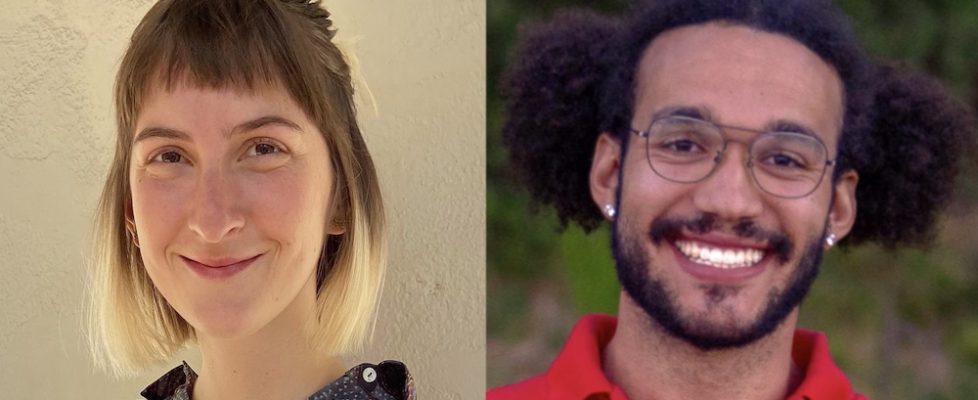
• Stanford environmental scientist Luísa Genes on “Rewilding Tropical Forests” — Tropical forests are suffering from deforestation, hunting, and a series of other threats that lead to the vanishing of animal populations. To reverse these threats, not only must we conserve remaining protected areas, but also restore plants and animal communities in degraded forests. What is rewilding, and can it really restore tropical forests?
• UC Berkeley plant biologist Lorenzo Washington on “Barriers Between Friends” — Appreciating boundaries is an important part of all relationships. Understanding the mutually beneficial relationships at the boundaries between plants and microbes has increasing importance in agriculture. An investigation into the plant cell wall illuminates how plants make microbial friends — and may help fight famine.
WHEN: 2021-04-14 — 8pm PDT, Wed, April 14 (1 hour)
HOW:
This event is free. But what value do these science insights have FOR YOU? Accordingly, please use the space below to contribute to nonprofit Wonderfest, and help to promote the scientific outlook broadly — as through our outstanding Science Envoy Program.
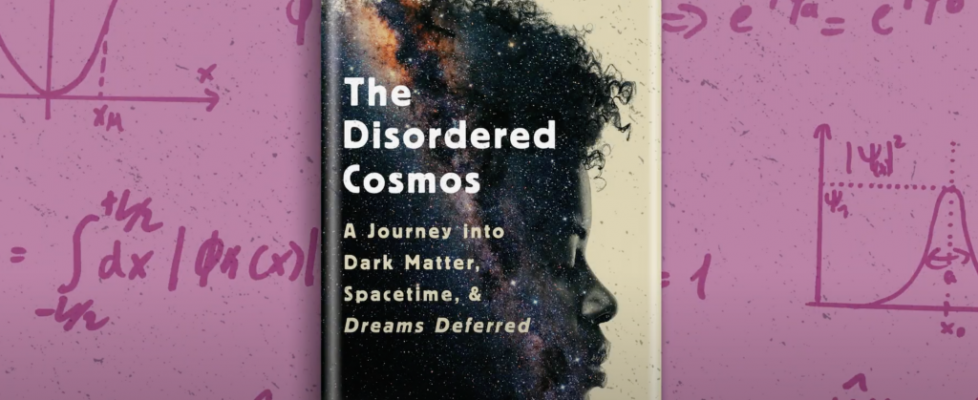
What does freedom look like to you? To theoretical physicist Chanda Prescod-Weinstein, freedom is (in part) thinking about “problems like dark matter and dark energy without worrying about cops killing Black people,” and freedom is “everyone having a chance to look at the dark night sky, wonder about it, and know it.” In her new book, The Disordered Cosmos, Dr. Prescod-Weinstein shares a deep love of physics — including the physics of melanin in skin, the nature of cosmic dark matter, and what may lie beyond the nearly-all-encompassing Standard Model of Particle Physics. Publisher’s Weekly calls The Disordered Cosmos “a resonant paean to the beauties of the cosmos and a persuasive appeal for solutions to injustices in science.”
Chanda Prescod-Weinstein is Assistant Professor of Physics & Astronomy and Core Faculty in Women’s Studies at the University of New Hampshire. Live-stream this Commonwealth Club interview — at no cost — with discount code WONDERFEST21.
Chandra Prescod-Weinstein
WHAT: Disordered Cosmos
WHO: Chandra Prescod-Weinstein, Asst. Prof. of Physics, University of New Hampshire
At the "Tickets" link below, enter data for GENERAL ADMISSION, then use discount code WONDERFEST21 to secure a completely FREE ticket. Review your order, and click "Submit." You will receive a Commonwealth Club email with instructions and a live-stream link.
TicketsUse promo code WONDERFEST21 for complete ticket discount.
Wonderfest Science Envoys are early-career researchers with special communication skills and aspirations. Following short talks on provocative modern science topics, these two Science Envoys will answer questions with insight and enthusiasm:
• UC Berkeley physicist Jeske Dioquino on “Laser Micro-imaging” — With the help of the electron microscope, researchers are taking pictures of some of nature’s smallest biological structures. To improve the contrast in these images, allowing us to study even smaller structures, a high-intensity laser joins the fray.
• Stanford neurobiologist Marc Harrison on “Mental Time Travel” — As we grow older, our ability to mentally time travel via episodic memory begins to change. Recent advances that utilize biomarkers of disease states, in combination with neuroimaging, have opened exciting new doors in the early detection of Alzheimer’s disease.
WHAT: Ask a Science Envoy: Laser Micro-imaging and Mental Time Travel
WHO: Jeske Dioquino (UC Berkeley) & Marc Harrison (Stanford), Wonderfest Science Envoys
This event is FREE. But what value do these science insights have FOR YOU? Accordingly, please use the space below to contribute to nonprofit Wonderfest, and help to promote the scientific outlook broadly — as through our outstanding Science Envoy Program.
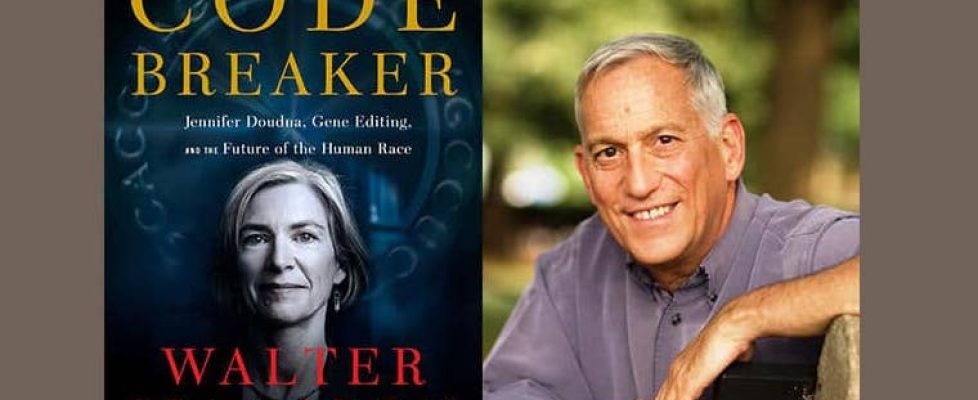
UC Berkeley biochemist Jennifer Doudna is “The Code Breaker” in historian Walter Isaacson’s new book. Doudna and colleagues created the phenomenal CRISPR gene editing tool, with unparalleld promise (and peril) to transform life on Earth. In humans, CRISPR facilitates DNA decoding — and engineering — that can make us less susceptible to viruses, promote muscle growth, enhance IQ, etc. (That’s a potent et cetera !)
Doudna won the 2020 Nobel Prize for her CRISPR research. Earlier, in 2017, she earned Wonderfest’s Carl Sagan Prize for her science outreach. In The Code Breaker: Jennifer Doudna, Gene Editing, and the Future of the Human Race, Walter Isaacson extends and deepens Doudna’s “reach” with a compelling account of her truly revolutionary discovery.
Wonderfest joins The Commonwealth Club in presenting historian & biographer Walter Isaacson, in conversation with Kishore Hari.Isaacson has written 11 books including biographies of Leonardo, Einstein, and Jobs. He has been the President and CEO of the Aspen Institute, the Chair and CEO of CNN, and the editor of Time magazine.
WHAT: Gene Editing and the Future of Humans
WHO: Walter Isaacson, Professor of History, Tulane University
Via the "Tickets" link below, enter data for GENERAL ADMISSION; then secure a $10 discount with code WONDERFESTPROMO; then enter "Contact" data; finally, "Checkout" with payment. Review your order, and click "Submit." You will receive a Commonwealth Club email with instructions and a live-stream link.
TicketsDiscount code WONDERFESTPROMO will reduce admission charge by $10.
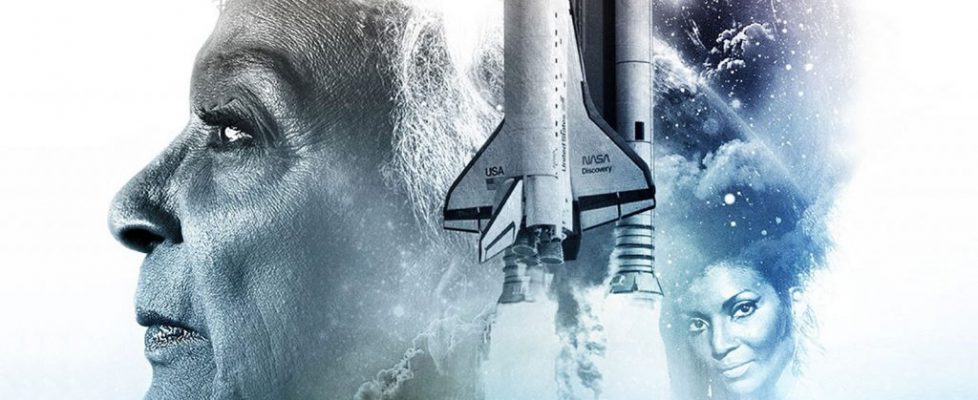
Hailing frequencies open! Woman in Motion (2019) tells the inspiring story of Nichelle Nichols, recipient of NASA’s Public Service Award and portrayer of Lt. Uhura, Communications Officer for the glorious starship Enterprise (2019 + 2.5 centuries). Movie Nation’s Roger Moore says that this compelling documentary “underscores Nichols’ undeniable contribution to broadening NASA’s horizons and drumming up interest in STEM education among minority students all over America.” Moore also describes the film as “warm, sentimental, and delightful … transcending its natural ‘Star Trek’ fan appeal.” Alongside the movie, in a livestream video that starts at 8pm PST, we’ll enjoy the insights of another woman in motion: planetary scientist Erin Redwing will describe her own “search for new (solar system) life” through research at the University of California.
Erin Redwing is a 4th-year PhD student in Earth and Planetary Science at UC Berkeley. She has done research at Keck and Lick observatories, and has aided exploration at NASA’s Jet Propulsion Lab and Goddard Space Flight Center. Erin is also a Wonderfest Science Envoy.
Erin Redwing, UC Berkeley
WHAT: Woman In Motion + Searching for Solar System Life
WHO: Erin Redwing, UC Berkeley, Astrophysicist and Wonderfest Science Envoy
WHEN: 2021-03-15 — 8pm PDT, Monday, Mar 15 (2.5 hours)
HOW:
Pre-order a ticket for Woman In Motion via the "Tickets" link, below. Then, on the Ides of March (3/15), starting at 12:15am PDT, you'll have 72 hours to start watching. At 8:00pm on that Monday, consult the same "Tickets" link to join the livestream with Erin Redwing. The movie and recorded livestream can viewed any time until March 19th at 1:15am.
At least since physicist Irwin Schrödinger published “What Is Life?” (1944), the popular imagination has struggled alongside scientific exploration to recognize what is alive, and what isn’t. The question hangs over some of society’s most charged conflicts — whether a fertilized egg is a living person, and when we ought to declare a person legally dead. We even wonder if we can create life in the lab, and we certainly hope our billion-dollar interplanetary probes know how to look for it in space. This is the subject of Carl Zimmer’s brand new book, Life’s Edge: The Search for What It Means to Be Alive.
Wonderfest joins The Commonwealth Club in presenting science writer Carl Zimmer, in conversation with CalMatter’s Rachel Becker.Zimmer has written 14 books (including two biology textbooks), numerous essays (for The New York Times, Discover, National Geographic, and more), and he is an adjunct professor in Yale University’s Department of Molecular Biophysics & Biochemistry.
Wonderfest Science Envoys are early-career researchers with special communication skills and aspirations. Following short talks on provocative modern science topics, these two Science Envoys will answer questions with insight and enthusiasm:
Stanford evironmental scientist Rebecca Miller on "Prescribed Burns in California" — Over the past several years, California has experienced record-breaking wildfire seasons. Recent wildfires have prompted important policy conversations about prescribed burns, fires that are purposefully set to remove ground vegetation and reduce fire risks. What are the challenges that have prevented us from using prescribed burns in California, and how might we wisely expand the use of this valuable fuel treatment?
UC Berkeley astrophysicist Kishore Patra on "Exploding Stars" — The atoms in everything around us — the oxygen in the air, the carbon in our bodies, the gold in our jewelry — were forged in stellar furnaces. We owe our very existence to stars that died in cataclysmic explosions known as supernovae. What is the cosmic story of our elemental origins? What do we know about supernovae, and how do astronomers study them?
WHAT: Ask a Science Envoy: Prescribed Burns & Exploding Stars
WHO: Rebecca Miller (Stanford) and Kishore Patra (UC Berkeley), Wonderfest Science Envoys
What value do these science insights have FOR YOU? Accordingly, please use the space below to contribute to nonprofit Wonderfest, and help to promote the scientific outlook broadly — as through the outstanding Science Envoy Program.
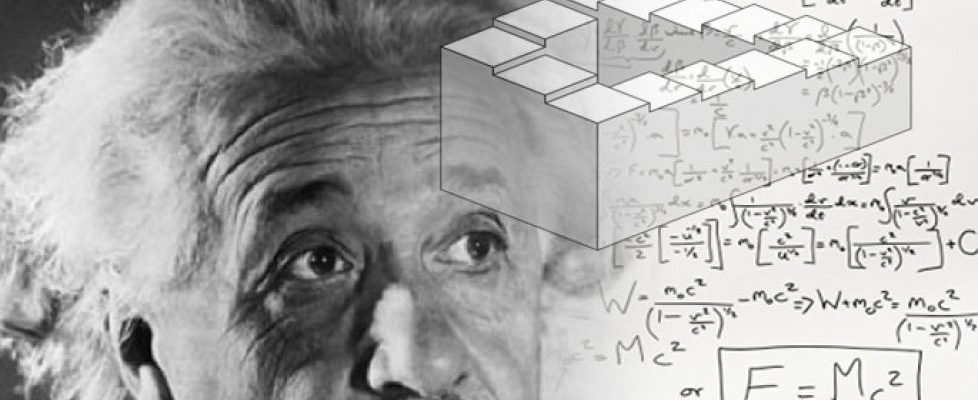
Around the world, people recognize that E=mc^2 oozes cosmic insight. But what does this "most famous equation" really say? What are energy and mass? And what makes the speed of light, c, so important? [Hint: mass, moving at speed c, doesn't turn into energy!] Using little more than common experience and middle-school math, Einstein's "special relativity" gem can come to life — with surprising insights into the nature of reality.
Speaker Tucker Hiatt, founding director of Wonderfest, has taught physics for a looong time. In 2006, he won the Amgen Award for Science Teaching Excellence, and, from 2008 to 2014, he was a Visiting Scholar in the Stanford Chemistry Department.
If you expect these E=mc^2 insights to have value FOR YOU, please consider contributing to Wonderfest, accordingly, via the Eventbrite "donation" space below.
Around the world, people recognize that E=mc^2 oozes cosmic insight. But what does this “most famous equation” really say? What are energy and mass? And what makes the speed of light, c, so important? [Hint: mass, moving at speed c, doesn’t turn into energy!] Using little more than common experience and middle-school math, Einstein’s “special relativity” gem can come to life — with surprising insights into the nature of reality.
Speaker Tucker Hiatt, founding director of Wonderfest, has taught physics for a looong time. In 2006, he won the Amgen Award for Science Teaching Excellence, and, from 2008 to 2014, he was a Visiting Scholar in the Stanford Chemistry Department.
Wonderfest Science Envoys are early-career researchers with special communication skills and aspirations. Following short talks on provocative modern science topics, these two Science Envoys will answer questions with insight and enthusiasm:
WHAT: Ask a Science Envoy: "Collaborative AI" and "'Between a Coral and a Hard Place"
WHO: Adam Gleave (UC Berkeley) and Nia Walker (Stanford), Wonderfest Science Envoys
WHEN: 2021-02-21 —11:00am PST, Sun, Feb 21 (1 hour)
HOW:
What value do these science insights have FOR YOU? Accordingly, please use the space below to contribute to nonprofit Wonderfest, and help to promote the scientific outlook broadly — as through this outstanding Science Envoy Program.
Wonderfest Science Envoys are early-career researchers with special communication skills and aspirations. Following short talks on provocative modern science topics, these two Science Envoys will answer questions with insight and enthusiasm:
WHAT: Ask a Science Envoy: Neurobiology & Astrobiology
WHEN: 2021-02-10 — 8pm, Wed, February 10th (1 hour)
HOW:
What value do these science insights have FOR YOU? Please contribute to Wonderfest accordingly, and help to promote the scientific outlook broadly — as through this outstanding Science Envoy Program — in the space below .
Humanity has looked up at the stars for millennia and wondered whether we’re alone in the Universe. Yet only in the past few decades have we begun to discover planets outside our Solar System: to date, we’ve found over 4,000 such “exoplanets.” Further, we have statistical reasons to believe that roughly one billion exoplanets — in our Galaxy alone — are promising abodes for life. Come learn about exoplanets and the exciting search for Earth-like and potentially habitable worlds.
Our speaker, Andy Mayo, is a PhD student and researcher in the UC Berkeley Astronomy Department. He is also a Wonderfest Science Envoy.
Andrew Mayo
WHAT: Exoplanets and the Search for Alien Life
WHO: Andrew Mayo, UC Berkeley Astronomy Department
What value will these insights have for you? Via the Eventbrite portal below, please consider a donation to nonprofit Wonderfest in accord with this value.
Computer vision systems now surpass the performance of human experts in fields like radiology and dermatology. Can they also help us discern real videos from deepfakes — videos manipulated by artificial intelligence? This Zoom presentation will provide an overview of the state-of-the-art machine-learning models for detecting deepfakes. It will also present evidence that reveals how most people are more accurate at spotting deepfakes than the best machine-learning models. We will examine results of a recent experiment suggesting that humanity’s specialized ability for recognizing faces lies at the heart of our superior performance. (No face shown above belongs to a real person!)
Our speaker, MIT’s Matthew Groh, is a PhD student and research assistant at the MIT Media Lab where he is a member of the Affective Computing Group. Before MIT, Matt cofounded Proprio Labs, worked as a data scientist at Qadium, RaiseMe, and DARPA, and was a research assistant at Innovations for Poverty Action and the World Bank.
Matthew Groh
WHAT: Cognitive Science of Deepfake Detection
WHO: Matthew Groh, Research Assistant, MIT Media Lab
"Nothing in life is to be feared; it is only to be understood." - M. Curie
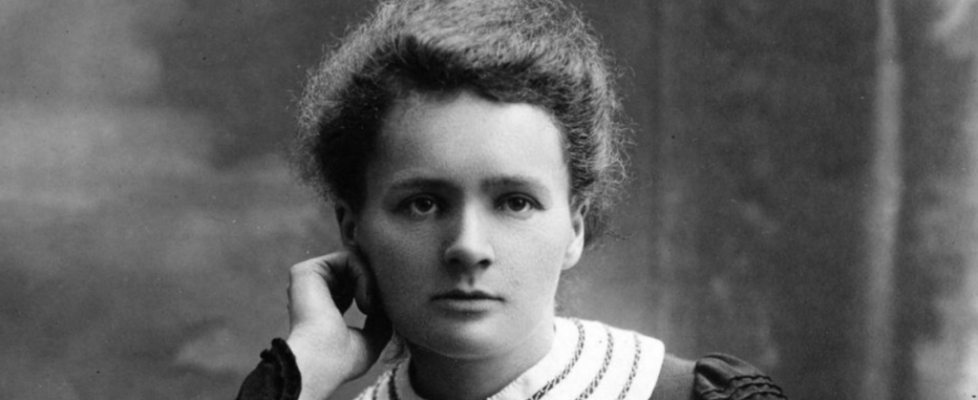
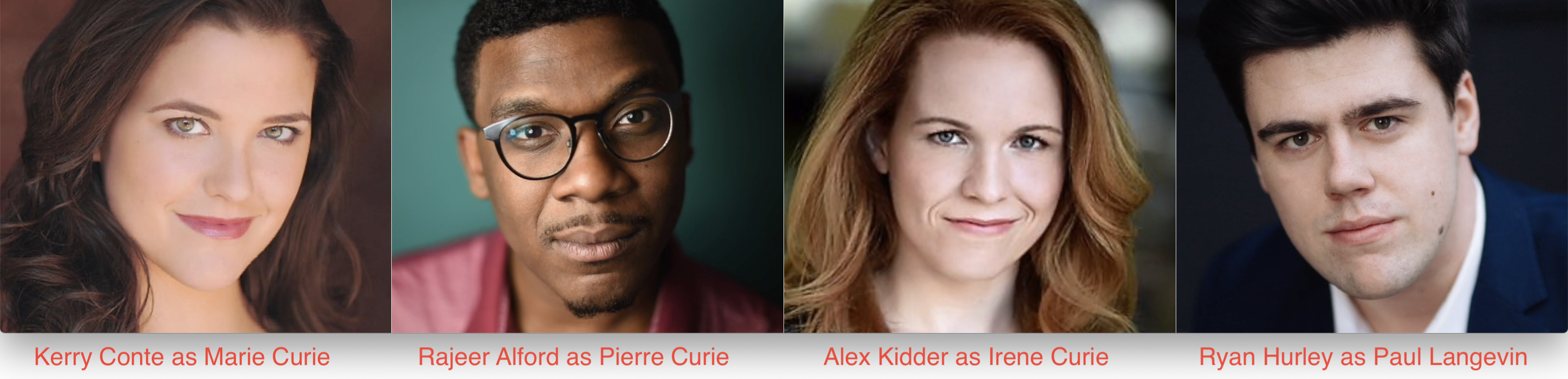
Wonderfest is delighted to present Madame Curie, a new musical-theater tribute to Earth's most accomplished female scientist. As Maria Sklodowska was becoming Marie Curie, she emigrated 1000 miles from Poland to France, overcame xenophobia and sexism, and pioneered our understanding of radioactivity. In the process, she earned Nobel prizes (plural!) in physics and chemistry, and treated — directly and indirectly — over a million WWI soldiers with her mobile X-ray units.
"I have frequently been questioned, especially by women, regarding how I could reconcile family life with a scientific career. Well, it has not been easy." - M. Curie
Madame Curie brings to life the story and spirit of a revolutionary. It features a compelling narrative, beautiful music, and eleven experienced actors who sheltered in their respective homes during recording! Fully orchestrated in the Rodgers and Hammerstein tradition, Madame Curie will revive your love of science, and it will especially inspire young women to heed their call to the passionate exploration of Nature.
"All my life through, the new sights of Nature made me rejoice like a child." - M. Curie
Madame Curie's YouTube Premiere took place on the evening of December 21st. This musical experience will continue to be available at the Wonderfest Science YouTube channel through the morning of December 24th. Simply visit the webaddress above for an inspiring start to your next revolution of the Sun ... with a revolutionary!