
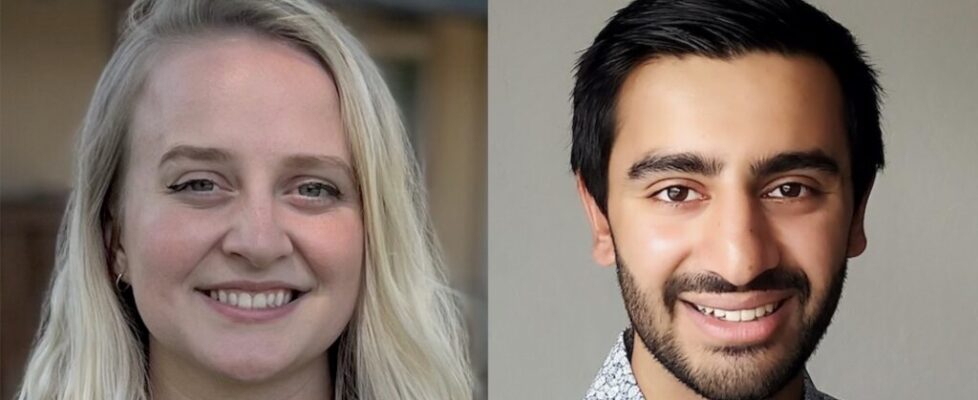
Poison Frogs; Quantum Chem – May 11
Wonderfest Science Envoys are early-career researchers with special communication skills and aspirations. Following short talks on provocative modern science topics, these two Science Envoys will answer questions with insight and enthusiasm:
• Stanford biologist Billie Goolsby on Family Feud: Familial Decision-Making in Poison Frogs — Cooperation between parents tends to ensure family success, especially among poison frogs. Through direct observation, sound recordings, and hormone analysis, researchers test how coordination of parenting happens in nature — and how it predicts offspring survival.
• UC Berkeley physicist Ashwin Singh on Exploring Quantum Chemistry with Earth’s Strongest Laser — Quantum mechanics helps describe cold chemical reactions, like those that occur in outer space. By building the world’s strongest laser to hold molecules in place, we can watch quantum chemistry happen in real time.
Berkeley Public Library [https://www.berkeleypubliclibrary.org]
This free, online, science presentation is produced by Wonderfest in partnership with the Berkeley Public Library.
What value do these science insights have for you? Accordingly, please consider making a donation to nonprofit Wonderfest via the Eventbrite box, below. (Note: No "sales" or "tickets" are involved; it's just a thoughtful contribution to help Wonderfest promote science understanding and the scientific outlook.)
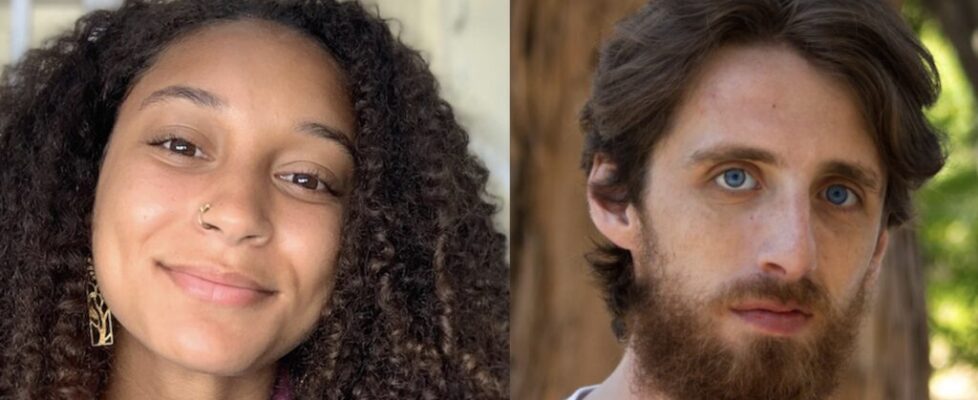
Fishy Ways; Monkey Business – Apr 17
Wonderfest Science Envoys are early-career researchers with special communication skills and aspirations. Following short talks on provocative modern science topics, these two Science Envoys will answer questions with insight and enthusiasm:
• Stanford marine biologist Ceyenna Tillman on A Unique Case Study in Fish Behavior — We don’t often think of fish as individuals with independent minds, making their own decisions about how to react to the world around them. We often study them through important and informative large-scale lenses such as population size and spatial distribution. But what do we lose when we leave out the choices that each individual makes? And, in general, how can humanity benefit from studying such fish behavior?
• UC Berkeley biological anthropologist Gustav “Tavi” Steinhardt on Primate Behavior and Microhabitat — Tamarins are squirrel-size Amazonian monkeys with big ecological impacts. Known for their ability to survive (and even thrive) in disturbed areas, Tamarins help the forest recover from damage by spreading seeds. Now, using aerial laser scans, machine learning, and countless hours trekking through jungle mud, we are beginning to understand the important ecological “business” of these tiny primates in exquisite detail.
Berkeley Public Library [https://www.berkeleypubliclibrary.org]
This free, online, science presentation is produced by Wonderfest in partnership with the Berkeley Public Library.
What value do these science insights have for you? Accordingly, please consider making a donation to nonprofit Wonderfest via the Eventbrite box, below. (Note: No "sales" or "tickets" are involved; it's just a thoughtful contribution to help Wonderfest promote science understanding and the scientific outlook.)
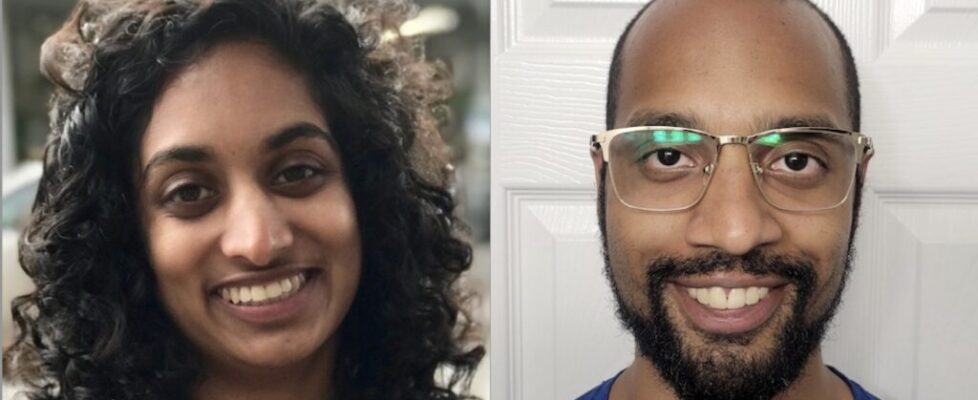
Earthquakes; Gene Engineering – Apr 5
Wonderfest Science Envoys are early-career researchers with special communication skills and aspirations. Following short talks on provocative modern science topics, these two Science Envoys will answer questions with insight and enthusiasm:
• UC Berkeley seismologist Sarina Patel on Earthquake Science Using Crowdsourced Data from Smartphones — MyShake is a free citizen-science smartphone app which has been downloaded globally 2.5 million times. MyShake delivers earthquake early warnings(!) to users in California, Oregon, and Washington. It also uses the vibration sensor built into all smartphones to record earthquake motion for scientific analysis. How can the gadget in your pocket contribute to earthquake early warning, shake-hazard mapping, and structural-health monitoring?
• Stanford biophysicist Kevin Aris on Genetic Engineering Refined with Single-Molecule Microscopes — CRISPR enzymes allow precise genetic engineering, cleaving DNA molecules to improve the health and function of organisms. However, naturally compact and twisted pieces of DNA, under stress due to mechanical deformation, are tough to cut precisely. Single-molecule microscopy helps us design novel CRISPR enzymes that become highly-accurate molecular scissors — new tools for beneficial gene modification.
Berkeley Public Library [https://www.berkeleypubliclibrary.org]
This free, online, science presentation is produced by Wonderfest in partnership with the Berkeley Public Library.
What value do these science insights have for you? Accordingly, please consider making a donation to nonprofit Wonderfest via the Eventbrite box, below. (Note: No "sales" or "tickets" are involved; it's just a thoughtful contribution to help Wonderfest promote science understanding and the scientific outlook.)
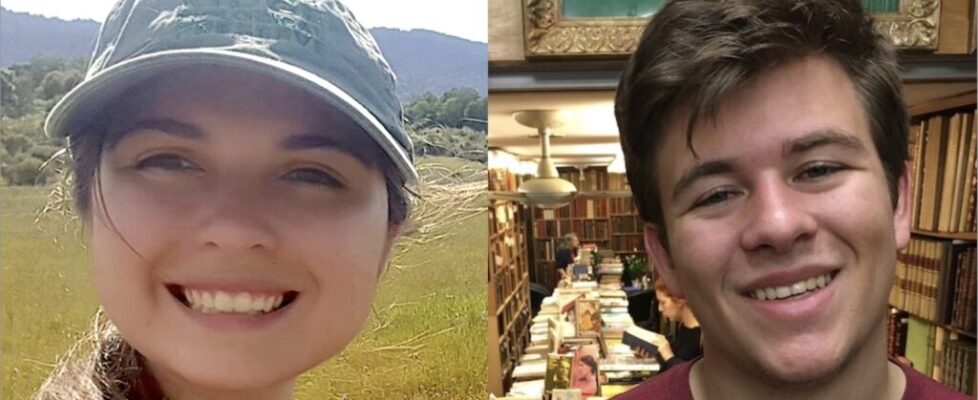
Biodiversity; Cosmic Maps – Mar 27
Wonderfest Science Envoys are early-career researchers with special communication skills and aspirations. Following short talks on provocative modern science topics, these two Science Envoys will answer questions with insight and enthusiasm:
• Stanford paleobiologist Dr. Maria Viteri on Exhuming the Dead to Save the Living — Earth is experiencing a crisis in biodiversity. Surprisingly, the fossil record offers key insights for understanding this crisis, and one scientist’s lifelong fascination with dinosaurs — leading to a career in conservation biology — is helping to combat the biodiversity challenge of the present … and of the future.
• UC Berkeley astrophysicist Tyler Cox on Creating the Largest-Ever Maps of the Universe — New datasets from the James Webb Space Telescope have begun to reveal some of the oldest known galaxies in the universe. But what lies beyond these extremely remote objects, and what more can we learn by going deeper? Next-generation experiments are working to map the most distant regions of the universe to help explain the origins of the first galaxies.
Berkeley Public Library [https://www.berkeleypubliclibrary.org]
This free, online, science presentation is produced by Wonderfest in partnership with the Berkeley Public Library.
What value do these science insights have for you? Accordingly, please consider making a donation to nonprofit Wonderfest via the Eventbrite box, below. (Note: No "sales" or "tickets" are involved; it's just a thoughtful contribution to help Wonderfest promote science understanding and the scientific outlook.)
Spider Love; Dark Matter – Mar 15
Wonderfest Science Envoys are early-career researchers with special communication skills and aspirations. Following short talks on provocative modern science topics, these two Science Envoys will answer questions with insight and enthusiasm:
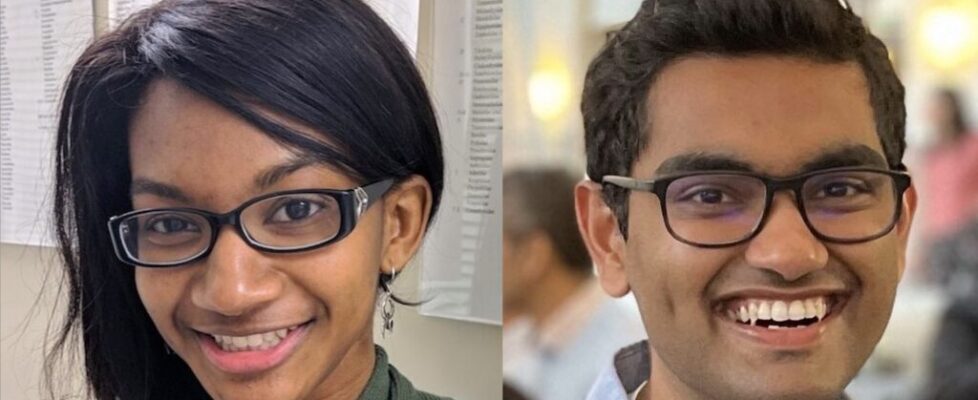
• UC Berkeley arachnologist Trinity Walls on Creepy or Captivating: A Spider Scientist’s Perspective — How have recent discoveries about spiders changed beliefs that have been passed down for generations? Can we see that the study of spiders is beneficial to society? One person’s life-long journey — from curious child to rigorous researcher — reveals spider science to be an avenue of creative self-expression that offers rich insights into nature.
• Stanford physicist Jyotirmai “Joe” Singh on Exploring the Dark Side of the Universe — Deeply mysterious dark matter constitutes a staggering 85% of the material universe. What is the evidence for dark matter’s ubiquitous existence, yet why has it been so difficult to detect in the laboratory? Cutting-edge theories and experiments within modern physics do give us hope that we can understand dark matter, unlocking key mysteries of the cosmos.
Berkeley Public Library [https://www.berkeleypubliclibrary.org]
This free, online, science presentation is produced by Wonderfest in partnership with the Berkeley Public Library.
What value do these science insights have for you? Accordingly, please consider making a donation to nonprofit Wonderfest via the Eventbrite box, below. (Note: No "sales" or "tickets" are involved; it's just a thoughtful contribution to help Wonderfest promote science understanding and the scientific outlook.)