Tremendous Telescopes – July 30
The USA has developed ground- and space-based telescopes that have helped revolutionize our view of the cosmos … and of ourselves. In this Commonwealth Club event, astrophysicist John Mulchaey explores current and future developments in telescope innovation, the state of national investment in those developments, the global collaboration on extremely large telescopes such as the Giant Magellan, and the future of American leadership in this particular leg of the modern space race.
Wonderfest joins Commonwealth Club World Affairs to present Dr. John Mulchaey, President of the Carnegie Institution for Science, in conversation with the George Hammond, author of Conversations with Socrates.
This event can be enjoyed in-person only. Pre-register with the Commonwealth Club / World Affairs via the “Tickets” link, below. Use promo code WONDERNAUTS for a $10 ticket discount.
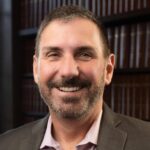
Dr. John Mulchaey
WHAT: Tremendous Telescopes: The Future of US Space Observation
WHO: Dr. John Mulchaey, President, Carnegie Institution for Science [https://carnegiescience.edu/dr-john-mulchaey]
WHERE: Toni Rembe Rock Auditorium, Commonwealth Club, 110 The Embarcadero, San Francisco CA 94105
WHEN: Thursday, July 30th — 5:30pm (1 hour)
COLLABORATORS:
Commonwealth Club World Affairs [https://www.commonwealthclub.org]
Commonwealth Club World Affairs [https://www.commonwealthclub.org]
HOW: During the last stage of online ticket purchase from the Commonwealth Club (via the "Tickets" link, below), use promo code WONDERNAUTS to secure a discount of $10.