

Spider Love; Dark Matter – Mar 15
Wonderfest Science Envoys are early-career researchers with special communication skills and aspirations. Following short talks on provocative modern science topics, these two Science Envoys will answer questions with insight and enthusiasm:
• UC Berkeley arachnologist Trinity Walls on Creepy or Captivating: A Spider Scientist’s Perspective — How have recent discoveries about spiders changed beliefs that have been passed down for generations? Can we see that the study of spiders is beneficial to society? One person’s life-long journey — from curious child to rigorous researcher — reveals spider science to be an avenue of creative self-expression that offers rich insights into nature.
• Stanford physicist Jyotirmai “Joe” Singh on Exploring the Dark Side of the Universe — Deeply mysterious dark matter constitutes a staggering 85% of the material universe. What is the evidence for dark matter’s ubiquitous existence, yet why has it been so difficult to detect in the laboratory? Cutting-edge theories and experiments within modern physics do give us hope that we can understand dark matter, unlocking key mysteries of the cosmos.
Berkeley Public Library [https://www.berkeleypubliclibrary.org]
This free, online, science presentation is produced by Wonderfest in partnership with the Berkeley Public Library.
What value do these science insights have for you? Accordingly, please consider making a donation to nonprofit Wonderfest via the Eventbrite box, below. (Note: No "sales" or "tickets" are involved; it's just a thoughtful contribution to help Wonderfest promote science understanding and the scientific outlook.)
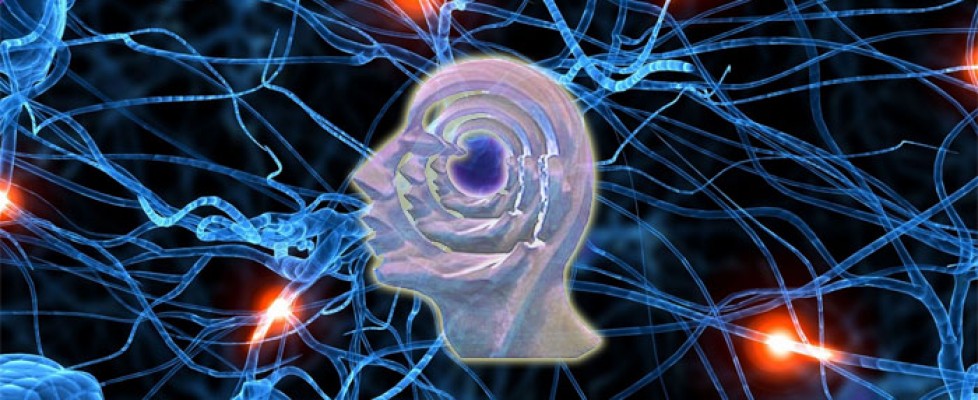
Incomplete Nature: Consciousness, and Purpose?

Prof. Deacon's presentation will focus on the central idea of his new book, "Incomplete Nature," namely that key elements of consciousness (values, feelings, meanings, etc.) emerge from specific CONSTRAINTS on the physical processes of a nervous system. "Incomplete Nature" is the inaugural selection of the brand new Wonderfest Book Club. As physicists work toward completing a theory of the universe and biologists unravel the molecular complexity of life, a glaring incompleteness in this scientific vision becomes apparent. The "Theory of Everything" that appears to be emerging includes everything but us: the feelings, meanings, consciousness, and purposes that make us (and many of our animal cousins) what we are. These most immediate and incontrovertible phenomena are left unexplained by the natural sciences because they lack the physical properties—such as mass, momentum, charge, and location—that are assumed to be necessary for something to have physical consequences in the world. This is an unacceptable omission. We need a "theory of everything" that does not leave it absurd that we exist.