
RockClocks & Supernovae – May 27
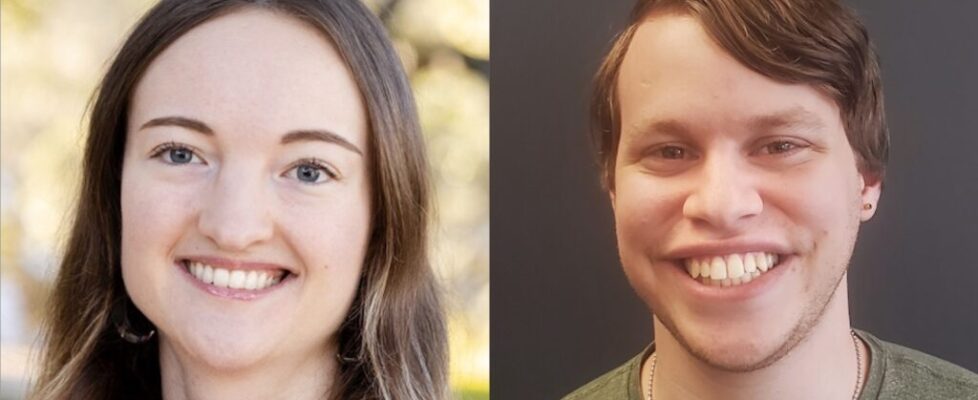
Wonderfest Science Envoys are early-career researchers with enhanced communication skills and aspirations. Following short talks on provocative modern science topics, these two Science Envoys will answer questions with insight and enthusiasm:
• UC Berkeley geophysicist Caroline Hasler on Measuring Geologic Time with Rock Clocks — In microscopically small crystals within rocks, radioactive elements decay at predictable rates and function as tiny clocks. These “rock clocks” help us to figure out the timing of major events in Earth history — from the moment of Earth’s formation to the asteroid impact that killed the dinosaurs.
• UC Berkeley astronomer Eli Wiston on Seeing Core-collapse Supernovae with Radio Telescopes — At the end of its life, a massive star will contract and explode in spectacular fashion, outshining the light of an entire galaxy. While most astronomers focus on the optical light given off by these stellar explosions, there is a wealth of new information to be gained by observing invisible wavelengths. With radio telescopes, we can study new aspects of supernovae: their stars’ activity in the years before death, their environments, and what they leave behind after the explosion fades.
This interactive science presentation, free and unticketed, is produced by Wonderfest in partnership with Marin Science Seminar.
Marin Science Seminar [https://marinscienceseminar.com]
World in a Sandgrain – May 30
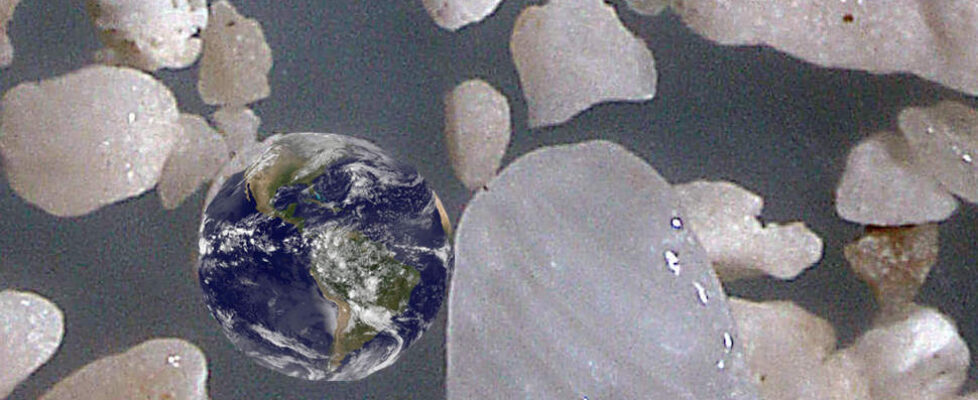
Might modern geology offer insight into the poetry of William Blake?
To see a world in a grain of sand
And a heaven in a wild flower,
Hold infinity in the palm of your hand
And eternity in an hour.
By some measures, modern geology has pushed our knowledge of Earth’s birthdate backward in time by a factor of a million: from 4,000 BCE to 4,000,000,000 BCE! Detrital zircon geochronology is a geological dating technique that affords insights into the structure and origin of planet Earth’s diverse components. Even locally, including on Mount Tamalpais, the rocks are speaking to us. Can we really see a world in a grain of sand?
Our speaker, Dr. Owen Anfinson, is Associate Professor of Geology at the Sonoma County campus of California State University.
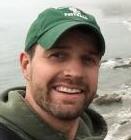
Dr. Owen Anfinson
Since this event is COVID-cautious, consider wearing a mask. The warm feeling of Wondernaut(!) camaraderie radiates through masks and across wide seat-spacing. Also, please consider donating to nonprofit Wonderfest in the Eventbrite space, below. (This event is free and unticketed; ignore any mention of "sales" or "tickets.")